Why ballet balance is a dynamic process
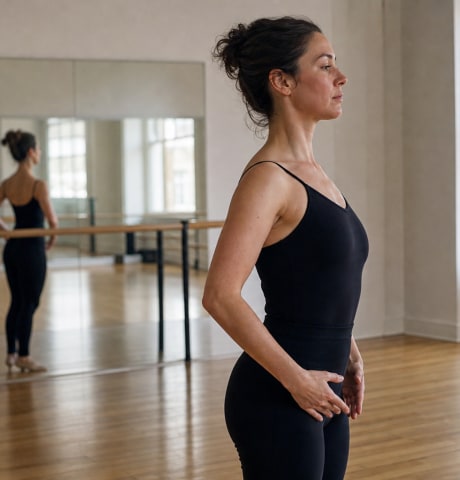
Standing on one leg in ballet is not a static state, but a highly dynamic process. Many adult beginners make the mistake of locking onto the standing leg and completely blocking their muscles. True stability, however, is created through fine, continuous muscle activity that reacts to weight shifts. Before you can practice balance on one leg in ballet, you need a stable base in your upper body. A stable ballet axis and core tension are the foundation upon which your balance rests.
When you shift your weight to one side, your center of gravity moves over the supporting area of the weight-bearing foot. This transition must be fluid and consciously managed, rather than simply letting the pelvis sag to the side. The alignment of the hip, knee, and ankle in a vertical line determines whether you will stand stably or begin to wobble. To protect the joints and optimally engage the deep muscles, it also helps to execute the basics of plie and releve correctly, as these movements strengthen the foot and calf.