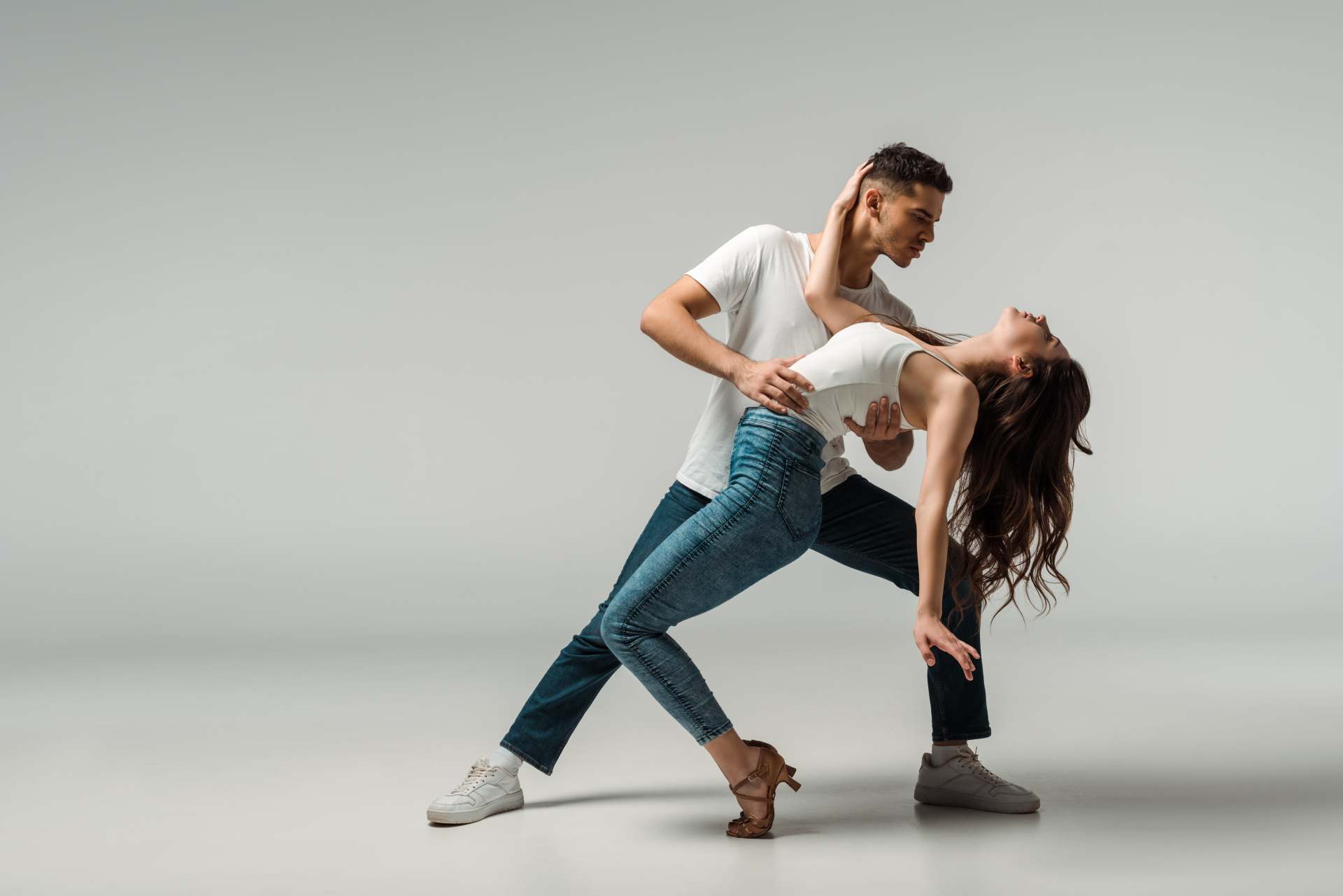
- The lead suggests a movement, the follow shapes it: no hierarchy, just two roles.
- The impulse comes from the upper body, not from the arm.
- Both roles contribute equally to the success of a move.
Lead & Follow: Partner dance as teamwork
Leading and following is more than just "calling the shots" and "tagging along". If you understand both roles, you will dance more freely after just a few hours than someone who has spent two years collecting figures.
What lead and follow mean
Lead is the role that suggests a movement, through direction, timing, and body tension. Follow is the role that accepts this suggestion and interprets it musically. Both roles are independent of gender.
Why leading is not commanding
Leading means: making a suggestion that is physically readable. Do not push, do not pull: offer direction and timing. The leader thinks half a figure ahead and gives the follower the time to fill it.
The most common beginner mistake is the arm. Anyone who leads from the arm creates resistance instead of clarity. The impulse comes from the upper body and travels through the connection: the arm only transmits, it does not decide.

Why eye contact matters

A quick glance before the move is often enough as a signal: it replaces words and builds trust, without interrupting the flow.
How to recognize good leadership
Like this
- The impulse comes from the upper body, not from the arm
- The follower has time to shape the movement
- Mistakes are caught instead of commented on
- Two figures executed cleanly instead of eight started poorly
Don't do this
- Pulling the arm to force a turn
- Announcing figures ("the turn is coming now")
- Correcting after every beat
- Increasing the tempo when it's not working
udansa tip
Spend five minutes just practicing offering and taking the hand, without dancing a single step. After that, every figure will feel easier.
Whoever follows does not just wait. Following is an active decision to trust the lead.
What following really demands
Following is the harder role to learn, because it demands attention instead of planning. The follower decides what a movement looks like: length, emphasis, completion. Anyone who just waits around makes the dance flat for both.
That is why it is worth learning both roles. Anyone who has led once follows more attentively, and anyone who has followed once leads more clearly. In many udansa courses, roles are swapped intentionally.
Two roles, two inner worlds
The pressure of decision
The world of the leader in partner dance

Suggests: direction and timing come from the core.
The art of active reaction
The world of the follower in partner dance

Shaped by: length, emphasis, and completion, the following role decides.
The social dance floor shows who has truly understood

Changing partners is the best test: Anyone who really leads or follows, instead of just reeling off patterns, will notice it immediately: with new partners, there are no rehearsed shortcuts.
Learn partner dance where you live
Leading and following is best practiced in pairs: many courses can also be booked without a fixed partner.

110 €
Paartanz
Beginner
Grundkurs für Paare

Sunday · 14:30–16:00Limbach-Oberfrohna18 freie Plätze

Loris Schulze · Christoph Böhm - Die Tanzschule
110 €
Paartanz
Beginner
Grundkurs für Paare
Sunday · 14:30–16:00Limbach-Oberfrohna18 freie Plätze
Loris Schulze · Christoph Böhm - Die Tanzschule
55 €
Hochzeitstanz
Beginner
Hochzeits- und Kurzkurs für Paare
Sunday · 14:30–16:00Limbach-Oberfrohna48 freie Plätze
Loris Schulze · Christoph Böhm - Die Tanzschule
Frequently Asked Questions
- No. The role does not depend on gender. In many courses, roles are intentionally swapped because both roles improve the understanding of the dance.
You might also like
Harmony in partner dance: giving feedback without conflict
How do you give feedback correctly while dancing? Learn the basics of dance communication to grow as a couple without killing the vibe.
Learn more: Harmony in partner dance: giving feedback without conflict
Partner dance as a relationship booster
Does dancing improve your relationship? Discover why dancing together strengthens your communication and brings a new spark to your relationship.
Learn more: Partner dance as a relationship booster
Assess your dance level
Beginner or pro? Learn how to honestly assess your dance level and how to dance with partners at different levels.
Learn more: Assess your dance levelCourse data from the udansa catalog, as of August 20, 2026. Imagery: our own recordings and licensed stock media.