


Find your dance community
On udansa, you will find like-minded people who share your passion for contemporary dance, as well as suitable studios for your weekly floorwork training.

By Bernhard De LucaUpdated
On udansa, you will find like-minded people who share your passion for contemporary dance, as well as suitable studios for your weekly floorwork training.
Floorwork in contemporary dance requires full physical commitment. With the right protective clothing for floorwork in dance, you can focus entirely on the flow of your movement instead of worrying about bruises.
Protective effect
The clothing must protect the skin from friction burns caused by the dance floor.
Freedom of movement
The fabrics must easily withstand every stretch and every deep lunge.
Durability and care
The materials must be durable and withstand frequent washing without any problems.
Independent selection
No manufacturer has paid for a placement or mention on this list.
Knee area, elastic fabric, flat padding
Special knee pads for contemporary dance are the most important element. They offer flat padding that provides optimal protection for the kneecaps during hard landings, without getting in the way during turns.
Legs, durable cotton blend, high waistband
A robust, elastic training pant protects the entire length of your legs from friction burns. It should fit snugly so that it does not slip during overhead movements.
Arms and shoulders, functional fiber, tight-fitting
A long-sleeved shirt protects shoulders and elbows during rolls and slides. Breathable functional materials wick away sweat and keep muscles warm during training breaks.
Feet, reinforced heel, soft material
Thick socks made of cotton or special synthetic blends are ideal for gliding smoothly across the floor. They keep your ankles warm and minimize resistance during foot slides.
Torso, elastane content, seamless construction
A well-fitting bodysuit prevents the top from sliding into your face during inversions. It keeps your back warm and ensures a clean silhouette, which makes it easier for the instructor to check your posture.
Find the right course now and try out your new floorwork outfit right away.
No courses for this dance style here yet
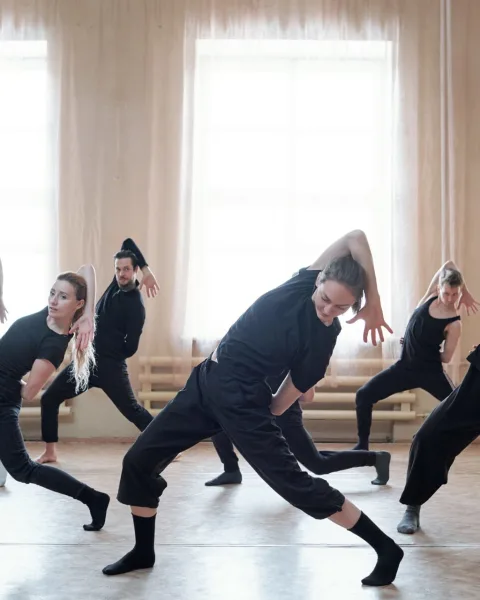 festivalOnly 5 spots leftModern Dance
Anyone who engages intensively with floorwork in contemporary dance quickly realizes that direct contact with the dance floor leaves its mark. Without the right clothing for floorwork training, turns, slides, and weight shifts quickly lead to painful abrasions or bruises. While thin leotards often dominate in classical ballet, contemporary floorwork requires a robust protective layer that minimizes friction and protects joints. The ideal clothing acts as a tool here, allowing you to glide smoothly without restricting your freedom of movement.
A well-thought-out contemporary floorwork outfit relies on layers. Long pants and sleeves protect the skin from friction burns on the dance floor, while strategically placed protectors like a flexible knee pad for contemporary dance cushion hard impacts. Make sure that all pieces fit snugly enough not to slip, but are loose enough to allow for deep lunges and wide splits. Natural fibers like cotton often offer better grip, while synthetic fibers make gliding easier. A smart mix ensures the perfect balance during training.
Knee pads are extremely important for floorwork, as they protect the patella and the surrounding tissue from bruising during hard landings and rotations. They allow for pain-free, fear-free training.
Long pants protect the skin from painful friction heat on the dance floor. In addition, the fabric makes it easier to slide across the floor in a controlled manner, which is hardly possible with bare skin.
Slippery cotton socks are ideal for rotations and slides on the floor. If you need more grip for standing, use special dance socks with rubberized zones or train barefoot.
 Contemporary Floorwork: The Art of Groundwork
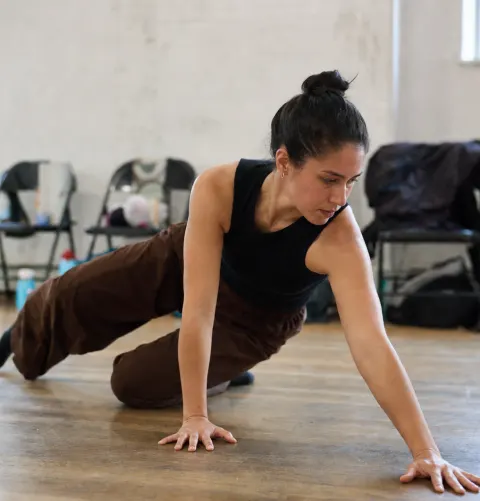 Floorwork mistakes in contemporary: Training safely on the floor
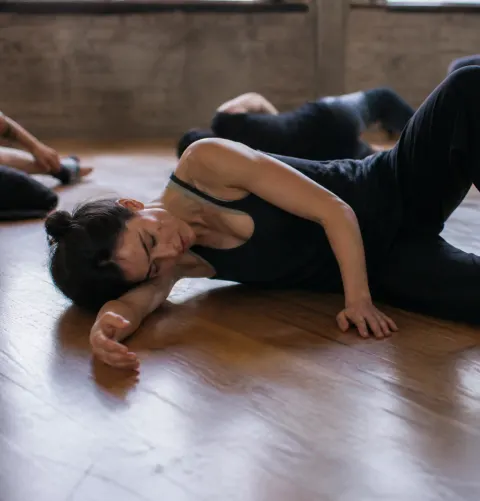 Somatic methods in contemporary dance: Trends
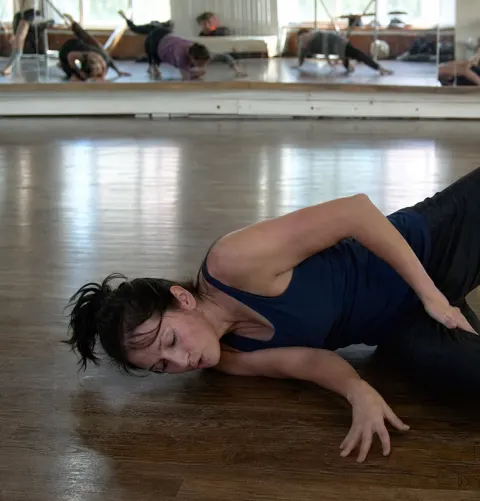 Breathing in Contemporary Dance: Flow and Power on the Floor
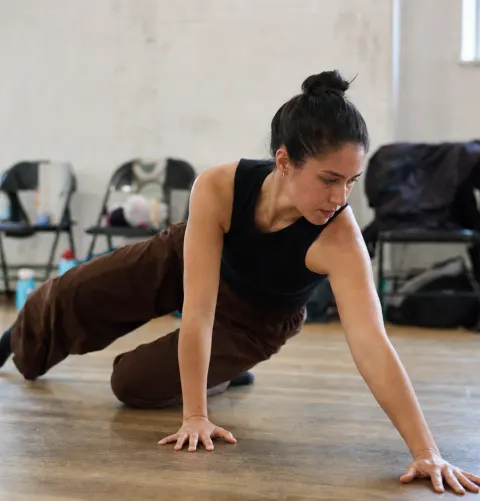 Protecting your joints in Contemporary floorwork: A biomechanics guide
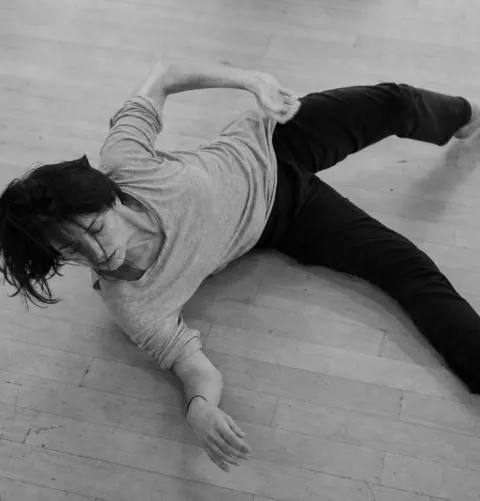 From Standing to Floor: Contemporary Floorwork Guide
 Anatomy in contemporary dance: Understanding the spine

