Floorwork3 minutes

Floorwork mistakes in contemporary: Train safely on the floor

In short
  • Uncontrolled landing with extended wrists quickly leads to painful strains and sprains during floorwork.
  • Unbraked impact of the knees and hip bones can be prevented by using spiral rotations and engaging the core muscles.
  • Holding your breath robs the body of the necessary elasticity and increases the risk of muscular tension and spinal compression.
  • Conscious weight shifting over fleshy parts of the body effectively protects sensitive joints from hard impacts on the dance floor.

Painful bruises and joint pain do not have to be part of your everyday dancing. With the right movement technique, you will glide smoothly and injury-free through every contemporary floor passage.

Our criteria for error analysis

  • Injury relevance

    udansa only lists technical errors that can directly lead to acute or chronic injuries in the dance studio.

  • Biomechanical clarity

    The errors are clearly distinguished from stylistic features and relate purely to biomechanics.

  • Practical solvability

    For every listed mistake, there is a directly applicable, corrective technical exercise.

  • Independence

    This ranking is created with editorial independence and does not contain any paid placements from manufacturers or schools.

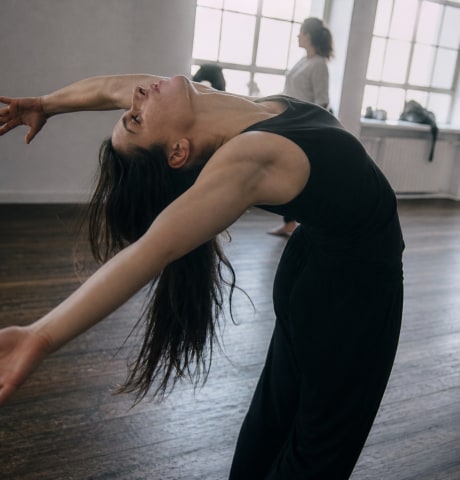
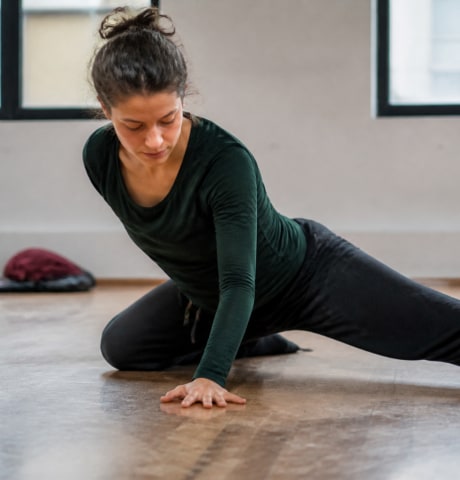
The correct weight distribution in contemporary dance protects your joints and prevents painful impact injuries on the dance floor.

The 5 most dangerous technique mistakes in floorwork

  1. 01

    Blocked bracing with extended arms

    Danger to wrists and elbows

    • Wrists
    • falls
    • support technique

    Anyone who tries to break a fall or a rapid descent with stiff, extended arms puts their entire body weight on their wrists. This quickly leads to painful sprains and tendon irritation.

  2. 02

    Frontal knee impact without rolling

    Danger to the kneecap and meniscus

    • Knee
    • impact
    • rolling

    Direct, unbraked impact of the kneecap on the hard floor causes painful bone bruising. Instead, the movement should be rolled over the outside of the thigh or the buttocks.

  3. 03

    Blocked breathing at the moment of impact

    Danger for the neck and back muscles

    • Breathing
    • tension
    • spine

    Anyone who holds their breath blocks the natural elasticity of the spine and causes the shoulder muscles to cramp. As a result, every contact with the floor hits the body with maximum force, instead of being elastically cushioned.

  4. 04

    Letting the pelvis drop limply

    Danger for the lumbar spine and hips Clarification

    • Core
    • pelvis
    • body tension

    Without activating the deep abdominal and pelvic muscles, the pelvis drops uncontrollably to the floor. This puts strain on the lumbar spine and leads to bruises on the hip bones.

  5. 05

    Uncontrolled head position during lowering

    Risk to the cervical spine

    • Cervical spine
    • neck
    • direction of gaze

    If you throw your head back or let it hang uncontrollably when transitioning to the floor, you risk straining your cervical spine. Your gaze and head position must follow the line of movement.

How biomechanical principles protect your joints

The analysis of our ranking clarifies that the most serious mistakes in floorwork are almost always due to incorrect force distribution and a lack of weight shifting. Anyone who tries to break a fall with their wrists or lets their knees hit the floor without cushioning risks painful strains and bruises. Biomechanics shows that a continuous spiral rotation of the body elegantly dissipates impact energy. If you want to delve deeper into the proper preparation, our guide on the best clothing for your floorwork training will help you further protect your skin and joints from friction. Conscious exhaling at the moment of floor contact also takes the harshness out of the movement and protects the spine from compression.

Safety figures in contemporary dance

Vulnerable main joints during floorwork
3
Criteria for safe rolling
4
Focus on typical sources of error
5

Frequently Asked Questions

  1. Dancers most frequently injure their wrists through abrupt bracing, their knees through hard impact, and their shoulders through incorrect support techniques. A clean spiral rotation distributes the weight and prevents these localized stresses.

Contemporary courses near you

Find the right dance course now to safely train your floorwork under professional guidance.

View all matching courses

Dance safely with udansa

Find like-minded people for contemporary dance on udansa and discover suitable courses in your area to take your floorwork to the next level, injury-free.

Dance safely with udansa