
Find your rhythm with udansa
Meet like-minded people who share your passion for modern beats, and find the right course in your area.



By Mary De LucaUpdated
Meet like-minded people who share your passion for modern beats, and find the right course in your area.
Forget dusty orchestral classics on the dance floor. Discover how fresh pop remixes and electronic beats are taking dance schools and tournaments by storm and breathing new energy into partner dance.
Fashion trends on social media explode overnight and often disappear just as quickly. In the dance world, clocks tick differently. New Samba dance music trends do not establish themselves through viral, split-second clips, but through an organic process that begins in studios and on dance floors. When a DJ at a social or an instructor in a workshop plays a new, driving remix, the spark jumps over slowly but steadily. It often takes months for a new sound to make its way from the first test runs in training to the official tournament playlists. This deceleration ensures that the music maintains a high level of quality: only tracks that can be danced with rhythmic precision while simultaneously captivating the audience survive the journey through dance schools.
Current trends are emerging at the intersection of global pop and electronic club music. DJs and producers take well-known radio hits and underpin them with the characteristic, driving Samba rhythm at the typical tournament tempo of about 50 to 52 bars per minute. Anyone looking for Samba dance school songs today will come across modern cover versions by artists like Dua Lipa or The Weeknd, which have been made danceable through rich bass and synthetic percussion elements. This development leads the dance away from dusty orchestral recordings toward a fresh, urban attitude to life. In the future, this trend will intensify even further, as more and more specialized music producers are releasing custom-made tracks for dance sports that perfectly combine electronics and Latin energy.

Classic radio hits from artists like Dua Lipa or The Weeknd are layered with a continuous, driving Samba beat. These tracks combine the familiar flair of the charts with the rhythmic precision required for partner dance. They are perfectly suited for getting started in dance classes.
More and more producers are integrating urban influences from dancehall and electronic synthesizer sounds into Samba dance sport music. This creates a very powerful, almost club-ready atmosphere on the dance floor. These tracks demand a particularly athletic and expressive presentation from the couples.
Acoustic instruments like guitars or traditional brass are digitally distorted in the studio and combined with rich bass. The result is a hybrid sound that preserves the Latin American soul, but is transported over the hall speakers in a way that is absolutely contemporary and punchy.
In modern competitive dance, the acoustic backdrop has changed fundamentally. Where classical, acoustic instruments used to dominate, high-gloss studio productions now define the scene. Modern samba tournament music combines the traditional two-four time with elements of house, dancehall, and modern R&B. For the couples on the dance floor, this means a completely new dynamic: the hard, electronic accents make it easier to present the speed of the movements precisely. Anyone who wants to be successful in competitive dance must learn to interpret these new sound structures through dance, instead of just relying on the classic counting pattern.
The everyday selection of samba dance school songs also benefits from this modernization. Dance schools use poppy remixes to make it easier for beginners to get into dancing. It is much more motivating to learn the demanding basic step to a familiar chart hit than to a historical piece of music. If you want to deepen your skills in partner dance and try out what you have learned in practice, it is worth taking a look at the offers for Samba in social and competitive dance. With the right choice of music and a suitable partner, training is twice as much fun.
Modern beats bring a completely new energy to the halls. Couples dance much more dynamically today because the music really drives them forward.
Like this
Not like this
In competitive sports, modern Samba dance music ideally moves at a tempo of 50 to 52 bars per minute. This precise tempo is necessary to cleanly execute the fast, dynamic movements and the typical bounce.
Yes, in the lower starting classes and in recreational sports, modern pop remixes are very popular and absolutely allowed. Only in higher special classes or at specific championships do associations sometimes prescribe more traditional music styles.
You can find good playlists on streaming platforms using search terms like Latin competition music or Samba remixes. Specialized dance sport labels also regularly release current albums with modern tracks for training.
Find the right dance class now and learn how to move to modern Samba beats.
Couple danceLimbach-Oberfrohna · Germany
PaartanzkreisFriday · 18:15 · Oct 23
Limbach-Oberfrohna
BallroomMeißen · Germany
Tanzkreis | PROFESSIONALTuesday · 20:15 · Oct 27, 2026 - Jan 5, 2027
“Ein Haus für Vieles” - Saal Tanzkurse
Couple danceLimbach-Oberfrohna · Germany
Silberkurs für PaareSunday · 16:15 · Oct 25 - Nov 15
Limbach-Oberfrohna
 Samba in competitive dance: How judges scoreIf you want to impress at Samba competitions, you need to know the judges' strict criteria. This guide explains what really matters in technique, rhythm, and presentation.
 Mastering Samba bounce technique: Step-by-step guideLearn the essential Samba bounce for an elegant look. Our step-by-step guide shows you how to perfectly execute the bounce from your knees and ankles.
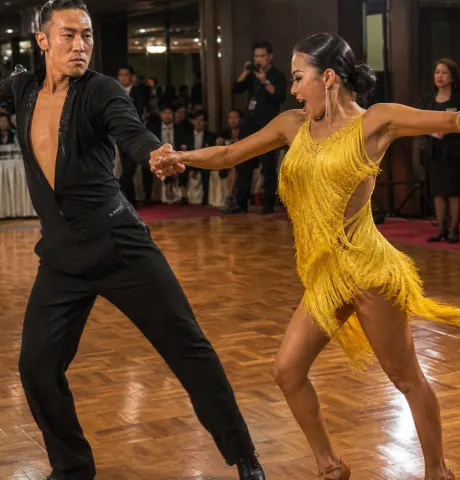 Samba in ballroom and competitive dance: technique & rulesSamba in competitive dance fascinates with its speed and precision. Learn how the Latin American tournament dance differs from the Brazilian social dance.Samba in ballroom and competitive dance: technique & rulesSamba in competitive dance fascinates with its speed and precision. Learn how the Latin American tournament dance differs from the Brazilian social dance.
 Samba Step Limits: Allowed Figures in TournamentsLearn everything about the strict step limits in tournament Samba from class D to S and how to design your choreography in compliance with the rules.
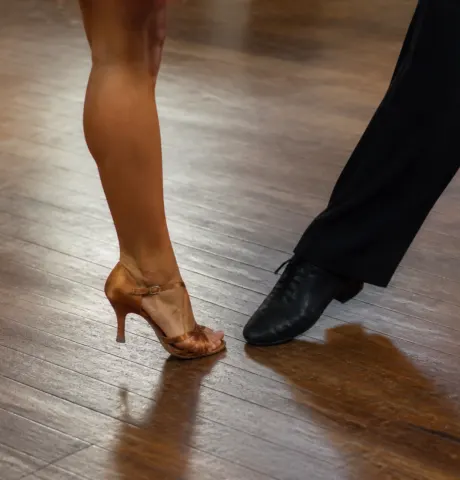 Improve Samba footwork: 5 exercises for fast feetFast feet and precise footwork are the key to success in competition Samba. These five field-tested exercises will take your dance technique to the next level.
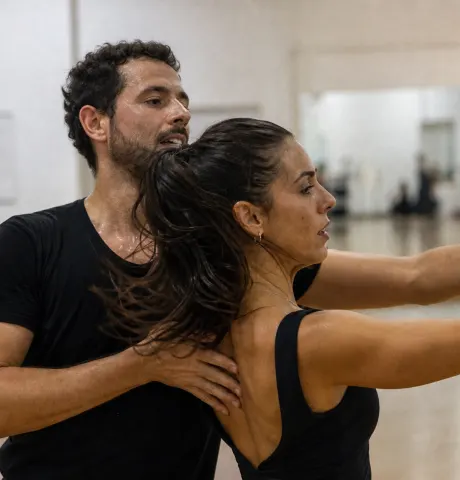 Samba Dance Hold: Perfect Partner Contact in CompetitionThe perfect Samba dance hold in competition requires a delicate balance of stability and dynamics. Learn how to maintain flawless partner contact during fast turns and promenades.
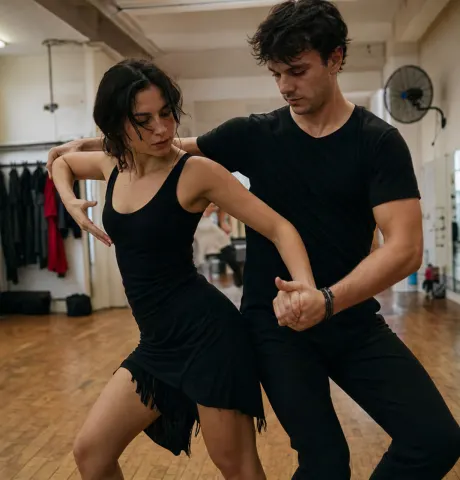 Preparing for your first Samba tournament: Stepping into the spotlightThe step from dance class to the competition floor is exciting and requires a whole new level of preparation. This case study shows how to succeed in your amateur debut.
 Finding a Samba tournament partner: What to look forIf you want to dance Samba successfully in Latin tournament sport, you need the ideal partner. Learn what matters when choosing and how to search systematically.Samba in competitive dance: How judges scoreIf you want to impress at Samba competitions, you need to know the judges' strict criteria. This guide explains what really matters in technique, rhythm, and presentation.