
Find your Samba partner on udansa
Create your profile on udansa and find like-minded people to refine your technique, compete in tournaments, or simply share your passion for Latin dances.



By Bernhard De LucaUpdated
Create your profile on udansa and find like-minded people to refine your technique, compete in tournaments, or simply share your passion for Latin dances.
If you want to shine in competitive Samba, you need razor-sharp precision in every millisecond. These targeted training methods take your footwork to the next level and secure the attention of the judges for you.
Focus on ankles
Every method aims directly at strengthening and mobilizing the foot muscles.
Practical feasibility
The exercises can be performed without a partner and in a small space in the dance studio.
Independent selection
No training method on this list has been influenced by sponsorship or partnerships.
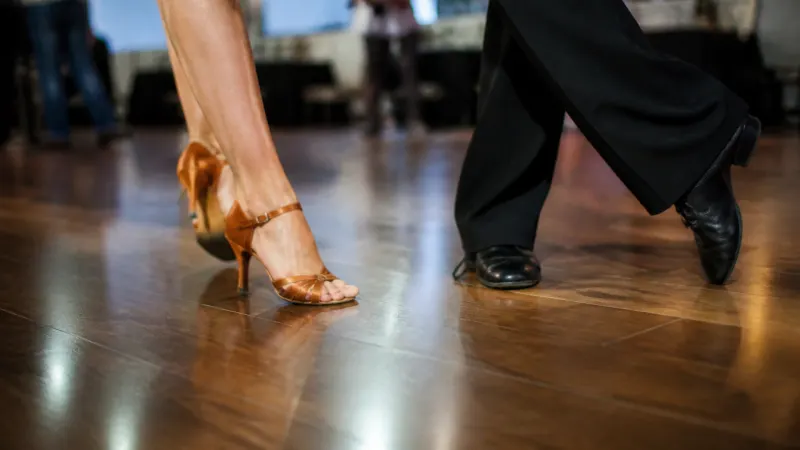
Dance studio, 3 sets of 15 repetitions, without a partner
This exercise strengthens the calf muscles and the tendons in the arch of the foot. You stand barefoot or in dance shoes and push yourself up explosively onto the balls of your feet, hold the tension for a second, and lower your heels slowly to maximize control.
Open space, 5-minute intervals, focus on speed
In this exercise, you move sideways and cross your feet quickly in front of and behind each other. This method trains foot coordination during quick changes of direction and forces you to keep your weight cleanly over the balls of your feet.
Mirror wall, 4 rounds of 30 seconds, high frequency
Your feet remain in close contact with the floor while you shift your weight from one leg to the other in an extremely fast rhythm. This exercise simulates the quick hip and knee work that is essential for the Samba tempo.
Dance shoe training, 10 minutes, slow music
You isolate the forward and backward step of the Samba and perform it in extreme slow motion to control the exact rolling movement of the foot. Only when the mechanics are flawless do you increase the tempo up to the tournament beat.
Dance studio, 3 sets per leg, high concentration
In this exercise, you tap your toe in quick succession in front of, next to, and behind your standing foot, without shifting your weight completely. This trains the independence of your footwork and ensures extremely fast, free feet for tournament dancing.
The speed of your feet in Samba is not decided in the air, but by building pressure against the dance floor. To improve your Samba footwork, you must optimize the power transmission through the ball of your foot. During fast promenade runs or typical station steps, many couples tend to execute their legwork incompletely because they do not extend their knee joints in time. This leads to a spongy visual impression and costs valuable milliseconds.
Focus during training on actively pushing off every step through your big toe before the foot leaves the floor. This conscious footwork provides the necessary stability and prevents slipping on smooth parquet. If you want to specifically improve your Samba in social and competitive dance, you should integrate these exercises firmly into your weekly warm-up program. This way, you automate the precise placement of your feet without having to think about it during a fast choreography in a competition.
To improve your Samba footwork, you should practice isolated ball raises and quick ankle work for five minutes every day. These short but regular sessions strengthen the tendons and muscles in the foot and are the fastest way to achieve a noticeable increase in speed on the dance floor.
At fast tempos, it helps to focus on closing your thighs quickly and pushing off precisely from the standing foot. Shorten your stride length slightly to keep the frequency high without losing your balance over your center of gravity.
A common mistake is placing the heel down on steps that should be danced purely on the ball of the foot. Also, failing to fully extend the knees at the moment of weight transfer robs the movement of its dynamics and makes the footwork look messy.
Find the right course now to systematically improve your technique in partner dance.
Couple danceLimbach-Oberfrohna · Germany
PaartanzkreisFriday · 18:15 · Oct 23
Limbach-Oberfrohna
BallroomMeißen · Germany
Tanzkreis | PROFESSIONALTuesday · 20:15 · Oct 27, 2026 - Jan 5, 2027
“Ein Haus für Vieles” - Saal Tanzkurse
Couple danceLimbach-Oberfrohna · Germany
Silberkurs für PaareSunday · 16:15 · Oct 25 - Nov 15
Limbach-Oberfrohna
 Samba in competitive dance: How judges scoreIf you want to impress at Samba competitions, you need to know the judges' strict criteria. This guide explains what really matters in technique, rhythm, and presentation.
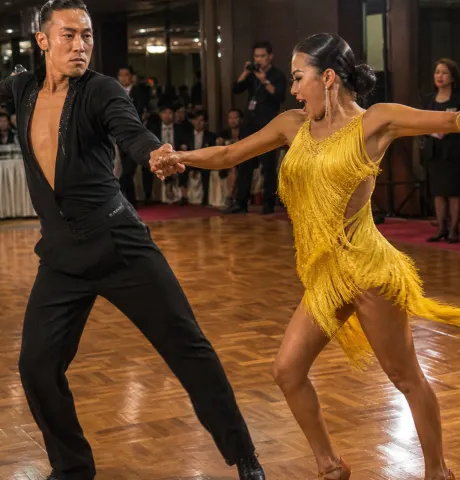 Samba in ballroom and competitive dance: technique & rulesSamba in competitive dance fascinates with its speed and precision. Learn how the Latin American tournament dance differs from the Brazilian social dance.Samba in ballroom and competitive dance: technique & rulesSamba in competitive dance fascinates with its speed and precision. Learn how the Latin American tournament dance differs from the Brazilian social dance.
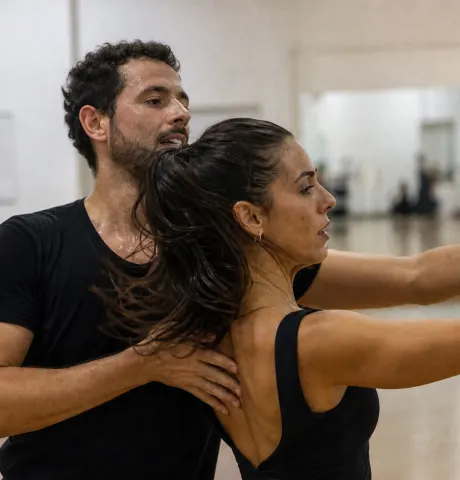 Samba Dance Hold: Perfect Partner Contact in CompetitionThe perfect Samba dance hold in competition requires a delicate balance of stability and dynamics. Learn how to maintain flawless partner contact during fast turns and promenades.
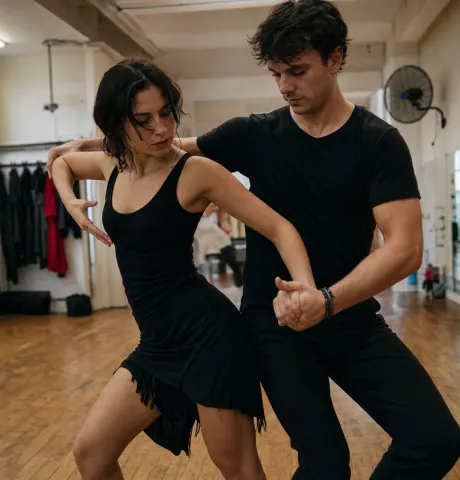 Preparing for your first Samba tournament: Stepping into the spotlightThe step from dance class to the competition floor is exciting and requires a whole new level of preparation. This case study shows how to succeed in your amateur debut.
 Finding a Samba tournament partner: What to look forIf you want to dance Samba successfully in Latin tournament sport, you need the ideal partner. Learn what matters when choosing and how to search systematically.Samba in competitive dance: How judges scoreIf you want to impress at Samba competitions, you need to know the judges' strict criteria. This guide explains what really matters in technique, rhythm, and presentation.
 Mastering Samba bounce technique: Step-by-step guideLearn the essential Samba bounce for an elegant look. Our step-by-step guide shows you how to perfectly execute the bounce from your knees and ankles.
 Avoiding Samba mistakes: The 7 most common pitfallsDancing Samba is fun, but it requires precise technique. Learn here how to avoid typical mistakes in posture and rhythm when dancing in a ballroom setting.