Dance styles5 minutes

Dance styles in Berlin: Which dance fits your rhythm?

By Bernhard De LucaUpdated

In a nutshell
  • Dance styles differ fundamentally in posture, step dynamics, and their relationship to the music.
  • While Salsa, Bachata, and Lindy Hop are based on improvisation and rhythm, ballroom dances and Tango require a precise line of movement.
  • Solo dances like Hip Hop or contemporary dance train individual coordination and personal expression without needing a dance partner.
  • Choosing the right style is best done by following your own musical taste and taking an uncomplicated trial class in Berlin.

From smooth turns in Salsa to the elastic bounce in Lindy Hop and earthy steps in Tango, every style places different demands on your body and mind. If you understand how the directions differ in posture, musicality, and role dynamics, you will choose the dance course from the very beginning that truly suits your personality.

DefinitionDance style

Dance styles refer to historically and culturally developed forms of dance, each with its own step technique, posture, rhythm, and music. They can be roughly divided into social dances performed in pairs and performing or urban solo dances.

Between partner dance and solo: Finding the right direction

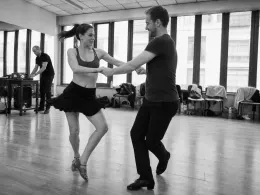
Anyone navigating the options will quickly realize: choosing the right dance style depends heavily on what you are looking for in dance classes. Different dance styles in Berlin appeal to completely different movement patterns and musical preferences. Classic partner dances like Ballroom and Latin require a firm posture and clear sequences of figures, while Salsa and Bachata rely on fluid turns and rhythmic hip work. In Swing and Lindy Hop, on the other hand, a springy bounce and playful improvisation characterize the interaction on the dance floor.

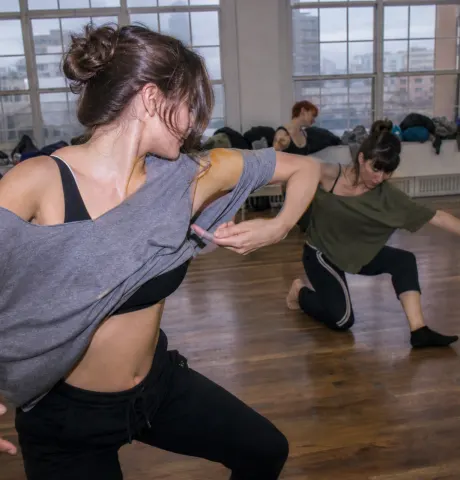
For those who prefer to dance without fixed roles of leading and following, urban styles like Hip Hop or contemporary dance in Berlin offer a completely different approach. Here, coordination, floor technique, changes in dynamics, and personal expression are in the foreground. Which dance style suits you is usually decided by the music: if you listen to jazz, you will feel at home in Lindy Hop faster than with precise Argentine Tango. Test in advance which rhythms intuitively get you moving.

Once you have internalized the basic step, you gain the freedom to improvise musically on the dance floor.

Common misconceptions about technique and prior knowledge

A common misunderstanding concerns the requirements for getting started: many interested people believe they need to be highly flexible or have an innate sense of rhythm for Salsa or Tango. In reality, all established dance styles are built on simple basic steps and clear axes of movement. What is often perceived as natural talent is simply repetition and clean weight transfer.

Equally common is the assumption that partner dance always implies strict gender roles. Modern dance venues and courses have long since separated the roles of lead and follow from gender. Anyone learning to lead or follow is primarily training non-verbal communication through physical contact. The fear that you have to wear special vintage clothing for historical styles like Lindy Hop also persists stubbornly: for class, comfortable everyday clothing and shoes with smooth, spin-friendly soles are sufficient.

Choose the right dance style

How to proceed

  • Choose a style based on the music you enjoy listening to in your private time
  • In trial classes, pay attention to posture and clear instructions on leading
  • In partner dance, learn to be flexible and understand both leading and following roles
  • Pack flat shoes with a sole that allows for easy turning for your first few classes

Common mistakes

  • Booking a dance course just because it is currently trending
  • Stubbornly memorizing choreographies without training your sense of rhythm
  • Avoiding free dancing at socials for months out of shame for making mistakes
  • Training with rubber soles that block your knee when turning

A good dance style is not defined by the complexity of the figures, but by how attentively two people interpret the music at the same tempo.

Dance instructor for partner dance

What matters when choosing a course and dance space

If you are trying out a new style, you should take a close look when choosing a studio. Pay attention to whether the lessons simply string together sequences of steps or teach sound fundamentals like balance, lead signals, and posture. A reputable dance course explains early on how steps originate from your own center of gravity, instead of demanding rigid patterns.

Another quality indicator is trying things out at socials or dance evenings. Styles like Tango, Swing, or Salsa only reveal their appeal outside the classroom. In Berlin, you can find special places for this: on summer evenings, couples dance Tango, Swing, Salsa, and Bachata at the Strandbar Mitte in Monbijoupark right under the open sky, while the historic Clärchens Ballhaus with its mirror hall provides space for a wide variety of partner dances. When choosing a course, pay attention to whether the school encourages you to gain practical experience on open dance floors at an early stage.

Partner dance versus solo dance

Partner dance

Dialogue about body tension

Leading, closeness, and interaction as a couple

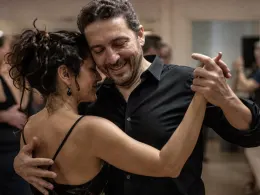
This is about non-verbal coordination as a couple: leading and following, maintaining a shared axis, and spontaneous turns in a confined space require constant attention to your partner.

Solo dance

Focus on your own movement

Expression, coordination and dynamics

Without being tied to a fixed partner, the focus is on your own body control. Choreography, rhythm changes and floorwork are at the center here.

Frequently Asked Questions

  1. Yes, for most social dance courses like Salsa, Bachata, or Swing, you can easily sign up as an individual. During class, partners are rotated regularly so that everyone can practice leading and following with different dancers.

Dance courses for various styles in Berlin

Find the right dance course for partner dance, Salsa, Tango, or urban styles in your area.

Find your dance style in Berlin

Use the filters on udansa to search specifically for courses in Tango, Salsa, Swing, or contemporary dance in Berlin. If you are still looking for someone to dance with, you will meet like-minded people directly in the community.

Find your dance style in Berlin

Everything about dance styles in Berlin: Which dance fits your rhythm?