Argentine Tango5 minutes

Tango Berlin: The guide for Argentine Tango and milongas

In a nutshell
  • Argentine Tango in Berlin is a pure improvisation dance and differs fundamentally from standard tango due to its fluid movements and close communication within the couple.
  • A milonga is a traditional tango event where people dance and where established rules, such as eye contact when asking someone to dance, apply.
  • In addition to traditional milongas, Berlin also plays a pioneering role for modern neotango events featuring contemporary music.
  • Beginners can easily get started through guided prácticas, taster classes before dance evenings, and specialized tango schools in the capital.

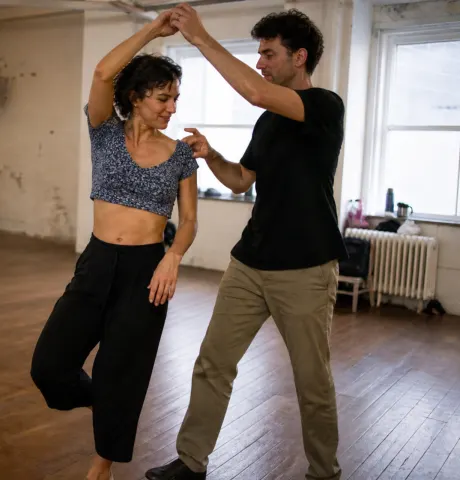
Argentine Tango is not a rigid dance, it is an intimate conversation without words. In Berlin, one of the most multifaceted Tango scenes in Europe awaits you, combining tradition and modernity in a unique way.

Definition
Cabeceo

The cabeceo is the traditional, non-verbal invitation to dance in Argentine Tango. It takes place exclusively through eye contact and a subsequent, confirming nod from a distance.

Berlin's Tango scene is a vibrant cosmos

The Berlin Tango scene is considered one of the largest and most vibrant outside of Buenos Aires. Every evening of the week, you have the opportunity in the capital to immerse yourself in another world. In this context, Tango Argentino differs fundamentally from the European standard tango known from the classic world dance program. While standard tango is based on fixed choreographies, a rigid posture, and march-like steps, Argentine tango is a pure dance of improvisation. It is about subtle, silent communication within the couple, about sensing the music together, and about soft, organic movement in the space.

Anyone who wants to learn Tango in Berlin will quickly realize that the scene is incredibly diverse. From Kreuzberg to Prenzlauer Berg and Schöneberg, there are countless places where this dance is lived. The community is open, international, and fortunately very experimental. In addition to strictly traditional events, a globally pioneering Neotango and Non-Tango scene has established itself in Berlin, opening up the dance to modern beats, electronic sounds, or pop music.

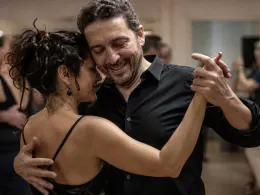
Eye contact is enough: In the traditional cabeceo, dance partners find each other across the room without a word.

The magic of milongas and their subtle rules

Anyone starting with Tango will inevitably stumble upon the term milonga. In Spanish, this word describes both a specific, cheerful musical style in two-four time and the dance event itself. When you visit a milonga in Berlin, you enter a space with its own unwritten laws. A central element of the traditional milonga is the invitation via eye contact, the so-called Cabeceo. Instead of walking across the dance floor and asking someone verbally, dance partners find each other from a distance with their eyes. A slight nod confirms the dance round, the so-called Tanda.

A Tanda usually consists of three to four songs by the same orchestra and from the same era. Between the Tandas, the DJ plays the Cortina, a short, non-danceable piece of music lasting about thirty seconds. The Cortina is the signal for all couples to say thank you, leave the dance floor, and reorient themselves if necessary. This clear structure gives the evening a rhythmic framework and ensures that the dancers keep changing and the dynamics in the room remain lively.

The unwritten rules on the dance floor

Etiquette

  • Make eye contact and wait for a nod
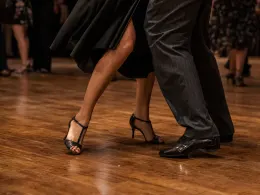
  • Move in the outer lane in the direction of the dance flow
  • After a tanda, say thank you politely and clear the floor

Avoiding mistakes

  • Walking across the dance floor and approaching someone directly
  • Dancing against the flow or constantly changing lanes
  • Stopping in the middle of a tanda without a good reason
udansa tip

When dancing at a milonga, always pay attention to the counter-clockwise line of dance. If it gets crowded, adjust your steps and prefer dancing in a smaller space instead of risking collisions.

Tango in Berlin is like the city itself: extremely diverse, tolerant, and always ready to break down traditional boundaries and experiment with new styles.

Tango teacher, Berlin-Kreuzberg

An easy entry into the Berlin Tango world

For beginners, the variety of offers in Berlin can seem overwhelming at first. The best way to start is with a trial lesson or a so-called Práctica. In contrast to a classic Milonga, things are more relaxed at a Práctica: here you are allowed to talk, correct, and experiment. Many Berlin organizers offer a short introduction right before their Milongas, so you can put what you have learned into practice on the same evening. If you want to learn systematically, we recommend visiting a dance school in Berlin that specializes in the Argentine style.

With Tango Argentino, there are no rigid age limits or physical requirements. Since the dance is based on natural walking, anyone can learn it. Most important is the willingness to engage with your partner and to listen actively. Whether you ultimately decide on the traditional path with classic music from the 1930s or prefer the modern, electronic variations of Neotango, remains entirely up to your personal taste. Berlin offers the right niche for every style.

Two worlds of Berlin Tango compared

Classical

A look at the golden era

Traditional milongas in Berlin

Here, you dance to the classical orchestras of the golden era of Tango. Traditional rules apply, such as the cabeceo for invitations and a respectful line of dance on the floor.

Modern

Limitless musical freedom

Neotango and Non-Tango in Berlin

Here, you dance to modern music, world music, or electro-tango. The dress code is usually more casual, dance postures are more open, and asking someone to dance often happens directly and simply through conversation.

Frequently Asked Questions

  1. No, you can easily go to a práctica or a beginner tango course alone. In the courses, partners are rotated regularly anyway, and showing up solo is absolutely common at Berlin milongas.

Tango courses in Berlin

Find the right course for your start in Argentine Tango in Berlin.

View all matching courses
udansa community

Find your Tango partner in Berlin

On udansa connect, you can find like-minded people in Berlin who share your passion. Connect with the Berlin community and find dance partners for the next milonga or your first Tango course.

Find your Tango partner in Berlin