Ballet in Rome, watch together
On udansa connect, you'll find people in Rome to go to a ballet with and talk about your impressions afterwards.

By Bernhard De LucaUpdated
On udansa connect, you'll find people in Rome to go to a ballet with and talk about your impressions afterwards.
On stage, you see a jump, a gesture, or a precisely aligned line. The decisions behind them usually remain invisible, even though they shape how you perceive an entire ensemble.
Repertoire refers to the selection of works an ensemble has rehearsed and keeps ready to perform. Performing a work from it again still requires rehearsals and may involve a different lineup.
The ballet of the Rome Opera is described in the documented history of the Teatro dell'Opera di Roma as a permanent company. This means a group belonging to the institution, not merely a succession of guest dancers. The history of the Teatro Costanzi and its guests therefore tells a different side of dance from the development of the in-house ballet company.
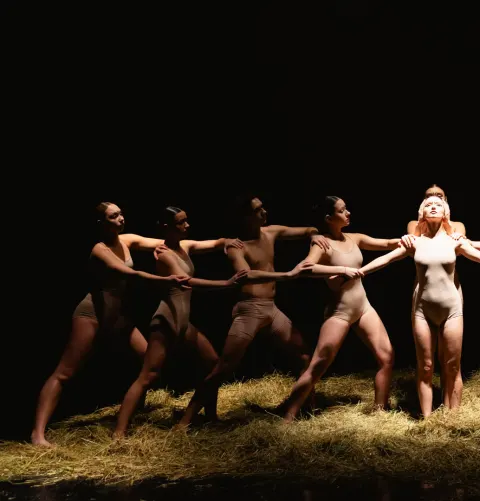
A permanent company can work together across different works. Dance skills remain individual: some roles call for expansive jumps, others for delicate gestures or precise coordination within the group. Shared quality does not come from everyone demonstrating the same solo technique. It also comes from coordinated paths across the stage, musical cues and a clear distribution of attention.
Imagine a diagonal line with a soloist performing behind it. Even a small shift can obscure her path or make the stage picture feel unsettled. These connections explain why a company needs regular rehearsals together. Its work combines individual abilities with an order that you, as an audience member, can see and follow.

The leadership history of the Roman company lists Ileana Leonidov and Dmitri Rostov from 1928. Other documented directors include Aurel Milloss, Maja Plissezkaja and Carla Fracci. Complete terms of office are not available here for these names. Therefore, neither an unbroken succession nor the exact duration of each directorship can be determined from this information.
For Eleonora Abbagnato, the start date is more clearly documented: she took over as director of the company in May 2015. This is a statement about her appointment, not confirmation of the personnel in November 2026. Her role in the history remains clear, without extending an earlier account into the present.
Guido Lauri illustrates a different role. He was the permanent ballet master in charge from 1965 to 1983. Before that, he danced with Attilia Radice in the 1950s in the first performances of classical repertory ballets. Dancing, overseeing rehearsals and leading a company are distinct activities. A biography can include several of them. The documented names therefore tell us not only about stage presence, but also about how knowledge is passed on through the work of an institution.
That's right
Not this way
If you'd like to learn the technique behind stage performance for yourself, you'll find suitable ballet classes in Rome on udansa.
A sense of unity on stage comes from many small decisions that the audience never sees individually.
In general, artistic ensemble leadership involves shaping a direction for the group. Which works suit its abilities? Which demands should be placed side by side? A classical repertoire work may call for different movement qualities than a new choreography. Such decisions affect the development of an ensemble beyond a single evening. Here, they explain the role, rather than attributing a particular program to any of the people mentioned.
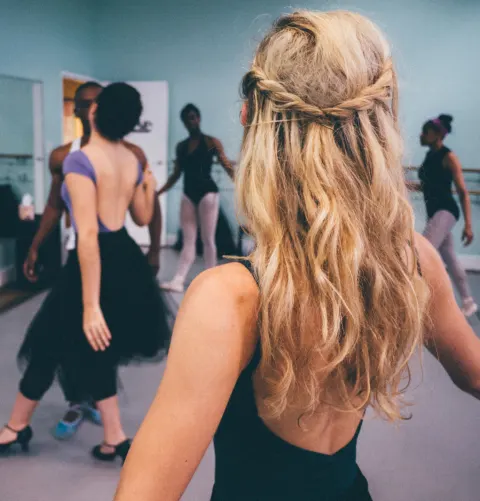
During rehearsals, this direction takes shape. A ballet master, for example, works to ensure that a group carries the same musical phrase. Two dancers can perform the same step correctly and still come across differently if one finishes the movement earlier. Rehearsal brings technical precision together with a shared interpretation.
For you as an audience member, this means: don’t focus exclusively on especially high jumps. A transition, a deliberately staggered movement, or a clear view of a solo role can also show organized collaboration. If you’d like to try out these fundamentals yourself, the guide to dance classes in Rome can help you get started with lessons. A class teaches you technique for your own learning, not necessarily the working conditions of a professional ensemble.
Artistic decisions for the ensemble
An ensemble director considers which works and requirements fit together. They keep the capabilities of the whole group in mind, not just the impact of a solo role. You can see this work in the selection and combination of stage productions.
Music, quality of movement and coordination
A ballet master translates the demands of a work into practical rehearsal tasks. An arm movement may need more time, or a line may need a different spacing. You can see this work when many individual movements come together as a coherent sequence.
No, leading a ballet company does not require the person in charge to perform in every production. A stage role and a leadership role are different activities. That is why a well-known dancer can appear in a company's history as its director without being part of the cast for a particular performance.
A choreographer creates the movement work, while a ballet master oversees its rehearsal and performance. In rehearsal, for example, this involves counting, pathways through the space, and quality of movement. The same person can take on both roles, but they are not automatically linked.
No, a company can dance at the same time, in staggered sequences, or in different groups. What matters is that each entrance and pathway through the space fits the choreography. Staggering the timing is therefore not a mistake: it can make a movement ripple through the company or deliberately draw the eye to a solo role.
Yes, you can understand ballet without any dance experience of your own. Music, directions of gaze, spacing, and repetition give you visible cues. Technical terms are not essential for this; they can later help you describe more precisely why, for example, a group formation feels calm or a movement builds tension.