Partner dance5 minutes

Kizomba in Munich: dance styles, socials, and getting started

By Mary De LucaUpdated

In short
  • The best way to dance Kizomba in Munich is at specialized socials that create a conscious distinction from general Latin parties.
  • Traditional Kizomba and modern Urban Kiz differ fundamentally in posture, music, and step dynamics.
  • A prior workshop makes it easier to get started with dance etiquette and the sensitive handling of the close dance posture.
  • Current courses and dates for Munich can be specifically filtered via the course directory.

If you want to dance Kizomba in Munich, you often search in vain at conventional parties for a real sense of rhythm and posture. At pure socials, it is not the show that counts, but the subtle interplay of leading and following.

DefinitionSocial Dance

Social dance refers to an open dance event where partner dances are performed in a relaxed atmosphere without any competitive nature. The focus is on spontaneous interaction between changing dance partners to the music.

Understanding the differences between the styles

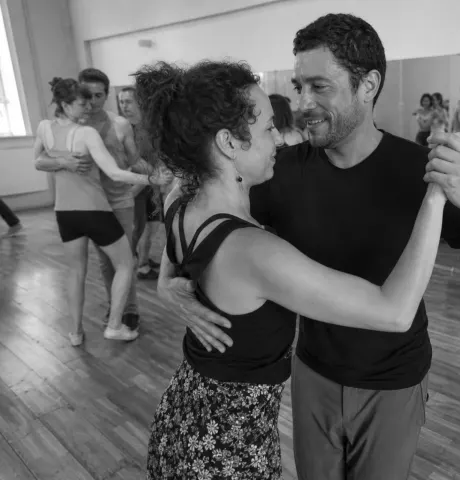
Anyone looking for Kizomba in Munich will quickly realize that the term covers an entire family of dance styles. At first glance, the dance posture seems close and calm, but this impression belies the rhythmic precision involved. Kizomba originated in Angola and is characterized by fluid movements, a grounded posture, and a constant shifting of weight in the hips. At mixed dance evenings, this style is often pushed to the sidelines, as the music requires completely different acoustic spaces than, for example, fast-paced Salsa sound.

Pure Kizomba events therefore create a completely different atmosphere. Instead of fast turns and expansive step combinations, the focus here is on subtle weight transfer. Before you decide on learning to dance in Munich, it is worth taking a look at the musical orientation of the evening, because traditional sounds require a different sensibility than modern electronic beats.
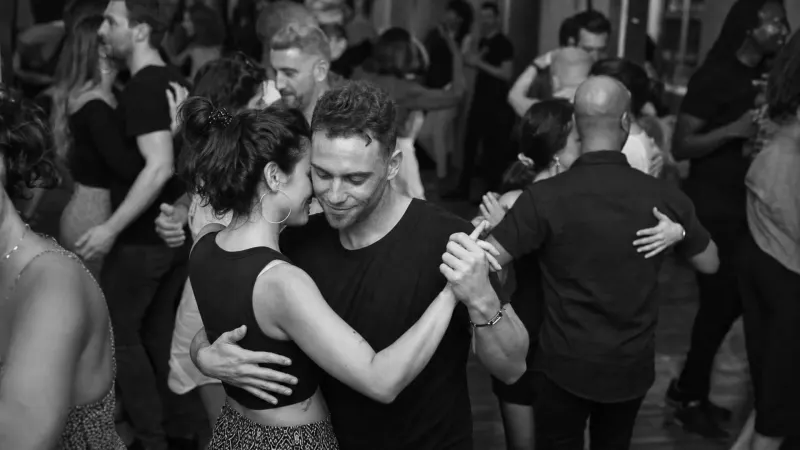
Concentration and subtle signals: In Kizomba, the shared rhythm counts for more than any visual pose.

Urban Kiz focuses on dynamic accents

You will encounter the term Urban Kiz in many announcements. This style developed in Europe and is built on completely different musical foundations. While traditional Kizomba is shaped by African rhythms like Semba, Urban Kiz moves to electronic sounds, trap, Hip-Hop influences, and modern R&B. The dance posture here is significantly more upright, and the footwork includes dynamic stops, changes of direction, and linear step patterns that visually resemble the Tango.

If you are planning to dance Kizomba in Munich, your personal musical taste will decide which social suits you. Traditional evenings challenge you to allow for continuous movement in the upper body. With Urban Kiz, on the other hand, precise isolations in the chest and controlled footwork are required. Those who know the difference avoid disappointment and find the right start on the dance floor.

Behavior on the Kizomba dance floor

Like this

  • Consciously listen to the music style before entering the dance floor
  • Gently adjust your dance posture to the comfort of your partner
  • Wear shoes with soles that allow for easy turning on the dance floor
  • Participate in a preparatory workshop before the party

Don't do this

  • Force fast turns regardless of the style
  • Impose physical closeness without the partner's consent
  • Go onto the dance floor with non-slip rubber soles
  • Start impatiently without a feel for the beat

Kizomba is not about running through patterns, it is about consciously feeling every single step in harmony with your partner.

Dance teacher for Kizomba and Urban Kiz

What matters in social dance

A pure Kizomba social follows its own unwritten rules. Because the dance can be performed in a close embrace, mutual respect plays an outstanding role. Invitations to dance are usually made discreetly through direct eye contact or a calm request at the edge of the floor. It is just as natural to choose the distance within the dance pair so that both partners feel safe and respected.

For newcomers, a Kizomba workshop in Munich led by experienced instructors is often recommended before a party. Beginners not only learn the step sequences there, but also how to properly gauge contact within the pair. Those who want to deepen their Kizomba learning in Munich should look for course offerings that provide solid foundations in leading and following technique, in order to be able to react flexibly to different partners on the dance floor. Appropriate clothing and suitable footwear with smooth soles also make it easier to turn cleanly on the dance floor.

Two dance styles in direct comparison

Traditional

Kizomba

Grounding and soft movements

This style is characterized by a grounded posture, continuous hip movements, and African rhythms. The connection between both partners remains soft and fluid throughout the entire dance.

Modern

Urban Kiz

Precision and tempo changes

This style focuses on more upright axes, electronic beats, sudden stops, and linear footwork. It requires precise isolations and playing with rhythmic syncopations.

Frequently Asked Questions

  1. Kizomba is danced upright, but with bent knees and constant floor contact. The movement originates in the pelvis and weight transfer, while the upper body remains calm. Fast spins take a backseat to precise footwork.

Kizomba courses in Munich

Find the right class or workshop for your start in Munich.

Find your Kizomba dance partner online

Create your personal profile, discover like-minded people in Munich, and arrange to meet up easily for the next social.

Find your Kizomba dance partner online

Read more