Dance acrobatics5 minutes

The role of the lifter: lift technique in detail

In a nutshell
  • The lift technique for the base is based on the optimal alignment of your own bone structure instead of pure muscle power.
  • The base directs the partner's weight directly into the floor through extended joints and active body tension.
  • The lifting movement is initiated explosively from the legs, while the pelvis remains upright to protect the lower back from injury.
  • Through a firm grip and constant eye contact, the base controls the shared center of gravity throughout the entire figure.

Lifts are fascinating because of their apparent weightlessness, but the key to success lies on the ground. Only the precise technique of the lifter makes it possible to present spectacular poses safely and elegantly.

DefinitionBase partner acrobatics

The base in partner acrobatics, also known as the carrier, is the partner who maintains contact with the ground during a lift or pyramid and supports, stabilizes, and secures the weight of the partner.

The foundation of acrobatics is bone alignment

Anyone who only stares at the flyer during a lift in show dance or Acro Dance overlooks the actual foundation of success. The entire technique for the base in lifts is based on physical laws that go far beyond mere muscle power. A good base does not carry with their arms, but transfers the partner's weight directly into the floor via their own bone structure. As soon as the joints are not exactly stacked on top of each other, the muscles have to compensate for the misalignment, which quickly leads to exhaustion or injuries.

The foundational work begins with a solid stance. The feet are usually a little more than shoulder-width apart, the knees are slightly bent to cushion dynamic weight shifts. This position allows the base to act like a shock absorber and compensate for unforeseen movements in a fraction of a second. If you want to get fit for this demanding discipline, you can put your own physical condition to the test with the acrobatics fitness test dance.

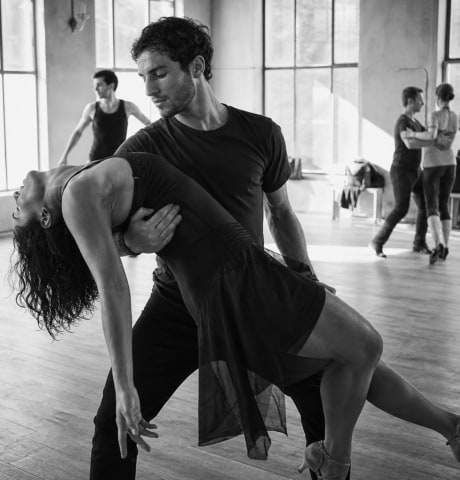
Protecting the spine and aligning the pelvis

A common mistake in lift technique is lifting with a hollow back. As soon as the pelvis tilts backward, the spine loses its protective stability, and the strain shifts directly to the lower back. The base in partner acrobatics must always actively align their pelvis and maximally engage their gluteal and abdominal muscles. This is the only way to create an unyielding column that can safely support the additional weight.

Furthermore, grip contact is crucial. Hands and wrists must not bend passively, but instead form a firm, active unit with the forearms. The base partner in a lift grips firmly, without cutting off the partner's blood circulation. Every grip point serves as a communication channel: through the pressure of the hands, the base immediately feels where the partner's center of gravity is shifting and can counteract it before any instability becomes visible.

The most important rules for the carrier in comparison

Correct

  • Stack your joints exactly on top of each other
  • Initiate the lifting movement from your legs
  • Straighten your pelvis and engage your core
  • Lead your partner close to your own body

Incorrect

  • Hold the weight with bent arms
  • Lift the move using only arm strength
  • Arch your back under strain
  • Catch your partner with outstretched arms

A good base is like an oak tree: deeply rooted in the ground, absolutely steady in the axis, but flexible enough in the knees to cushion every storm.

Trainer for show dance and acrobatics, Cologne

Power transfer from the legs instead of the arms

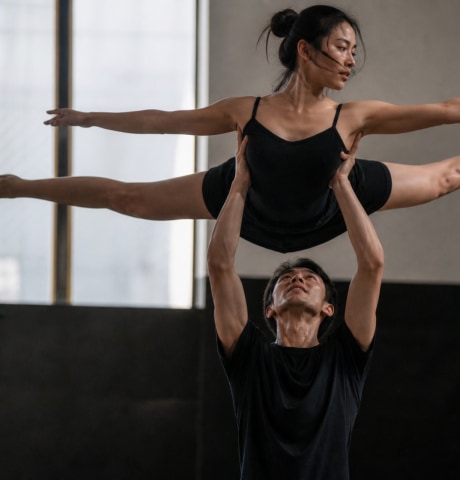
The dynamic phase of a lift poses the greatest challenge for the lifting technique. The momentum for the lift never comes solely from the shoulders or arms, but is generated by an explosive extension of the legs. The lifter uses the impulse from the floor, directs it upwards through a stable core, and gently catches the movement at its highest point.

Safety is the top priority here. If a move becomes unstable, it is the lifter's responsibility to bring the partner back to the ground in a controlled manner and on their own feet. Anyone wanting to train these complex sequences as a duo should proceed systematically. On udansa, you can specifically find a suitable acrobatic dance partner to work on the technical foundations together in a safe environment and at the right pace.

The two dimensions of the leader role

Supporting

Stability and power transmission

The supporting base on the floor

The supporter focuses on firm anchoring in the floor, the alignment of the joints, and absorbing weight through the legs.

Securing

Balance and communication

Reactive balance in space

The leader reacts sensitively to shifts in the center of gravity, corrects minimal fluctuations non-verbally, and actively secures the partner.

Frequently Asked Questions

  1. The power for lifts comes primarily from the legs and gluteal muscles. The lifter uses an explosive extension from a slight squat to propel the partner upward, while the arms merely stabilize and fix the weight.

Acrobatics courses near you

Find the right course on udansa now to train your lifting and carrying technique professionally.

View all matching courses

Find your partner for Acrobatics

Here you can meet other dance enthusiasts who share your passion for acrobatics and find experienced instructors who will teach you the lifts and underpartner technique from scratch.

Find your partner for Acrobatics