Show dance trends4 minutes

Lift trends 2026: Dynamics and new poses

In short
  • The 2026 lift trends are moving away from static poses and focusing on continuous, fluid movement sequences.
  • Modern lifts emerge directly from the dance movement and use the couple's kinetic energy for the ascent.
  • The trends combine elements of partner acrobatics with contemporary dance styles for maximum dynamics on the dance floor.
  • Safety and harmonious transitions are the focus of the new tournament season choreographies.

Dynamic transitions and fluid poses define the 2026 tournament season. Learn how modern choreographies seem to defy gravity and how you can safely bring the new trends to the stage.

How trends on the dance floor really emerge

Dance trends behave differently than the fleeting hypes of social media feeds. While a new dance step can go viral on a smartphone screen overnight, development in competitive dance requires months of testing in training halls and at workshops. Lifts are the best example of this conscious deceleration: a new pose or a novel transition only becomes a trend once it has proven itself in competitions under the critical eyes of judges and can be safely taught by specialized instructors. Evolution in show dance therefore takes place steadily and in a controlled manner on the dance floor, rather than unprepared in short video clips.

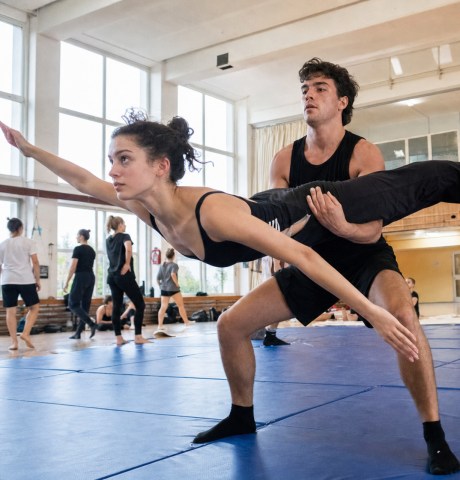
The trends of the current 2026 tournament season are emerging from a constant exchange between contemporary dance, classical acrobatics, and urban influences. Today, choreographers are specifically looking for ways to break up the static poses of the past. The trend is moving away from rigid lifting moments toward continuous movement, where the lift emerges seamlessly from a turn and slides directly into a floor element. This requires an extremely high level of dynamics and flexibility from both partners, but it creates a completely new, fluid overall image on stage that seemingly defies gravity.

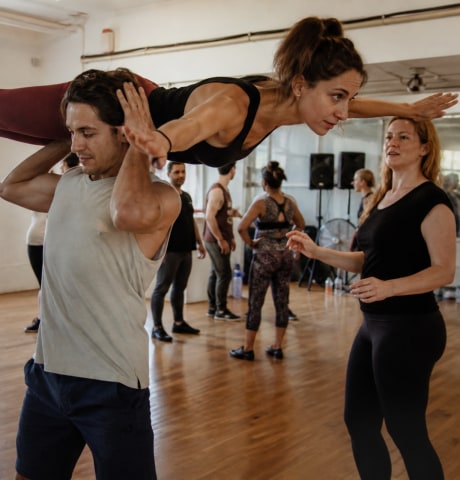
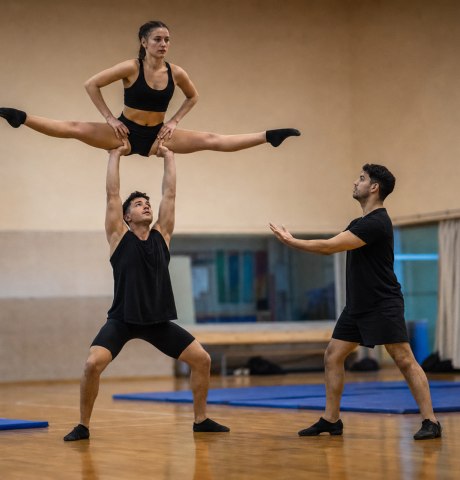
The perfect balance in the air requires precise timing during the jump and a continuous movement of the entire couple.

The most important movement trends of the season

  • Fly-to-Floor Transitions

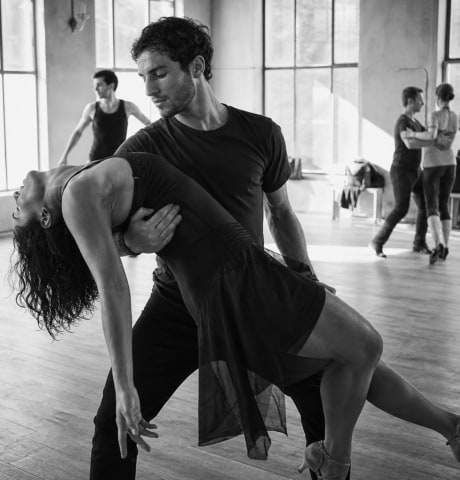
    This movement skips the classic landing after a lift. The lead glides directly from the air into a controlled floor element, which creates an extremely fluid and uninterrupted image on stage.

    • Contemporary
    • Floorwork
    • Flow
  • Rotational Elevational Poses

    In this case, the lift is initiated by a continuous rotational movement of the base partner. Centrifugal force is used optimally to guide the flyer into an elegant, floating pose with minimal effort.

    • Rotation
    • dynamics
    • momentum
  • Asymmetric Air Shapes

    These modern poses are characterized by asymmetric lines and unexpected angles. Instead of the classic, symmetrical extension in the air, geometric shapes are created that cause a stir, especially in contemporary show dance.

    • Asymmetry
    • aesthetics
    • Modern Dance

The art of seamless momentum transfer

Executing these fluid transitions requires a precise understanding of momentum transfer and timing. If you want to try out the new, dynamic poses, you have to let go of the idea that lifting is purely about muscle power. Instead, it is about redirecting the kinetic energy of dancing together directly into the lift. A common mistake when performing modern choreography is stopping abruptly before the jump, which disrupts the flow of the performance and wastes energy unnecessarily.

To get started in this dynamic world, we recommend targeted training that systematically builds the transition from standing to being in the air. If you already have experience with basic body tension, as described in the article Body tension as a flyer: technique for the top partner, you can use this foundation to safely master the complex torques of the new season. Only through the perfect interplay of momentum and tension do modern figures unfold their full effect on stage.

The lifts of the new season thrive on the illusion that the transition into the air happens completely effortlessly. Whoever stops, loses the flow.

Judge and choreographer, Cologne

How to master modern lifts in show dance

Correct

  • Initiate the lift directly from the flow of the dance
  • Actively use the partner's momentum
  • Dance soft transitions back to the floor

Wrong

  • Stop completely before jumping
  • Force the move using pure muscle power
  • Land abruptly on the dance floor after the lift

Frequently Asked Questions

  1. In 2026, fluid transitions will dominate, where lifts emerge directly from turns and flow into floor work without interruption. Static poses are increasingly being replaced by dynamic movement sequences.

Acrobatics and show dance courses near you

Find the right course on udansa to learn lifts and modern choreographies professionally.

View all matching courses

Find your partner for taking off

On udansa, you can find the right dance partners, clubs, and workshops to train modern acrobatics and dynamic choreographies in a safe environment.

Find your partner for taking off