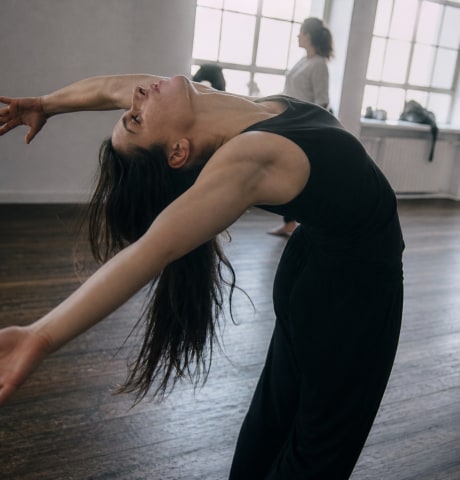
The physics of sliding in contemporary dance
Anyone moving in contemporary dance quickly realizes that the floor is not an obstacle, but an extension of the space. To learn how to slide fluidly and elegantly across the floor in contemporary, you must deliberately minimize the friction between your body and the dance floor. Many beginners try to push themselves across the parquet or sprung floor using pure muscle power. This not only leads to unsightly jerky movements, but often also to painful skin abrasions and bruises. The key lies in biomechanically correct weight distribution.
When you learn to shift your weight onto the bony structures that lie flat on the floor, while simultaneously using soft muscle areas as buffers, an effortless dynamic is created. Before you attempt complex movements, however, you should train your fundamental body awareness in dance. Only those who can feel which parts of their body are touching the floor can precisely control the pressure. In addition, targeted activation of your core, as described in the guide activating the contemporary dance center, helps you build the necessary stability for long sliding paths.