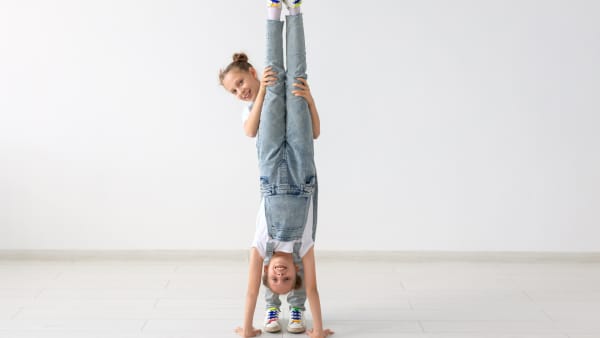
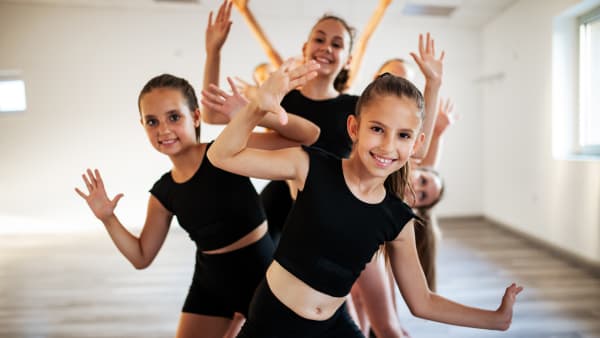
Rolling, jumping, balancing – acrobatics lets children rediscover their bodies
Getting strong while having fun
Coordination, muscle tone, and self-confidence grow playfully
Safely guided
Age-appropriate courses with clear structures and plenty of room for experimentation
Climbing,rolling, balancing, and building self-confidence in the process
Acrobatics for children combines movement, strength, and coordination in a playful way. In a safe environment, children learn to gain better control over their bodies, try out new things, and grow beyond their limits with a great joy of movement and completely free from performance pressure.
Acrobatics strengthens children physically and mentally. Through varied exercises, they learn to use their bodies consciously, maintain balance, and coordinate their movements. At the same time, acrobatics fosters courage, concentration, and perseverance. Children experience a sense of achievement, learn to deal with minor challenges, and gain confidence in their own abilities.
Howdoes an acrobatics class for children work?
A typical class begins with playful warm-ups and simple movement exercises. This is followed by age-appropriate acrobatic elements such as rolls, supports, balancing, or small jumps. Many courses combine individual exercises with partner or group tasks. To conclude, there is usually a group game or a quiet phase to wind down.
has a great urge to move
enjoys climbing, jumping, or gymnastics
should develop physical strength and coordination
could benefit from becoming more courageous and self-confident
enjoys challenges
wants to experience movement without competition
FAQabout acrobatics for children
01
Acrobatics is generally suitable for children from about 5 or 6 years of age. At this age, children usually have sufficient body control to safely perform simple acrobatic movements. The courses are structured according to age and are based not only on the child's biological age, but also on their individual development.