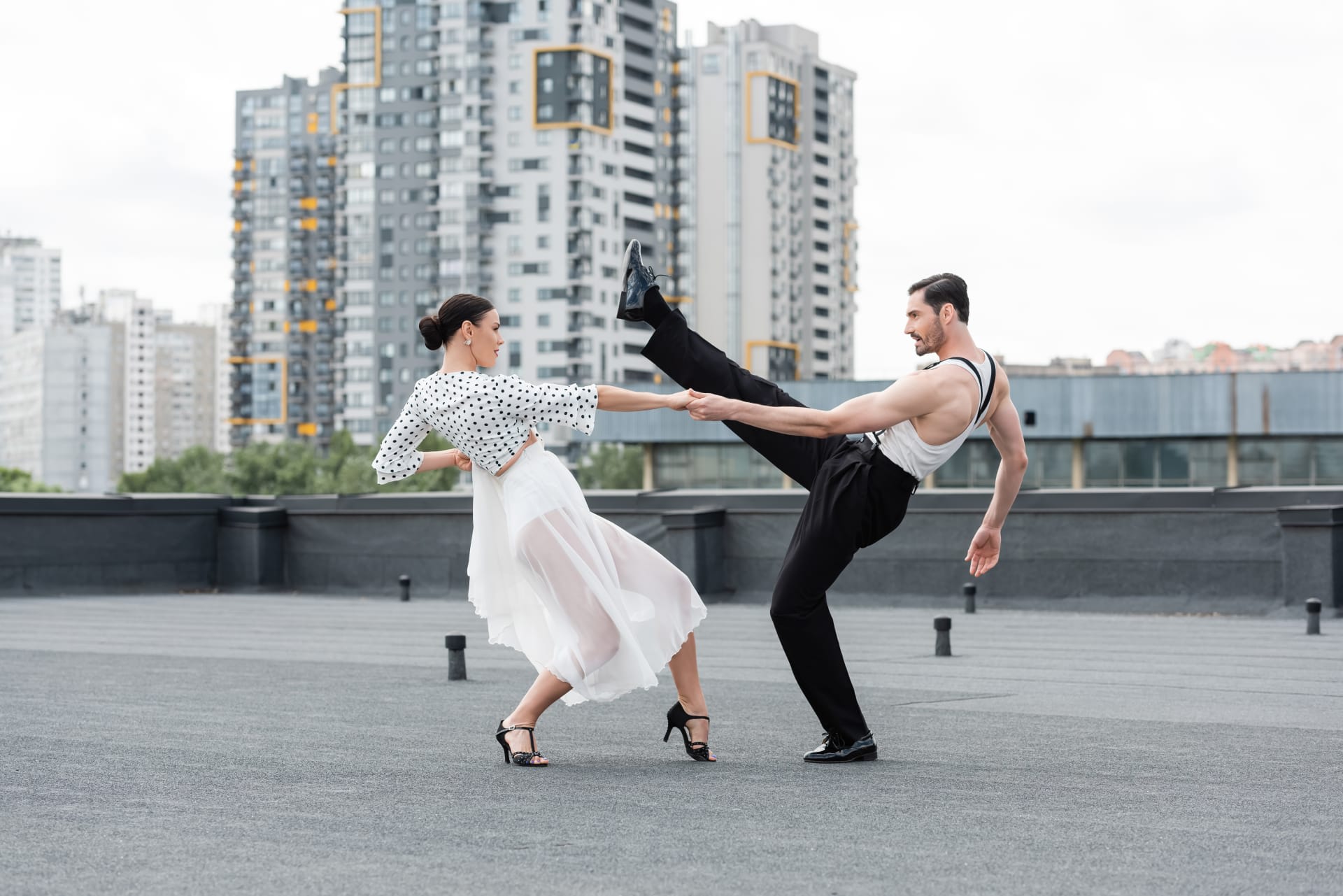
The typical back-and-forth kicks are the trademark of this global success
Solo or in pairs
Charleston works wonderfully alone as "solo jazz" or as a dynamic couple dance
Freedom & Rebellion
The symbol of emancipation and the exuberant parties of the 1920s
ExperienceCharleston
Named after the harbour city in South Carolina, the Charleston took the world by storm in the 1920s. With its isolated movements, swaying arms and X-legs, it broke all the rules of "proper" dancing at the time. Today, it is the perfect addition to any swing dancer's repertoire.
FindCharleston dance classes in your area
Discover the best dance classes for Charleson in your area and start dancing.
Think of "The Great Gatsby": ragtime, hot jazz of the 20s and later the classic swing of the 30s. The music is syncopated, cheeky and immediately invites you to tap along.
Discovermusic for Charleston
01--:--
02--:--
03--:--
Charlestondance steps
At the heart of the Charleston are the distinctive 8-count kick steps that give the dance its unmistakable energy. The flowing back-and-forth movement is typical, with the legs marking the rhythm with springy kicks. This is complemented by the famous "twist": the active turning in and out of the balls of the feet and heels creates the playful look that is so typical of the 1920s.
Charlestonis exactly your dance if you...
love the flair of the "Roaring Twenties
want to improve your coordination and body control
want to shine on the dance floor without a partner
FAQabout learning to dance the Charleston
01
The 20s Charleston is usually danced to very fast hot jazz, is often more upright and can be danced wonderfully solo (as a show dance). The Lindy Charleston from the 30s/40s is flatter, more down-to-earth and was integrated into the Lindy Hop. In dance classes, you often learn both facets, as the typical kick steps and the "twist" movement of the feet form the common basis.