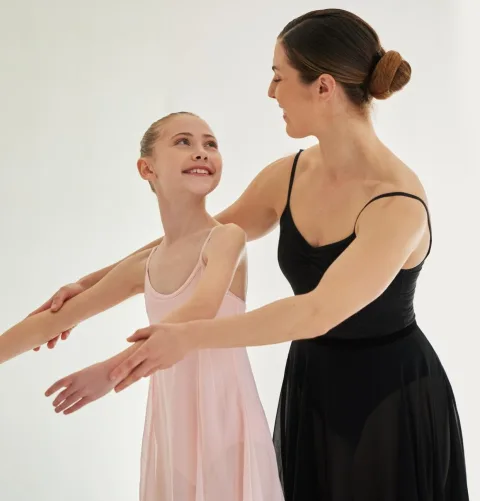
Learn with clear instruction in Rome
On udansa, you can find dance classes in Rome to bookmark as you search for classes. With your specific language needs in mind, you can turn an interesting option into a focused inquiry.

By Bernhard De LucaUpdated
On udansa, you can find dance classes in Rome to bookmark as you search for classes. With your specific language needs in mind, you can turn an interesting option into a focused inquiry.
A turn may look clear when it's demonstrated. But when it comes to the foot carrying your weight, timing to the music, or a correction to your posture, having a shared language of instruction makes a noticeable difference.
When looking for a course in Rome, it helps to distinguish language by its role. The first role is explaining a movement: Which foot carries the weight, when does the turn begin, which way does the upper body face? Demonstrations show you the form, but not always the crucial difference. When watching in reverse, you can also confuse right and left. The guide to copying dance movements explains these kinds of observation errors.
The second role is personal feedback. “Smaller” might refer to your step length, not your arm movement. “Later” might refer to the weight shift, not the start of the whole sequence. That’s why you need clear instructions exactly where you’re meant to make a change. A brief explanation in English may be enough, even if the group instructions are in Italian.
The third role is organization: registration, terms of participation and changes also need to be clear. However, English at reception does not guarantee movement explanations or corrections in English from the instructor. An English course title is no proof either. The overview of dance courses in Rome can help you choose a class format; the language agreement is something to confirm for your specific course. What matters is the support that is actually promised, not the language shown in an advertisement.
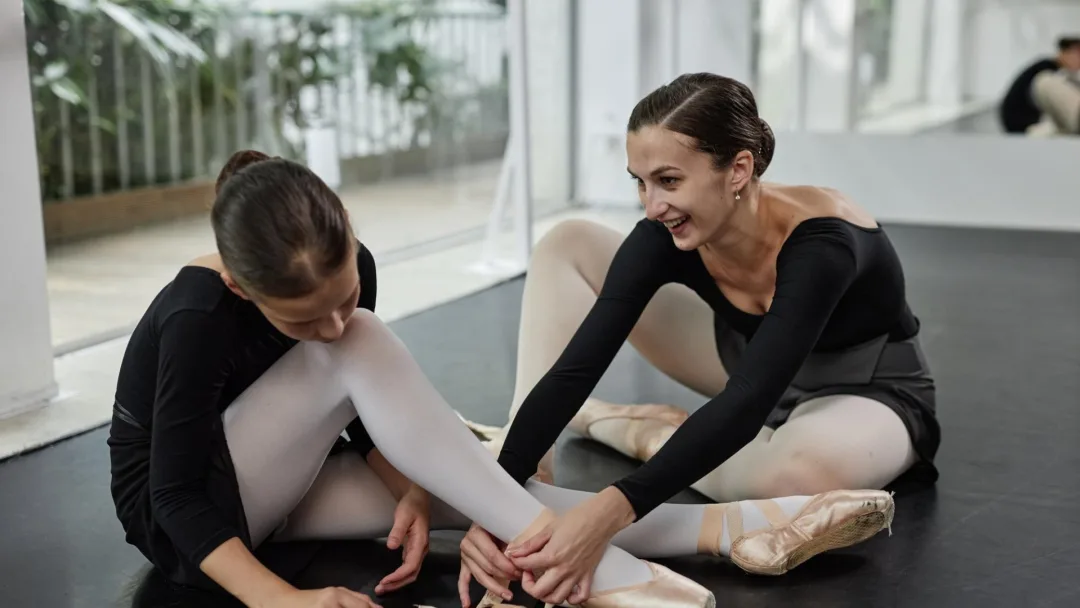
Choose a course on udansa in Rome and note the course name and class format. Frame your question about language around this offering, so a general statement about English skills isn't mistaken for a guarantee about your lessons.
Write down what you need in terms of language: full explanations in English or brief explanations in English when you have trouble. Add your actual level, for example: „I understand everyday English, but dance terminology is new to me.“
Send this template once, including the course name and your previous experience: „Hello, I’m interested in [course]. My experience is [level]. Can the teacher explain movements and give individual corrections in English? Can registration and course changes be handled in English? I understand that group instruction may remain in Italian.“
Classify the commitment under explanations of movements, individual corrections, and organization. “We speak English” leaves the scope open; “the teacher can explain difficult parts in English” describes limited support. Treat missing information as unconfirmed, not as an implicit commitment.
Based on the needs you noted, decide whether the answer is sufficient. If you need all explanations in English, an occasional translation isn't enough. If brief additions are enough, the group's main language doesn't have to be a dealbreaker for you. Save the answer with the course name.
For class, write down “weight” for weight, “step” for step, and “turn” for turn. Add “Could you show that slowly?” and “Which foot carries the weight?” That way, you’ll have specific phrases instead of a long list of vocabulary.
During your first class, slowly put an understood correction into practice and briefly name the change, for example, “smaller steps”. Your movement shows whether you understood the suggestion correctly. If the meaning is unclear, pause that movement instead of dancing on faster.
On udansa, you'll find current classes and dates in Rome, without assuming that a listing offers instruction in English.
This way, yes
Not like this
Preparation
Classification
Lessons
No, “international” does not confirm that the class is taught in English. The label may refer to the participants, the music or the class’s focus. For your specific class, rely on an explicit confirmation of the language. An international group may still receive shared instructions in Italian, while individual explanations are given in another language.
Basic English may be enough if you understand short movement instructions and the promised support suits your needs. Useful words include those for body parts, direction, weight and timing. Technical terms are easier to understand when paired with a demonstration. Conversely, being able to hold a fluent conversation alone says little about whether you can immediately apply a technical correction.
A personal correction in English clearly explains what you should change in your own movement. It may refer to your supporting foot, your step length or your timing with the music. A simple “good” is praise, not a technical correction. A helpful instruction is one whose effect you can notice in your next slow attempt.
Watching can help you understand movement patterns, but it cannot reliably replace every technical instruction. A weight shift may look small and still determine the entire step that follows. Turning direction and demonstrations performed as a mirror image can also be misleading. So use observation to supplement clear explanations, especially for weight bearing, partner contact and quick changes of direction.
You do not need to memorize a complete Italian dance vocabulary before your first class. A short English phrase sheet is enough to prepare for the agreed English-language support. Later, write down the terms that actually come up in class, each alongside a specific movement. This helps your understanding grow in line with the class instead of relying on an arbitrary word list.
A written translation is more helpful during a break than in the middle of a movement sequence. Reading can easily make you miss the musical cue and lose sight of the demonstration. Write down unfamiliar words after the sequence and connect them to the action they refer to. If an instruction about weight bearing is unclear in the moment, pause first.
 Dance Classes in Rome: Which Class Is Right for You?
 Contemporary Dance Kurs in Rom: Was Unterricht vermittelt
 Get Ready to Dance Again in Rome
 Kids' Dance in Rome: Play or First Technique Exercises?
 Which Dance Class for Teens in Rome Is Right for You?
 Senior Dance Classes in Rome: Pace and Effort
 Request a Wedding Dance Course in Rome