Find your partner for lifts
Here you can find like-minded people who want to work on perfect synchronicity with you and share the fascination of dance acrobatics.

By Bernhard De LucaUpdated
Here you can find like-minded people who want to work on perfect synchronicity with you and share the fascination of dance acrobatics.
If lifts feel clumsy, it is rarely due to a lack of strength. It is almost always a question of timing, which is created through shared breathing and a precise impulse.
Anyone who has ever seen a spectacular lift often assumes it is pure muscle power behind it. But in the practice of partner acrobatics, a completely different factor determines success or failure: the exact interaction at the moment of takeoff. If the movement is not initiated at the exact same time, the energy dissipates and the figure feels heavy and uncontrolled. The key lies in coordinating breathing and a precise, shared rhythm. Only when the base and the flyer act in the exact same fraction of a second does the weightlessness that defines successful acrobatics emerge.
A synchronous jump in dance is based on the subtle perception of the other person. Before any physical strength is applied, both partners must internalize the same beat. To develop this intuition, it helps to first focus on the basics of movement coordination, as taught for example in the Cunningham technique for precision in dance. Only when the joint preparation works blindly does the transition into the air succeed without loss of power.
Stand in the starting position and begin to consciously breathe deeply into your belly. Adjust your breathing rate so that you are breathing completely in sync, in order to harmonize your heart rate and muscle tension.
Lower yourselves together in a controlled manner while exhaling. This "plié" serves as an elastic spring: it must be performed by both partners at exactly the same depth and at the same tempo to optimally bundle the energy.
Use a short, agreed-upon signal such as an emphasized inhalation or a light pressure of the hand. Push off the floor explosively at that exact moment to carry the rising energy into the lift together.
As soon as the upward movement begins, the flyer stabilizes their core, while the base extends the movement straight upwards. The built-up energy now carries the move into the air almost by itself.
Find the right course to take your technique and timing in partner dance to the next level.
Student DancePenig · Germany
Aufbaukurs Penig Schuljahr 2026/27Monday · 14:30 · Nov 9, 2026 - Jan 25, 2027
Penig
Modern Dance for kidsBerlin · Germany
Modern Dance & Akrobatik ab 10 J.Wednesday · 17:00 · Nov 11
Flow Motion Studio Wedding
Couple danceLimbach-Oberfrohna · Germany
PaartanzkreisMonday · 17:45 · Nov 9
Limbach-Oberfrohna
Like this
Not like this
Preparation
During
Breathing is the most important timing mechanism for synchronicity. By exhaling together during the descent and inhaling explosively during the jump, both partners coordinate their muscle tension and movement rhythm without words.
If the flyer jumps too early, the lifter cannot yet support the lifting movement, which makes the figure unstable. If the flyer jumps too late, the lifter has to lift the entire weight from a standing position, which requires an enormous amount of strength.
A short, audible exhale or a minimal pressure impulse through the hands are excellent methods. During training, a clear, quiet count also helps to establish the shared rhythm for the jump.
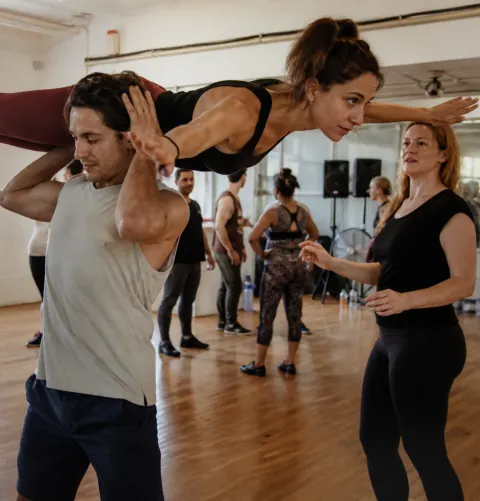 Learning lifts: Take off safely in show dance
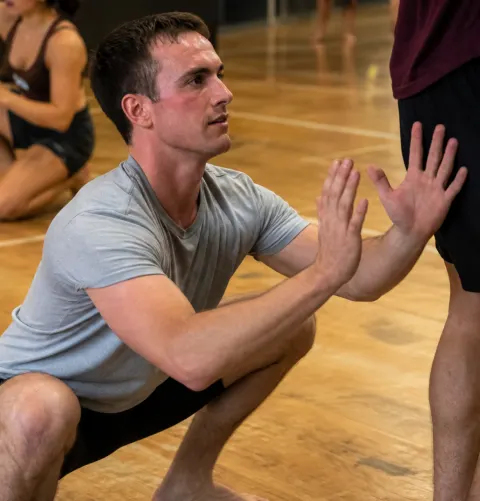 The role of the base: lifting technique in detail
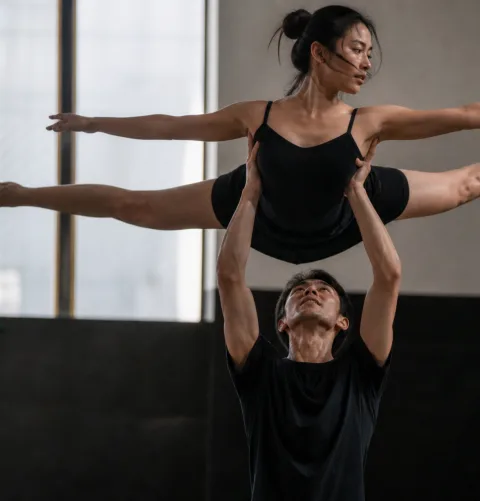 Body tension as a flyer: technique for the top partner
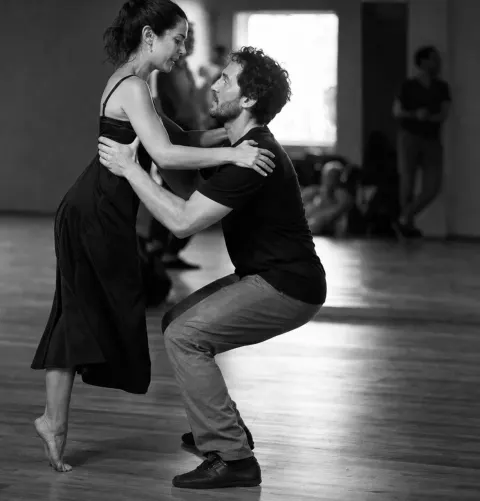 Landing lifts safely: A guide to controlled dismounts
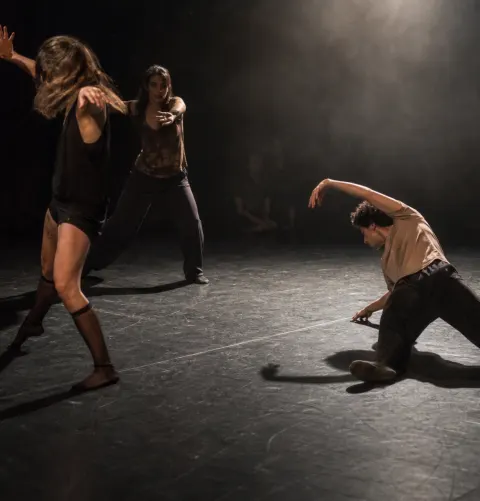 Lift Trends 2026: Dynamics and New Poses
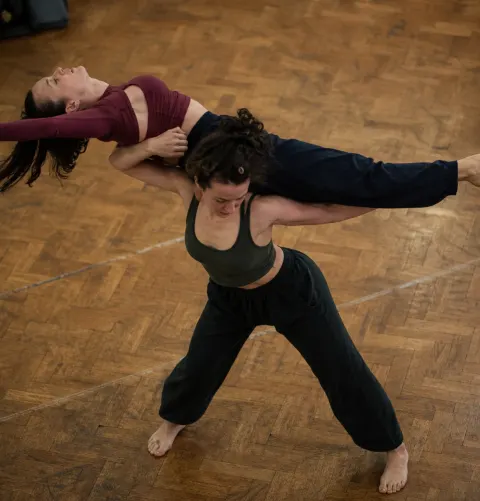 Gender-neutral lifts: Dynamic role switching
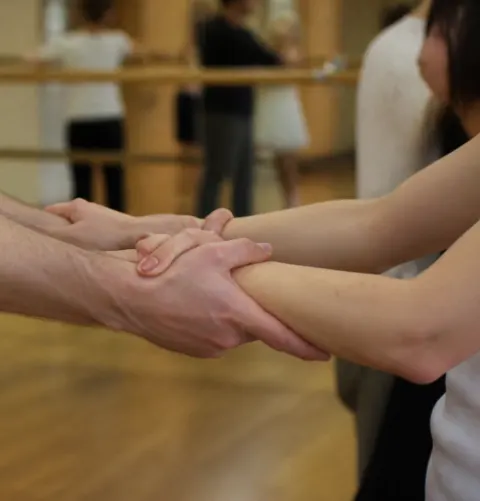 The 5 most common grip mistakes in show dance lifts