Dance shoesSocial Dance Clothing & Shoes

Blisters on your feet while dancing: Quick relief for dancers

4 minutes
In a nutshell
  • Blisters on your feet while dancing are caused by constant friction and moisture inside your shoe.
  • A special blister plaster for dance shoes immediately protects open areas from further pressure.
  • Preventive taping on sensitive areas stops blisters from forming entirely.
  • Taking regular dance breaks and changing your socks keeps your feet dry and resilient.

If you want to get through a long dance weekend without pain, you need to protect your feet. With the right strategy, burning pressure points and blisters won't stand a chance anymore.

What belongs in your emergency bag

  • Special hydrocolloid blister plasters in various sizes
  • Skin-friendly, elastic sports tape for fixation
  • Disinfectant spray for pain-free cleaning on the go
  • A pair of fresh spare socks to change into
  • A second pair of dance shoes with a different fit

Why friction on the dance floor becomes a problem

Long dance congresses and weekend festivals demand peak performance from our feet. When you dance Salsa, Bachata, or Ballroom for hours, constant turning and sliding create extreme friction inside your shoe. Moisture from sweat softens the skin, which leads to painful pressure points from dance shoes and eventually blisters. If you do not react quickly, you risk having to watch from the sidelines for the rest of the weekend. With the right preparation and quick first-aid measures, however, the pain can be relieved immediately, allowing you to return to the dance floor quickly.

Areas on the heels, the balls of the feet, and the toes are particularly susceptible. If you pack the right items when preparing your bag, you will be ready for an emergency. You can also find a great addition to your gear on our page Checklist for the dance party: What belongs in your bag. In addition to a change of clothes, first-aid supplies for friction belong in every dancer's luggage to effectively prevent sore feet after dancing.
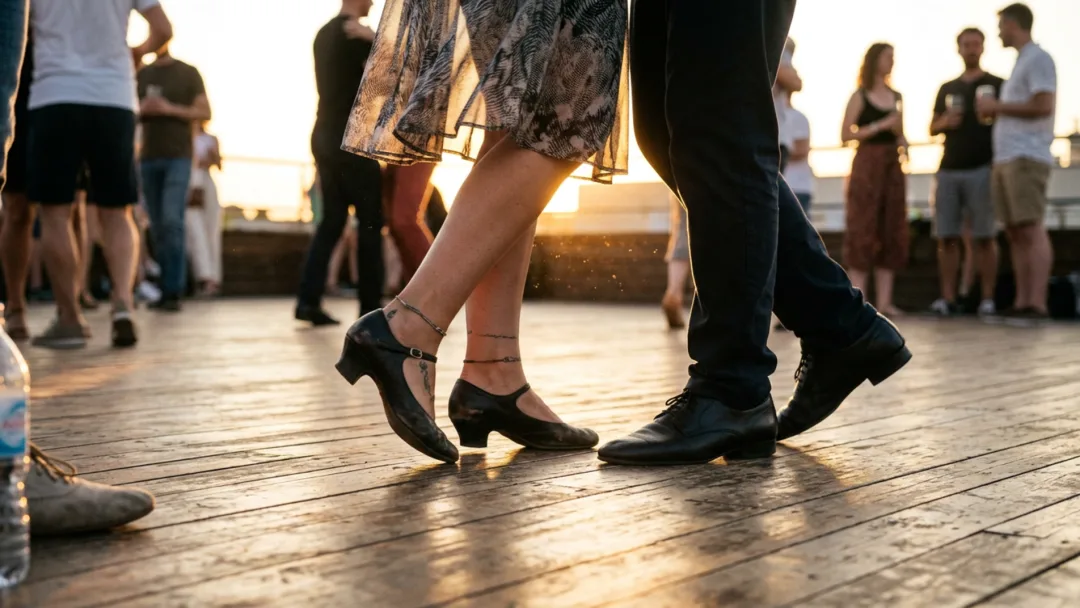
If you protect your feet in time and keep them dry, you will dance pain-free until the early hours of the morning.

First aid for blisters: step by step

  1. Clean and dry the area

    Thoroughly clean the affected area of sweat and dirt. Dry the skin completely, as plasters and tapes do not stick to damp skin and will slip off immediately while dancing.

  2. Applying blister plasters without bubbles

    Apply a suitable hydrocolloid blister plaster to the pressure point. Warm it up briefly between your hands beforehand so that the adhesive sticks optimally to the skin and cushions the pressure.

  3. Secure additionally with sports tape

    Secure the plaster additionally with a strip of elastic sports tape. This prevents the edges of the plaster from peeling off due to constant friction inside your dance shoe.

  4. Change your socks and shoes

    Put on fresh, dry socks to minimize moisture in your shoe. If possible, switch to a different pair of dance shoes with a different fit to redistribute the pressure.

Partner dance courses near you

Find the right course and learn new steps in a gentle way.

View all matching courses

Do's and don'ts for burning feet

Correct

  • Apply blister plasters without wrinkles and press them on with warm hands
  • React immediately at the first signs of burning pressure points
  • Pack dry spare socks for long nights of dancing

Wrong

  • Use normal plasters that slip off immediately when turning
  • Keep dancing despite severe pain
  • Dance barefoot in unworn, stiff dance shoes

Your checklist for pain-free feet

Before the event

Preparation

At the party

In the meantime

The next day

Aftercare

Frequently Asked Questions

  1. A blister plaster for dance shoes should be moisture-resistant and adhere like a second skin. Hydrocolloid plasters provide optimal cushioning for the affected area and protect against further friction on the dance floor.

Bernhard De Lucaudansa editorial team ·
Share