

Dancing connects people
On udansa you will find dance enthusiasts in your area who share the joy of movement just like you. Make connections, discover courses, and start your next dance adventure in a relaxed way.

By Mary De LucaUpdated

On udansa you will find dance enthusiasts in your area who share the joy of movement just like you. Make connections, discover courses, and start your next dance adventure in a relaxed way.
The fear of rejection on the dance floor keeps many from actively approaching others. With the right mindset, a no loses its power and makes room for pure dance fun.
Getting turned down on the dance floor often feels like a personal rejection at first. However, social dance has its own rules that have little to do with you as a person. If someone declines an invitation, it is usually for very pragmatic reasons: their feet hurt, the tempo of the song is too fast, or the person simply needs a short break. A no is not a judgment on your dancing skills or your attractiveness, but a completely normal boundary set in the hustle and bustle of a dance party. By understanding this dynamic, you take the emotional weight out of the moment.
To help you overcome your fear as a beginner in social dance, a change of perspective helps. View asking someone to dance as a non-binding offer, not as a request for validation. Whoever turns down an offer is deciding against the product at that moment, not against the seller. If you learn to view the situation objectively, the fear of being rejected quickly loses its sting. This way, you can enjoy the evening carefree and focus entirely on the music and the community.

Be aware that a no usually has nothing to do with you. The other person might be tired, does not like the song, or needs a break.
Respond to a no with a friendly smile and a brief thank you. This shows your confidence and keeps the atmosphere positive for the future.
Don't use the rejection to ruminate, instead look directly for other people who are also waiting for a dance opportunity.
Allow yourself to say no sometimes when you need a break. This helps you understand how normal and insignificant this decision is.
Like this
Don't do this
Preparation
Arrival
During
The most common reasons are exhaustion, thirst, or sore feet. Often, the current song does not suit one's mood, or one simply wants to talk to friends for a moment.
Take a deep breath, smile kindly, and briefly thank the person for their response. Then turn away without resentment and focus your attention on what else is happening in the room.
Yes, absolutely. If you feel uncomfortable, are exhausted, or do not like the song, you may politely decline at any time. A friendly no protects your own boundaries.
Find the right course and meet like-minded people in a relaxed atmosphere.
 Assess your dance levelBeginner or pro? Learn how to honestly assess your dance level and how to dance with partners at different levels.
 Social Dance Preparation: Your Mindset for the Dance FloorMentally and physically ready for your dance night: This guide shows you how to prepare, ease your nerves, and start with the right mindset.Social Dance Preparation: Your Mindset for the Dance FloorMentally and physically ready for your dance night: This guide shows you how to prepare, ease your nerves, and start with the right mindset.Assess your dance levelBeginner or pro? Learn how to honestly assess your dance level and how to dance with partners at different levels.
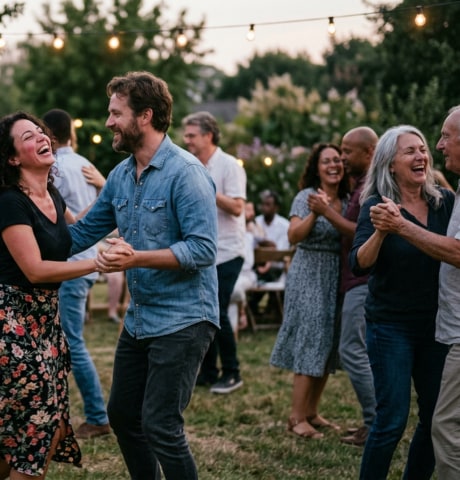 Dance improvisation: 5 exercises for more freedomLearn to move freely to the music without fixed choreography. These five practical exercises will strengthen your improvisation and musicality while dancing.
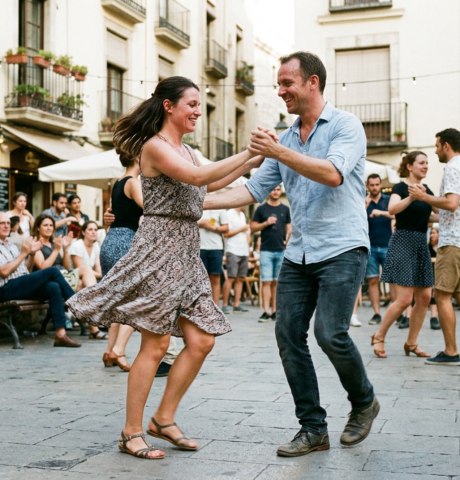 Returning to dance after a break: How to succeedStarting to dance again after a long break? With this practical guide, you will reactivate your body awareness and master your return completely stress-free.
 Dance class or dance party: Where do you learn to dance best?Are you choosing between a structured dance class and a free dance party? We compare both paths so you can find the optimal start for yourself.
 Dance Night Checklist: Ready for your first social danceThe quick last-minute check before you leave the house. With this compact checklist for your dance night, you are guaranteed not to forget anything important.
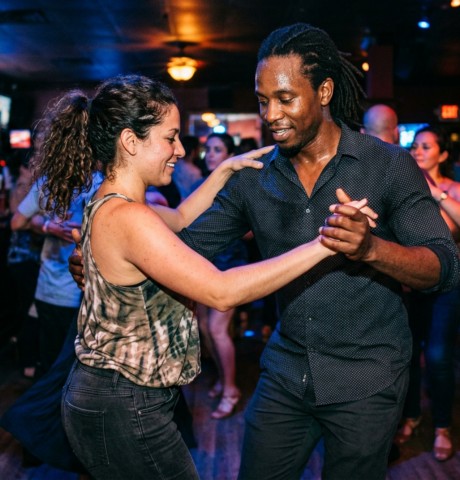 Improve your body awareness for dance: Your foundationGood body awareness is the key to harmonious partner dancing. Learn how to train your perception and move better without the stress.