Find the right course in Leipzig
Use the course finder to find the right offers for your dance style in Leipzig and connect with other dance enthusiasts.

By Mary De LucaUpdated
Use the course finder to find the right offers for your dance style in Leipzig and connect with other dance enthusiasts.
Choosing the right dance school determines whether dancing becomes a lasting joy or fades away after a few weeks due to a busy schedule. Three basic models shape the instruction, and your personal learning style determines the best path.
Anyone looking for a suitable dance school in Leipzig will quickly notice how differently the teaching concepts are structured. The question of the best training facility cannot be answered in general terms, because your own priorities are the deciding factor: Is it about social evenings for two, fixed step sequences for festive occasions like the Leipzig Opera Ball, or free bodywork in a dance studio? Instead of comparing names, it is worth categorizing them systematically by teaching model.
For a well-founded comparison of dance schools in Leipzig, there are three main concepts to choose from: traditional partner dance schools with fixed cycles for Ballroom and Latin, specialized scene studios for styles like Salsa or Argentine Tango, and open movement studios with a focus on ballet, contemporary dance, or Urban Dance. Clarifying in advance whether a fixed day of the week or flexible drop-in classes fit better into your own schedule effectively narrows down the selection. Your goal is also decisive: While a wedding couple needs compact basics, others are looking for a long-term balance to everyday life in a fixed group.
You value clear guidance, social gatherings, and a broad repertoire for festive occasions. Fixed beginner courses for partner dance with progressive levels offer you the most reliable learning curve. Find a suitable beginner course for social dance and arrange a fixed weekly appointment.
For you, spontaneity, musical dynamics, and casual social interaction are what count. A specialized studio for social dances like Salsa, Bachata, or Forró with frequent partner rotation fits your goals perfectly. Visit a trial class at a club-oriented studio and experience the atmosphere without any obligation.
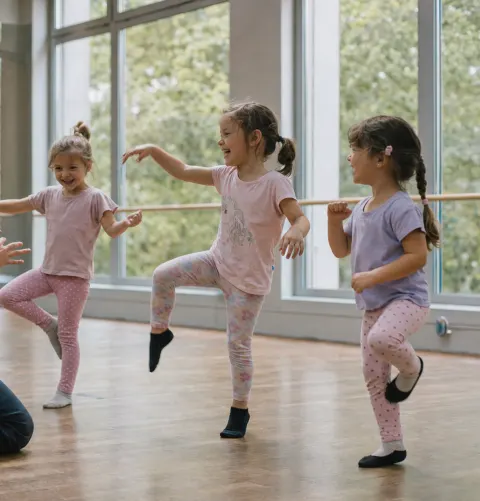
You are looking for a physical challenge, individual technique and the freedom to train independently of a partner. Open classes for contemporary dance, ballet or Urban Styles give you the necessary space. Choose a ten-class pass at a movement studio and test different styles according to your own schedule.
| Criterion | Classic dance school | Scene studio (social dance) | Independent dance studio |
|---|---|---|---|
| Typical dance styles | Standard, Latin, Discofox | Salsa, Bachata, Argentine Tango | Ballet, Contemporary, Urban Dance |
| Partner commitment | Usually fixed dance partner | Continuous partner rotation common | No partner required (solo) |
| Schedule structure | Fixed weekly course blocks | Weekly appointments plus prácticas | Open classes or flexible cards |
| Learning focus | Step sequences, posture and leading | Musicality, improvisation and socializing | Body control and individual technique |
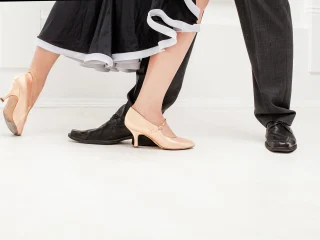
| Footwear | Dance shoes with sliding soles recommended | Shoes with good spin or dance sneakers | Socks, slippers or indoor sneakers |
The characteristics reflect the typical focus of the respective studio types.
Find the lesson format in Leipzig that perfectly matches your goals.
Once you have determined your focus, the practical impression on site will determine your learning success. Well-thought-out dance instruction in Leipzig is characterized by clear didactic structures, a transparent group size, and a considerate tone. During your first visit, pay attention to whether the instructors address different learning speeds and if there is room for individual questions, instead of just demonstrating choreographic sequences at a rapid pace.
Equally important are the spatial conditions: a sprung parquet floor noticeably protects the joints, while sufficient dance floor space prevents couples from constantly bumping into each other. If you want to plan for the long term, also take a look at the contract terms. Whether it is a ten-class pass, a flexible monthly model, or a closed block course: the booking format must fit your actual leisure budget. If you want to expand your repertoire after learning the basics, historic ballrooms like the Felsenkeller offer ideal opportunities to try out what you have learned at social dance events.
For classic partner dance courses, many participants sign up in pairs, but some studios offer guest spots or organize substitute partners. For social dances like Salsa or Bachata, solo registration is the norm, as partners are rotated continuously during class anyway.
Traditional ballroom dance schools value dance shoes with chrome leather soles, which make turning easier and protect the studio floor. For modern studios and solo dance, clean sneakers, socks, or ballet slippers are sufficient at the beginning, as long as the sole does not leave marks.
Fixed block courses guarantee a consistent group with content that builds on itself over several weeks. Open classes and monthly passes, on the other hand, offer the freedom to choose dates spontaneously, but require more personal initiative to catch up on missed steps.
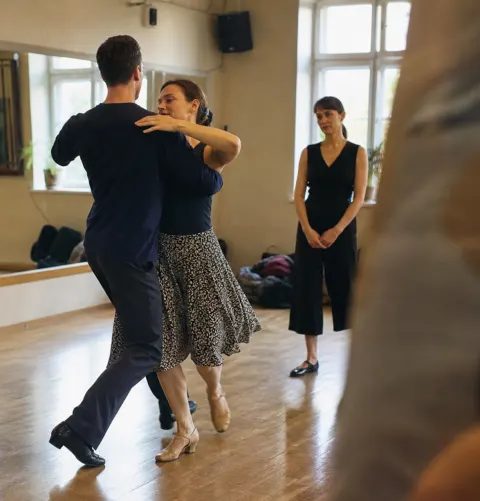 Dance schools in Leipzig: Courses and getting started
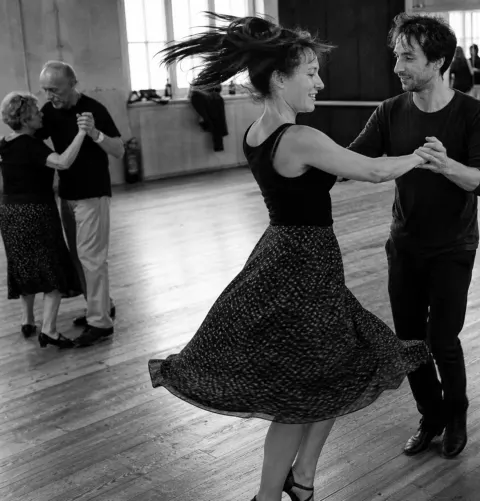 Dance courses in Leipzig: An overview of prices, subscriptions, and course models
 Senior dance in Leipzig: Stay active with energy and confidence
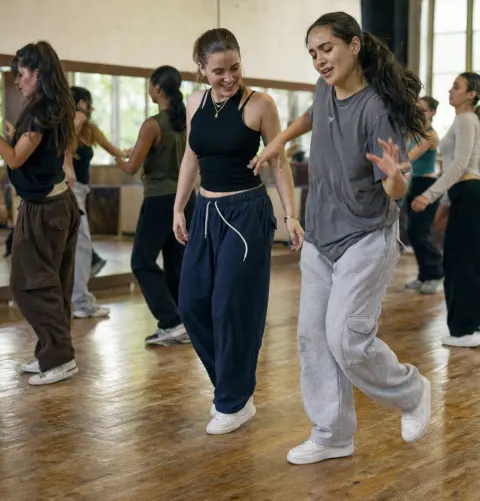 Urban Dance in Leipzig: An overview of dance studios and courses
 Dance classes for singles in Leipzig: Dancing without a partner
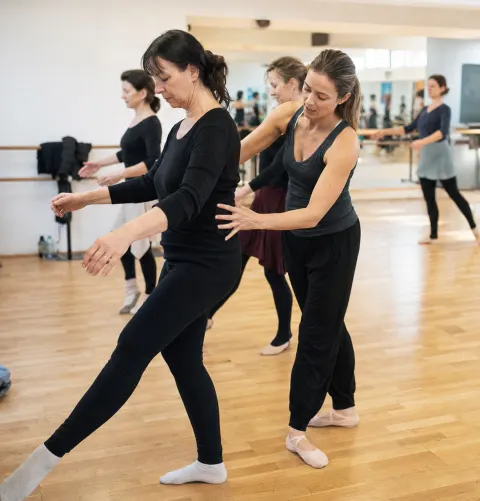 Ballet for adults in Leipzig: Your path to the dance studio
 Trial dance class in Leipzig: 7 criteria