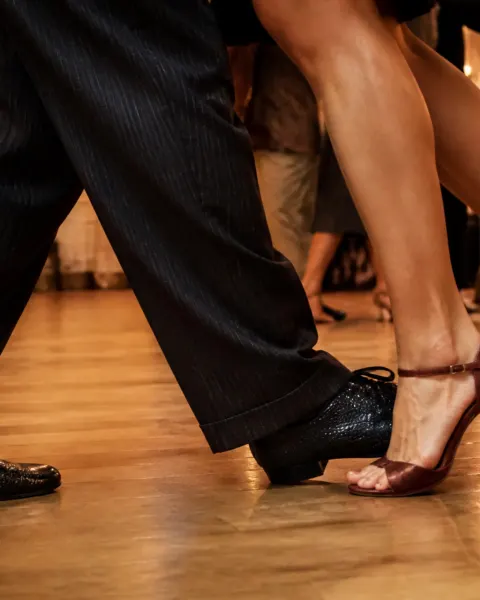
Argentine TangoGo dancing in Hannover

Milonga in Hanover: Experience Argentine Tango evenings

5 minutes
In a nutshell
  • A milonga is a social dance evening for Argentine Tango with established customs such as tandas and cortinas.
  • Traditionally, invitations are made nonverbally through eye contact and a nod, known as mirada and cabeceo.
  • Dancing takes place on a shared circular path counterclockwise, with consideration for other couples.
  • In Hannover, regular milongas take place indoors in halls as well as outdoors as open-air events during the summer.

At a milonga, music, embrace, and unwritten rules merge into a fascinating ritual. If you understand the flow and the subtle signals, you will step onto the dance floor with ease from the very beginning.

DefinitionWhat is a milonga?

A milonga is both the term for a social dance evening of Argentine Tango and for a cheerful, rhythmically faster style of this music genre. At the event, couples dance several tracks together before the dance partnership changes for the next round of music.

How a traditional tango evening is structured

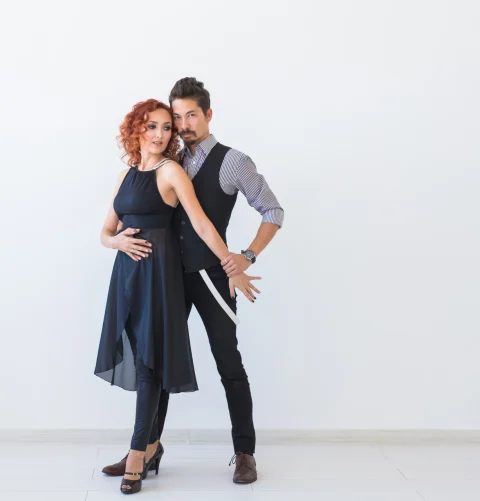
A milonga in Hannover is much more than an ordinary dance event: it is the social heart of Argentine Tango. Anyone visiting such a tango evening for the first time enters a space with established, evolved rituals. Dancing takes place counter-clockwise on the so-called ronda, the outer dance lane. The music is organized in tandas: blocks of three to four pieces by the same orchestra, separated by short musical snippets, the cortinas. This framework ensures that couples can fully immerse themselves in their shared movement without having to think about the sequence.

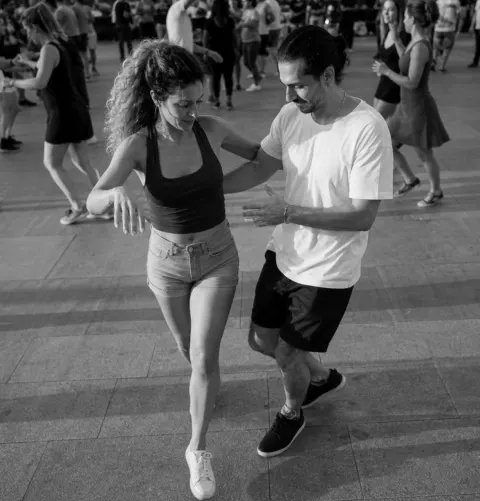
In summer, this activity occasionally moves outdoors: for example, the summery open-air milonga at Andreas-Hermes-Platz behind the Pavillon offers an opportunity to experience tango culture outside. Further insights into the city's summery dance meetups are provided by the overview of Rueda de Casino in Hannover. Whether inside in a hall or outside on pavement and wood: respect for the couple in front of you determines every step.
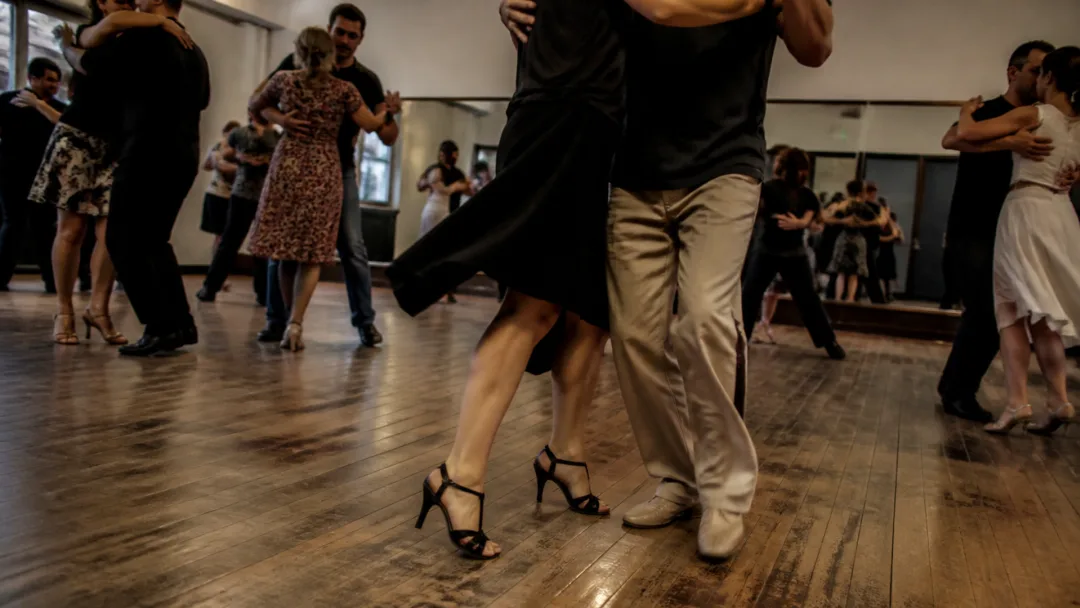
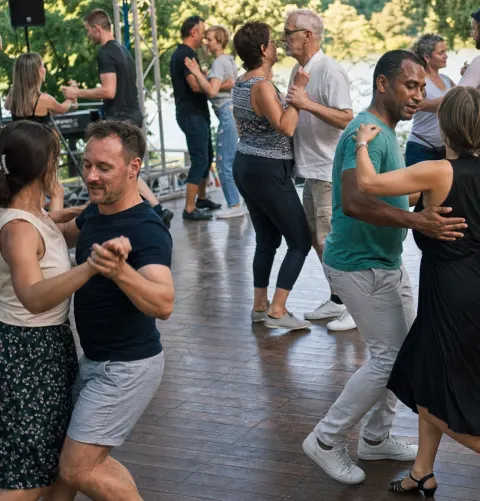
Eye contact across the room discreetly decides on the next shared tanda on the dance floor.

Mirada and Cabeceo: Inviting without words

Inviting someone to dance at a traditional milonga follows its own rules, which often seem mysterious to outsiders. Eye contact from a distance, the so-called mirada, is the first step. Only when the other person returns the gaze and confirms with a slight nod is the invitation considered accepted. The leader only walks to the follower's table once consent has been established. This spares both sides the uncomfortable feeling of a public rejection.

Anyone attending a Tango Argentino party in Hannover will experience a relaxed, unobtrusive atmosphere thanks to this code. No one has to justify themselves if a tanda is skipped. Suitable companions for such evenings can often be found in advance by searching for dance partners in Hannover or directly at udansa. Most importantly: on the dance floor, there is no teaching or correcting, only dancing and enjoying.

Dance floor etiquette: Dos and don'ts

Etiquette at the milonga

  • Seek an invitation through eye contact from a distance
  • Move along the line of dance in a counter-clockwise direction
  • Thank your partner kindly after a tanda and leave the dance floor
  • Save expansive lifts for shows

Inappropriate behavior at a milonga

  • Approaching the table directly and being verbally pushy
  • Swerving backwards abruptly in the middle of the line of dance
  • Stopping in the middle of a tanda without a valid reason
  • Giving the partner unsolicited tips and corrections

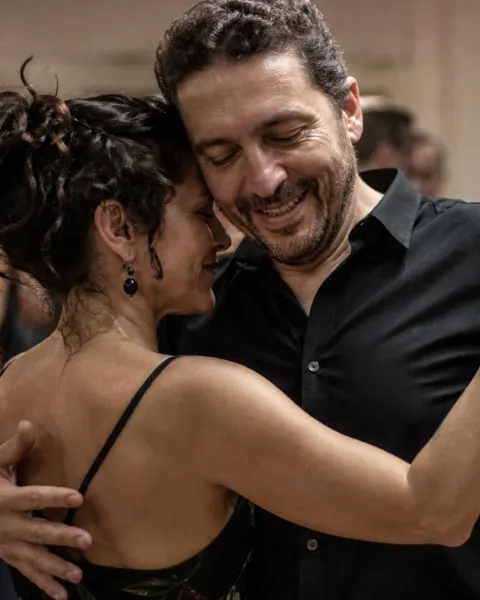
At a milonga, it is not about complicated step sequences, but about the connection between the couple and the respectful flow of all dancers on the floor.

Dance teacher for Argentine Tango

Navigation on the floor and musical variety

A successful Tango evening in Hannover thrives on the awareness of everyone on the dance floor. Since Tango is an improvised dance, there are no rigid step sequences. Navigation requires constant vigilance: the leader protects the follower from collisions, while the follower trusts and leaves the space behind them to their partner. Large, expansive figures belong in show dance, not on a crowded milonga.

Musically, milongas are usually divided into traditional sounds of the Golden Age and modern trends. Classic evenings play orchestras like D'Arienzo, Di Sarli, or Pugliese. Modern formats occasionally incorporate Neotango or non-Tango. If you are unsure before your first visit, you can find information via tips for your first trial dance to dive into the ronda in a relaxed way and without performance pressure.

Two ways to experience Argentine Tango

Classic

Traditional Milonga

Golden Era and established customs

Recordings of the great Tango orchestras from the 1930s to the 1950s will be played. Established rituals, traditional etiquette, and a clear structure of the tandas define the atmosphere.

Modern

Modern dance evenings

Neotango and a relaxed atmosphere

Here you will hear modern orchestras, electro tango, or danceable pop music. The dress code is often more relaxed, invitations to dance happen more directly, and dance styles mix more openly.

Frequently Asked Questions

  1. At traditional milongas, many dancers choose elegant clothing such as dresses, skirts, or dress pants. More important than being fancy, however, is freedom of movement and clean dance shoes with leather soles that allow for easy turning. At modern events, neat casual clothing is often sufficient.

Mary De Lucaudansa editorial team ·
Share
Know-how for the floor

From the guide

View all articles