
Find your partner for Tango
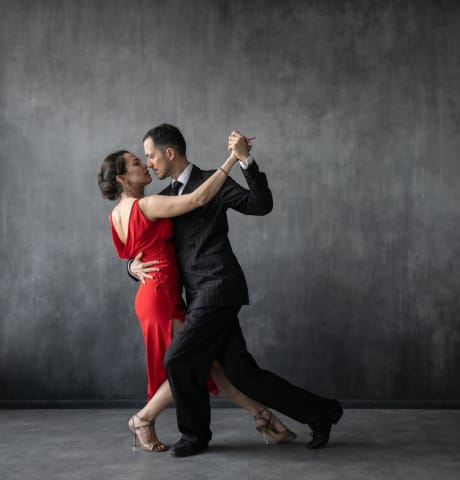
Find like-minded tango enthusiasts on udansa and discover milongas in your area. Make connections and experience the fascination of this legendary dance together.


By Bernhard De LucaUpdated
Find like-minded tango enthusiasts on udansa and discover milongas in your area. Make connections and experience the fascination of this legendary dance together.
The roots of Argentine Tango lie in the late 19th century at the Rio de la Plata. In the crowded immigrant neighborhoods of Buenos Aires and Montevideo, the so-called conventillos, European migrants met African rhythms and the music of the local gauchos. From this melange of homesickness, hope, and loneliness, the raw history of dance music in South America emerged. In the taverns and brothels of harbor districts like La Boca, the Guardia Vieja tango, the old guard of tango, was formed. Back then, the dance was disreputable, highly improvised, and absolutely taboo in high society. Men often danced with each other on the street to practice the complex steps and to impress women in the dance halls.
The actual turning point for the worldwide acceptance of tango occurred in the early 20th century in Europe. Young, wealthy Argentinians brought the dance to the entertainment districts of Paris. There, a veritable tango mania developed, which shocked and simultaneously fascinated the moral guardians of the old world. Only when the Parisian high society declared the dance socially acceptable did the attitude of the upper class in Buenos Aires change as well. Tango returned to its homeland cleansed and glamorous, conquered the grand ballrooms, and ushered in the golden age of the 1930s and 1940s. Anyone who dares to start today often searches specifically for a dance partner for Tango to feel this deep connection in the dance itself.
After a phase of decline in the 1950s, caused by political upheavals and the triumph of rock 'n' roll, the musical genre reinvented itself completely. The Astor Piazzolla story marks the beginning of Tango Nuevo. Piazzolla, who had studied classical composition in Paris, broke with the rigid traditions of dance orchestras. He integrated elements of jazz and classical modernism into the traditional rhythm and brought the bandoneon from the dance floor into international concert halls. Although he was initially attacked by traditionalists in Argentina, his musical revolution saved the genre from being forgotten and paved the way for the worldwide renaissance of tango at modern milongas.

The fusion of Afro-Cuban Habanera, European polka, and the songs of the gauchos in the slums of Buenos Aires creates the musical foundation.
The music establishes itself in the harbor bars and brothels, where immigrants express their longing and melancholy in their first shared steps.
Young Argentine musicians bring the dance to France, where it electrifies the Parisian bohemians and breaks through the moral barriers of the upper class.
Following its success in Europe, Tango also becomes socially acceptable in its Argentine homeland and experiences its golden era with massive orchestras. The latter continues to define the traditional dance style to this day.
Astor Piazzolla breaks open traditional structures and, with Tango Nuevo, creates a modern, concert-style form that revitalizes the genre worldwide.
Argentine Tango originated in the late 1880s in the immigrant neighborhoods of Buenos Aires and Montevideo. There, African rhythms, European influences, and the music of the gauchos blended together.
The Guardia Vieja refers to the era of the old guard of tango from its beginnings until about 1920. During this time, the typical instrumentation with the bandoneon and the first fixed musical structures were established.
Astor Piazzolla revolutionized traditional tango by merging it with jazz and classical music to create Tango Nuevo. He turned tango into a concert art form that was no longer intended solely for dancing.
Follow in the footsteps of a fascinating history and learn Argentine Tango.
Couple danceLimbach-Oberfrohna · Germany
PaartanzkreisFriday · 18:15 · Oct 9
Limbach-Oberfrohna
Couple danceLimbach-Oberfrohna · Germany
TanzkreisFriday · 18:30 · Oct 9
Limbach-Oberfrohna
Couple danceLimbach-Oberfrohna · Germany
PaartanzkreisMonday · 19:30 · Oct 12
Limbach-Oberfrohna
 History of dance music: How rhythms moved the worldDive into the fascinating development of dance music and understand how historical rhythms have shaped the dance styles we enjoy today.
 Looking for a Tango dance partnerIn the mood for Tango? Find a suitable dance partner for the next milonga with udansa.History of dance music: How rhythms moved the worldDive into the fascinating development of dance music and understand how historical rhythms have shaped the dance styles we enjoy today.
 The history of house music: How beats conquered the clubsDive into the fascinating history of house music. Learn how the heartbeat of modern club culture was born in the Chicago underground of the eighties.
 History of the Viennese Waltz: Rebellion in 3/4 timeFrom a frowned-upon peasant ritual to an imperial status symbol: Learn how the Viennese Waltz revolutionized the dance world in 3/4 time.
 History of Discofox: How the Hustle reached EuropeLearn how Discofox evolved from the New York Hustle and the European Euro-Disco wave of the 70s and 80s into our most popular party classic.
 Hip-Hop history: How music and street dance shaped the streetsThe birth of Hip-Hop lies in the dusty streets of the New York Bronx. Learn how DJs and dancers created a worldwide culture together in the 1970s.
 Dance Music Eras Quiz: Which historical type are you?Find out which era of dance music best suits your personality with our interactive self-test. Take the quiz now!
 7 musical milestones that changed the dance worldDiscover the 7 most influential albums and recordings in history that revolutionized dance styles like Swing, Mambo, and Disco forever.