Dance partner search4 minutes

Dancing for the blind and visually impaired: find a partner

Kurz gesagt
  • Beim Tanzen für blinde und sehbehinderte Menschen wird die visuelle Orientierung vollständig durch taktile Signale und Körperkontakt ersetzt.
  • Eine gezielte Blinden-Tanzpartnersuche bringt sehende und sehbehinderte Tanzbegeisterte für ein gemeinsames Tanzerlebnis zusammen.
  • Der sehende Partner übernimmt auf der Tanzfläche die Navigation und schützt das Paar vor Zusammenstößen mit anderen Tänzern.
  • Offene Kommunikation über die Sehbehinderung im Profil erleichtert die Suche nach einem verständnisvollen und passenden Tanzpartner.

Dancing is the pure perception of movement and music. This guide shows you how dancing can be made accessible for blind and visually impaired people and how you can find the right partner for an intense dance experience on equal terms with udansa.

Definition
Inklusion beim Tanzen

Inklusion beim Tanzen beschreibt die gleichberechtigte Teilnahme aller Menschen am Paartanz, unabhängig von körperlichen oder sensorischen Voraussetzungen. Beim Tanzen für blinde und sehbehinderte Menschen steht dabei die Übersetzung visueller Tanzsignale in rein körperliche Impulse im Mittelpunkt.

Wie Paartanz ohne visuelle Reize funktioniert

Paartanz ist eine Kunstform, die ohne visuelle Reize hervorragend funktioniert. Beim Lead & Follow im Paartanz geht es im Kern um körperliche Verbindung, Gewichtsverlagerung und das feine Gespür für den Partner. Für blinde und sehbehinderte Menschen bietet das Tanzen eine einzigartige Möglichkeit, sich frei im Raum zu bewegen, da die Führung des Partners als physischer Orientierungsrahmen dient. Anstatt Schritte visuell zu kopieren, lernen blinde Tänzer durch direktes Erspüren der Bewegung im eigenen Körper.

Die größte Hürde für den Einstieg ist selten die Bewegung selbst, sondern die Suche nach einem passenden Partner. Eine gezielte Blinden-Tanzpartnersuche hilft dabei, Menschen zusammenzubringen, die bereit sind, sich auf eine intensivere, taktile Kommunikation einzulassen. Ob im klassischen Standardtanz oder bei lateinamerikanischen Rhythmen: Die Basis für das gemeinsame Gelingen ist eine klare, feinfühlige Verbindung über die Hände, Schultern und den Rumpf.

,title:
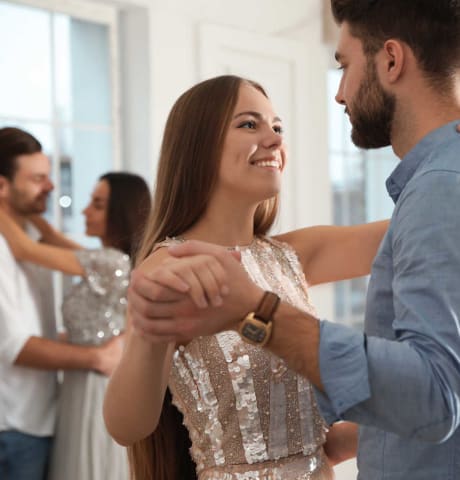
Konzentration und Körperkontakt: Durch die physische Verbindung wird der Rhythmus auch ohne Blickkontakt perfekt übertragen.

The role of leading and spatial orientation

When a sighted person dances with a blind partner, they must adjust their usual communication. Visual signals like a nod or an outstretched arm in space are ineffective. Instead, every impulse is transmitted directly through the physical contact points. This requires some patience from both sides at first, but it quickly leads to a remarkably precise dance connection, from which sighted dancers also benefit enormously in their technique.

For a secure feeling on the dance floor, clear communication beforehand is crucial. Especially when starting social dance, as described in the Social Dance Guide, mindfulness is required. The sighted partner takes on an active guiding role here. They ensure that collisions with other couples are avoided and navigate the couple safely through the room without losing the flow of movement.

Tipps für das gemeinsame Tanzen

Richtig

  • Klare körperliche Impulse geben
  • Hindernisse vorausschauend umtanzen
  • Schritte vorab verbal erklären

Wrong

  • Relying on eye contact
  • Spinning your partner without warning
  • Entering the dance floor without agreement
udansa tip

When learning new figures, use the tactile method: the blindfolded partner feels the leg position or hip movement of the sighted partner to understand the sequence of movements directly.

When dancing with a blind partner, you finally learn what true leading means. You no longer lead with your eyes, but with your whole body.

Dance instructor for inclusive partner dance, Hamburg

Ways to successfully find a dance partner

To find a suitable dance partner with a visual impairment or a sighted partner for an inclusive dance project, specialized platforms and inclusive dance schools are great options. When searching online, it is advisable to communicate openly from the start. An honest profile that describes your own needs and openness to the topic of inclusion reduces inhibitions and attracts the right people.

Many dance schools now offer trial lessons for inclusive partner dance. Here, initial contacts can be made in a safe environment. If you are unsure, it is best to start with dances that maintain a very close and constant connection, such as the Waltz or Salsa in a closed hold, before trying freer dance styles with solo turns.

Zwei Rollen für ein harmonisches Zusammenspiel

Fühlen

Die taktile Wahrnehmung

Körper und Rhythmus im Fokus

Als blinder Tänzer verlässt du dich ganz auf dein Gehör und deinen Tastsinn. Du nimmst die Impulse deines Partners über die physische Verbindung auf und setzt sie direkt in Bewegung um.

,eyebrow:
Navigating

Visual responsibility

Keeping safety and space in view

As the sighted partner, you guide the couple safely across the dance floor. You watch out for obstacles and translate spatial conditions into gentle, clear leading signals.

Häufige Fragen

  1. Ja, absolut. Viele Tanzschulen bieten barrierefreie Kurse an, und im Social-Dance-Bereich ist die Gemeinschaft meist sehr offen und hilfsbereit. Eine kurze Absprache vor dem Tanz reicht oft völlig aus.

Inclusive dance courses near you

Find a dance school that offers accessible courses and meet your new dance partner.

View all matching courses
udansa community

Feel the rhythm together

On udansa, you can specifically search for dance partners who are open to inclusive partner dance or who dance with a visual impairment themselves. Simply create your profile and find the perfect connection on the dance floor.

Sources

Empirical values from inclusive dance projects and guidelines for accessible sports in German dance sports associations, as of August 2026.