Partner danceFind a dance partner in Cologne

Equality Dancing in Cologne: Queer dance scene and free role choice

4 minutes
In a nutshell
  • Equality dancing refers to partner dance regardless of the gender of the dance partners, where same-sex couples dance or roles are swapped flexibly.
  • Suitable offers in Cologne are characterized by instruction that teaches leading and following as freely selectable roles.
  • Those interested can find training opportunities through specialized clubs, queer groups, or dance partner platforms like udansa.
  • Before choosing a course, it is recommended to clarify whether ambitious tournament training or leisure-oriented dancing is the priority.

Partner dance works perfectly well without traditional role assignments. In equality dancing, only dance skills and mutual agreements determine who leads and who follows.

DefinitionEquality Dancing

Equality Dancing refers to competitive and recreational partner dancing outside of traditional gender roles, where same-sex or mixed couples compete with freely chosen role distribution. This form of dance has established itself as an inclusive practice in partner dancing.

How equality dancing differs from traditional dance lessons

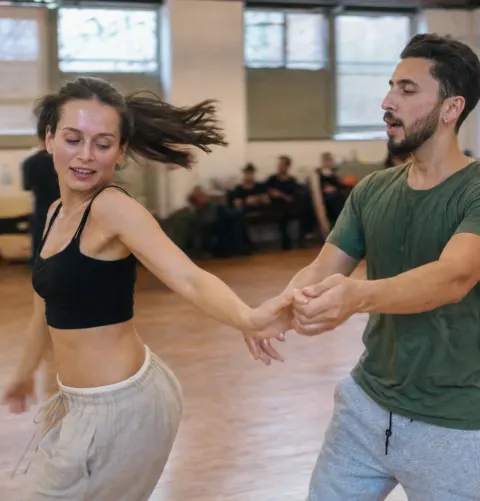
If you are interested in equality dancing in Cologne, you will often search in vain in classic dance schools, where classes are still sorted according to rigid gender roles. In equality dancing, dancing is decoupled from the gender of the participants: two men, two women, or people of any gender identity form dance couples. In Cologne, many people specifically look for offerings that welcome queer couples and the free exploration of leading and following. If you want to discover a suitable dance style in Cologne for yourself, you will quickly encounter the difference between purely niche formats and open course models.

For choosing a course, it is primarily decisive how the respective dance studio structures its lessons didactically. Transparent providers do not ask for man or woman during registration, but simply ask which role you would like to learn. Some groups even systematically switch roles during the lesson, so that every person experiences and understands both perspectives.

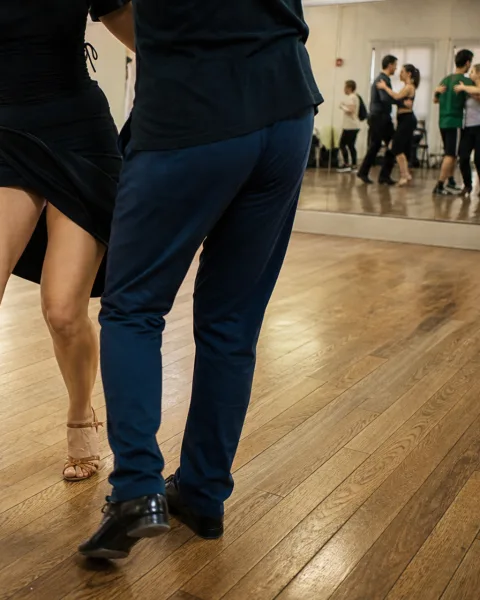
Eye contact and precise posture are enough: leading in partner dance is created through body tension and communication, not through social gender roles.

Competitive sports or social dance: Finding the right profile

Not every queer dance offer focuses on the same thing, which is why a targeted classification before the first lesson prevents misunderstandings. Some training groups are strictly oriented towards competitive dancing, where couples train for equality competitions, practice precise footwork, and study fixed choreographies. Those who prefer to dance without the pressure to perform, however, usually feel more comfortable in social dance groups or recreational sports circles, where socializing and getting to know others are the main focus.

Anyone looking for a dance partnership for a dance course without a fixed partner should check how the respective group handles individuals. Open practice evenings offer a good opportunity to test the interpersonal atmosphere in advance. Before joining, pay attention to whether the focus is on ballroom and Latin or if modern social dances are the center of attention, and clarify beforehand whether fixed couples are required.

Successful interaction on the dance floor

How to succeed

  • Choose your role based on your interest and body awareness
  • Clarify in advance whether tournament or social dancing is being taught
  • Actively communicate about tempo and space while dancing

Avoidable mistakes

  • Automatically delegating leading to the taller person
  • Assuming unwritten expectations for fixed roles
  • Replacing missing signals with pure force

Dance courses for partner dance in Cologne

Find suitable dance courses and open dance circles in Cologne that support free role choice.

Good leading on the dance floor is not a question of identity or stature, but a clear impulse from the center of the body.

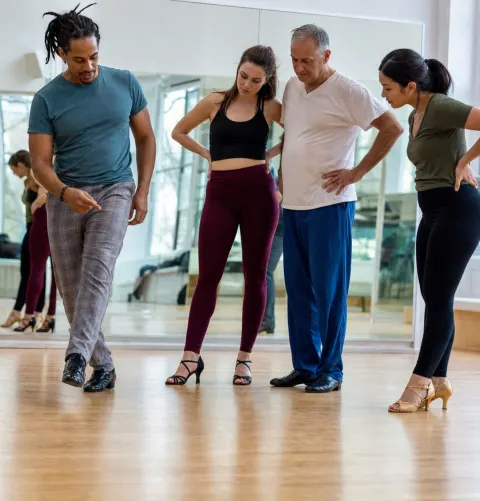
Dance instructor for partner dance

Find a dance partner and master your start with ease

If you are looking for suitable offers in Cologne, you will find them not only in specialized queer groups but increasingly in studios that offer gender-neutral concepts. Platforms like udansa help you to specifically search for dance partners who prefer the same role or are open to role switching. When making contact, it is recommended to communicate openly right away whether you want to lead or follow, how much dance experience you have, and which dances interest you.

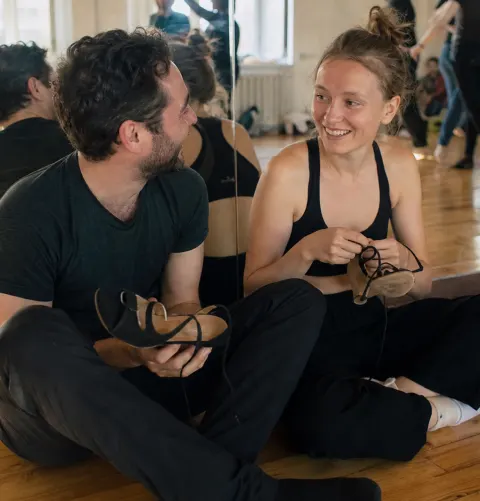
Good preparation for your first dance class removes any potential insecurities. Comfortable clothing, flexible shoes with a smooth sole, and openness to direct agreements on the dance floor are completely sufficient. Through clear communication about wishes and boundaries, a partnership-based exchange on equal terms is created in equality dancing from the very beginning.

The two faces of equality dancing

Recreation

Social dancing and recreational sports

Focus on fun and switching roles

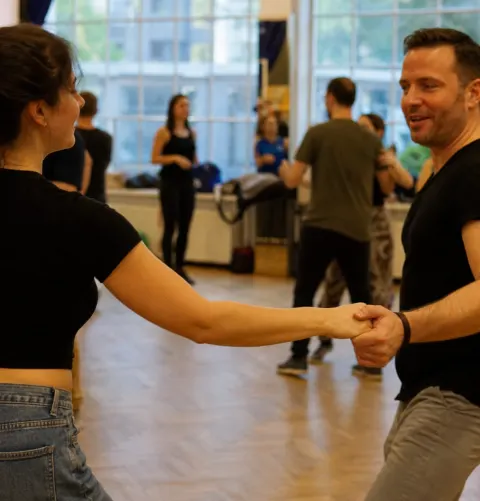
In recreational dancing, couples often switch roles spontaneously within a dance. This deepens the mutual sense for leading impulses, removes performance pressure, and creates a playful dynamic on the dance floor.

Tournament

Equality competitive dance

Precision and fixed criteria

In the competitive sector, same-sex couples dance Ballroom and Latin according to established rules. Here, preparation requires exact choreographies, stamina, and a clear distribution of roles throughout the entire evaluation round.

Frequently Asked Questions

  1. No, Equality Dancing is open to everyone. This dance form is aimed at same-sex couples, queer people, and anyone who wants to learn partner dance without stereotypical gender roles or wants to alternate between leading and following.

Bernhard De Lucaudansa editorial team ·
Share
Know-how for the floor

From the guide

View all articles