Dance cultureDance styles in Hannover

Kizomba in Hannover: Urban Kiz and Afro-Latin scene

5 minutes
In short
  • Kizomba is based on calm walking steps and subtle weight shifts, while Salsa and Bachata are more characterized by turns and hip movements.
  • The European offshoot Urban Kiz uses linear footwork, sudden stops, and electronic beats, while traditional Kizomba is danced in a softer and more grounded way.
  • In Hannover, the best way to orient yourself is by checking the current course lists and social events on udansa to find suitable introductory workshops.
  • It is possible to join without a fixed partner, as roles are regularly rotated in workshops and at dance evenings.

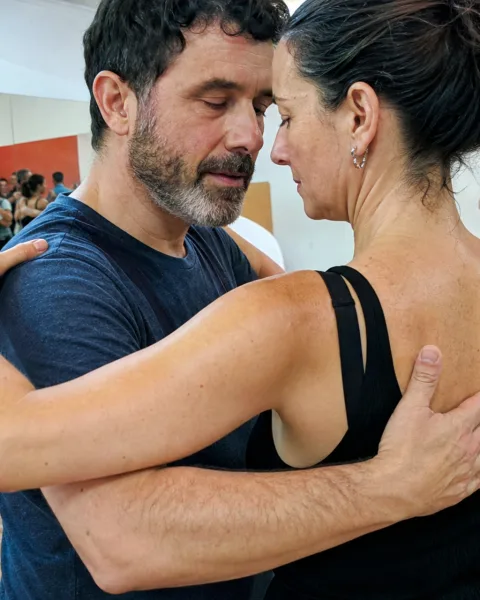
Kizomba avoids spectacular figures and focuses entirely on the connection between two bodies in the rhythm of the music. If you understand the difference between traditional Kizomba and Urban Kiz, you will quickly find your way into the local scene.

DefinitionKizomba

Kizomba is a partner dance of Angolan origin, based on shared steps, subtle weight transfer, and a close connection to the music. Emerging in the 1980s, it combines traditional Semba elements with slow Caribbean Zouk rhythms.

Walking instead of spinning: The foundation of Kizomba

Anyone looking for new rhythms in Hannover will quickly come across the word Kizomba. But while many dance enthusiasts immediately think of the fast spins of Salsa or the hip movement of Bachata, Kizomba is based on a completely different dynamic. The dance originally comes from Angola and developed there from traditional Semba and Caribbean Zouk sounds. Instead of expansive poses, the focus here is on deep grounding: the movement arises from walking together, where every step is placed precisely on the beat.

For beginners, this difference is often surprising. While you are constantly orienting yourself in the room and reeling off sequences of figures in Cuban Rueda de Casino or at classic Latin parties, Kizomba demands immediate attention to your partner. There are no rigid beat patterns with eight counts that are counted out stubbornly. The music provides impulses, and the couple reacts with changes of direction, weight shifts, and gentle pauses. Anyone who wants to understand this style must, above all, learn to listen to the walking pace of their partner.

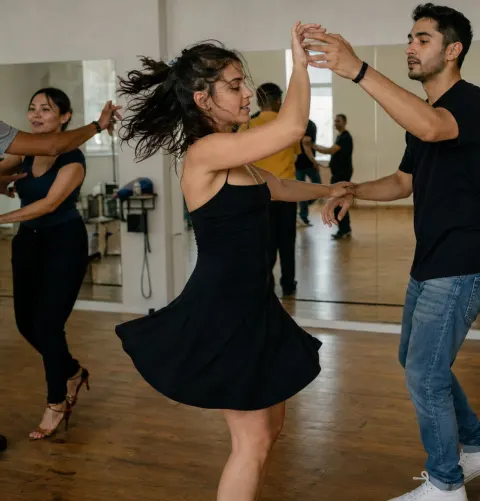
People dancing Bachata, Kizomba and Salsa on a dance floor in Kharkiv, Ukraine
Kizomba demands full presence in the now: The couple listens to the beat before the first shared step is taken.

Traditional versus Urban Kiz: Two worlds on the dance floor

Over the years, music has changed, and with it, the dance style. While traditional Kizomba is danced with rounder hip movements and a soft lead, the modern style Urban Kiz emerged in Europe. Inspired by R&B, pop, and electronic Ghetto Zouk beats, Urban Kiz is characterized by a linear way of dancing, sharp stops, tempo changes, and subtle footwork. The distance between the upper bodies varies more, and the lead is primarily performed through the hands, forearms, and a stable center.

This separation between traditional Kizomba and Urban Kiz often leads to confusion for newcomers. Anyone signing up for a course should pay close attention to which focus is being taught. A solid Kizomba workshop in Hannover often places value on introducing both worlds. After all, only those who have understood the rhythmic basis and the weight principle of the African original can cleanly lead and follow the technically demanding accelerations of Urban Kiz without applying pull or pressure.

Connection and etiquette in Kizomba

How to master the connection

  • Roll through your whole foot and shift your weight noticeably
  • Choose a distance that allows both people to breathe comfortably
  • Listen to your partner's rhythm before starting the next movement
  • At socials, thank your partner politely after two or three dances and take a break

Common mistakes

  • Pulling with your arms or forcing your partner into a turn
  • Forcing a hold that is too tight against the other person's will
  • Running through fixed sequences of steps without paying attention to the music
  • Staying on the dance floor with only one person for the entire evening

Find Kizomba courses in Hannover

Find current courses, trial classes, and workshops for Kizomba and Urban Kiz directly in your area.

In Kizomba, you do not lead with your hands, but with your center of gravity: whoever walks calmly immediately gives their partner security on the dance floor.

Dance instructor for Urban Kiz and Kizomba

Connecting with the community and your first dance night

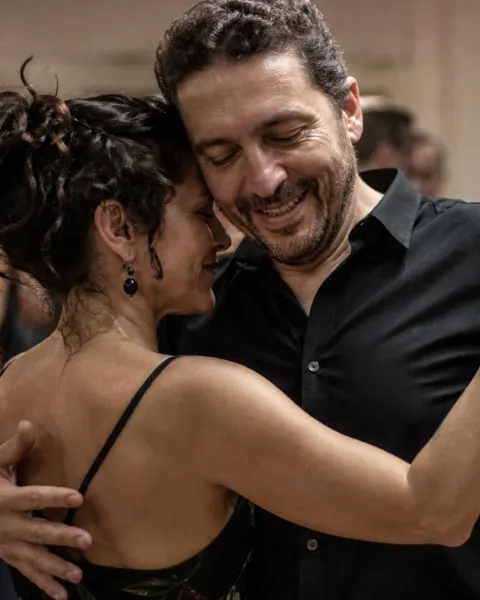
The best way to get started in the Kizomba community in Hanover is through socials, which are open dance nights where dancing together without competition is the focus. Unlike in some classic dance scenes, the barrier for newcomers is low here if you follow basic etiquette. The closeness in the dance requires mutual respect, pleasant muscle tone, and above all, sensitivity: no one is forced into a close hold, and the distance between the dance partners is always determined by the follower.

Before you decide on a fixed offer, targeted orientation often helps. If you are still unsure, you can use a dance style finder for Hanover to see if the calm intensity of Kizomba suits your personality. For your first few nights, it is also recommended to take a look at the Kizomba parties in Hanover to experience the music and flow of the dance for yourself. This way, you can connect with like-minded people without any pressure to perform.

Two styles in direct comparison

Traditional

Kizomba Traditional

Angolan roots and smooth flow

This style focuses on a close dance posture, gentle weight shifts in the pelvis, and African Zouk rhythms. The movements flow organically and remain close to the ground.

Modern

Urban Kiz

Electronic beats and clean lines

This style focuses on linear figures, syncopations, sudden stops, and electronic sounds. The distance between partners is more flexible and the footwork emphasizes dynamic changes of direction.

Frequently Asked Questions

  1. No, a fixed partner is not required to get started. In courses and workshops, it is common to rotate partners, and at socials, it is standard to ask people you do not know for a dance.

Bernhard De Lucaudansa editorial team ·
Share
Know-how for the floor

From the guide

View all articles