Together in three-quarter time
Find dance courses, workshops, and suitable dance partners for Waltz and ballroom dances directly in Leipzig.

By Bernhard De LucaUpdated
Find dance courses, workshops, and suitable dance partners for Waltz and ballroom dances directly in Leipzig.
Ballroom dances combine posture, balance, and expansive elegance into a timeless art of movement. Anyone who understands the basic mechanics of leading and following will glide confidently across any dance floor.
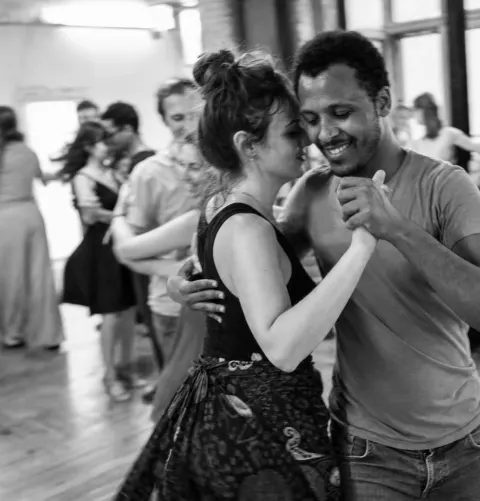
The dance frame refers to the precise alignment of arms, shoulders, and chest in partner dance, which gives the dance couple stability and a reliable connection for leading impulses. It remains dimensionally stable and flexible at the same time while moving.
Anyone thinking of ballroom dancing in Leipzig usually associates it with the festive flair of historical architecture. Magnificent venues like the Felsenkeller on Karl-Heine-Straße, opened in 1890, or tradition-steeped buildings like the Schaubühne Lindenfels, which dates back to a former social hall with a ballroom, are symbolic of this culture. Major events like the annual Leipzig Opera Ball at the opera house on Augustusplatz also show how vividly classic dancing is anchored in social life. However, ballroom dancing is far more than festive evening wear: it combines technical precision with musical dynamics.
The classic ballroom dances include five independent disciplines: the floating Slow Waltz, the fiery Tango with its abrupt changes of direction, the expansive Viennese Waltz, the flowing Slow Foxtrot, and the lively Quickstep. Many beginners start with a combination of Ballroom and Latin to develop a feel for different rhythms. While Latin dances like Cha-Cha or Rumba use a lot of hip movement and open figures, the ballroom category is characterized by a permanent, upright dance posture as a couple.
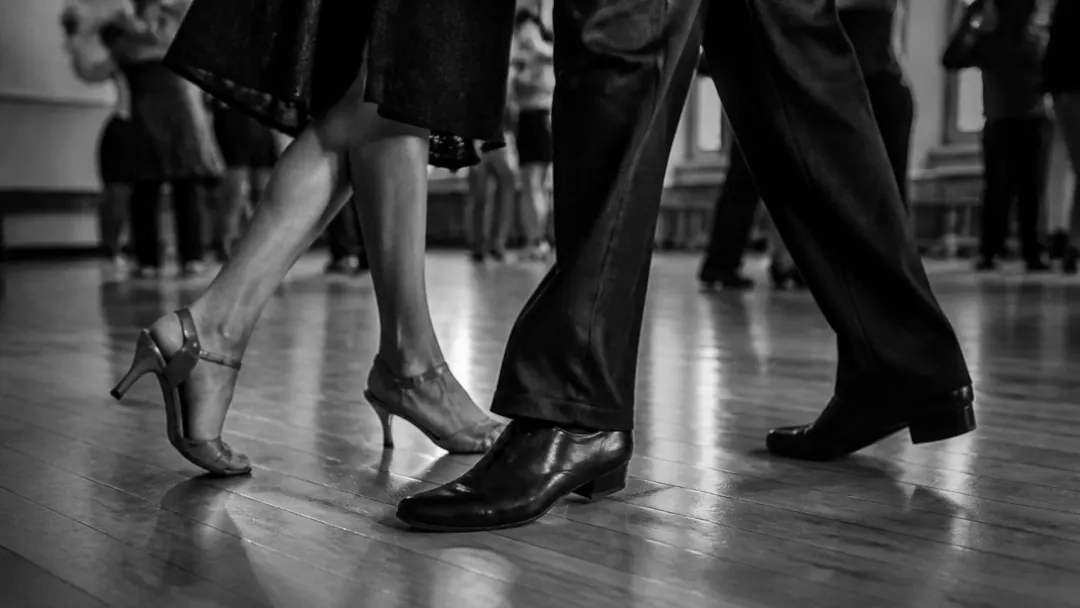
A common misconception is that the leader must push their partner across the dance floor using muscle power. However, true leading and following in social dance is based on clear body tension and gentle weight shifts. The contact point between the pair transmits movement impulses directly from the torso, not through pulling or pushing arms. This requires mutual attention and patience, but rewards you with a feeling of effortless lightness.
Especially in dynamic dances like the Wiener Walzer or Quickstep, the rotations create enormous centrifugal force. Dancers therefore learn early on to maintain a stable axis and balance their shared center of gravity. Anyone stepping onto the dance floor should also familiarize themselves with the so-called line of dance: couples generally move counter-clockwise along the outer edge of the room. Slower couples, or couples practicing stationary figures, stay in the center of the room so that the smooth flow of traffic on the outer edge is maintained.
Properly on the dance floor
Common mistakes
Discover suitable courses and workshops for Waltz, Tango, and Quickstep in Leipzig.
If you lose your posture in ballroom dancing, you lose the lightness: the frame is not a prison, it is the couple's communication channel.
Before you sign up for a dance course, it is worth taking a look at your own goals. Are you mainly interested in social occasions, relaxed practice evenings, or mastering complex technique in competitive sports? Leisure-oriented courses quickly teach the basics to help you look good at balls or dance parties. Sport-oriented dance groups, on the other hand, focus very intensively on footwork, posture, head positions, and lines.
If you are still looking for the right partner, udansa offers you an uncomplicated way to meet dance enthusiasts with a similar level and the same ambitions. For your first training session, clean clothing with freedom of movement is perfectly sufficient. In the long run, it is worth investing in real dance shoes with a roughened chrome leather sole: they offer exactly the right amount of grip and glide on the dance floor for controlled turns, without straining your joints. This way, you will master every turn with confidence.
Confident on the social dance floor
In social dancing, the focus is on sociability, musical variety, and practical dance sequences. Couples learn a solid repertoire to move confidently at balls, family celebrations, or casual dance evenings.
Highest standards for technique and dynamics
In competitive dance, everything revolves around precise footwork, perfect upper body extension, and maximum dynamics in the room. Training requires stamina, millimeter-precise coordination in the dance frame, and constant refinement of technical details.
The five classic ballroom dances include Waltz, Tango, Viennese Waltz, Foxtrot, and Quickstep. In contrast to Latin dances, they are characterized by a closed posture and sweeping steps.
Comfortable everyday clothing with enough freedom of movement is perfectly sufficient for getting started. It is important to wear shoes with a clean, smooth sole that make turning easier and protect your joints before purchasing special dance shoes.
On udansa you can specifically search for dance partners in Leipzig who match your prior knowledge and goals. Many courses can also be booked individually, as dance partners are often rotated on-site.
The Waltz is danced in a leisurely three-quarter time and emphasizes gentle rises and falls. The Viennese Waltz is almost twice as fast, requires continuous right or left turns, and demands significantly more stamina.
 Dance styles in Leipzig: How to find the right dance for you
 Latin American dances in Leipzig: Cha-Cha, Rumba and Jive
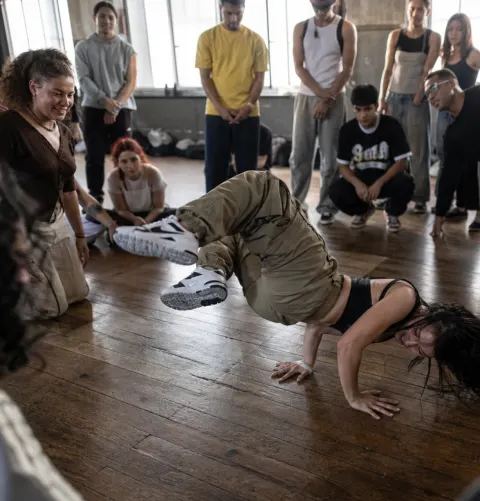 Hip Hop in Leipzig: Understanding urban dance, battles, and cyphers
 Contemporary Dance in Leipzig: Space for Free Movement
 Flamenco in Leipzig: Rhythm, pride, and Spanish dance
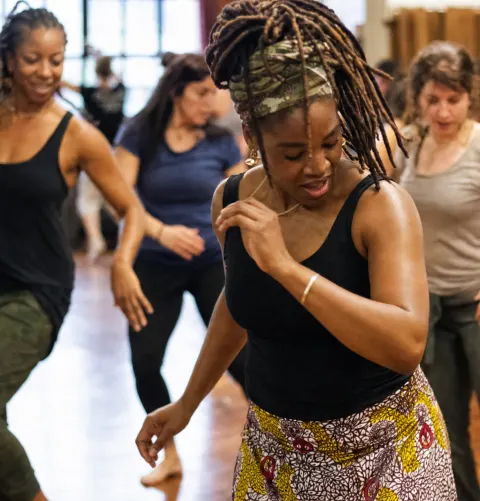 Afrobeats dance in Leipzig: club culture, grounding, and groove
 Which dance style suits me in Leipzig? The self-test