Dance styles4 minutes

Latin dances in Leipzig: Cha-Cha, Rumba and Jive

By Bernhard De LucaUpdated

In short
  • The classic Latin American dances Cha-Cha, Rumba, and Jive are characterized by an elastic Latin dance posture concept and precise floor work using extended standing legs.
  • In Leipzig dance schools and dance circles, these styles are usually taught as part of regular partner dance programs or targeted special courses.
  • In contrast to social dances, these dances require pronounced body tension with controlled weight shifting, but in return, they offer maximum flexibility for changing music tempos.

Beyond Caribbean street dance, there is a sophisticated Latin scene in Leipzig. Rumba, Cha-Cha and Jive challenge your body control with precise footwork, clear rhythm and athletic dynamics.

DefinitionLatin American dances

Latin American dances refer to a group of five standardized partner dances in the world dance program with roots in Cuban, Brazilian, and North American rhythms. These include Cha-Cha, Rumba, Samba, Paso Doble, and Jive.

What distinguishes Latin dance in the world dance program

When you think of Latin American dances in Leipzig, your mind often lands directly on the Cuban rhythms of a Salsa scene or parties in Plagwitz. However, the world dance program of the Latin section comprises an independent dance family with a precise movement vocabulary: Cha-Cha, Rumba, Jive, Samba, and Paso Doble. While social dances like Bachata rely heavily on fluid body contact, classic Latin dances thrive on clear lines, distinct footwork, and the conscious use of the floor.

Leipzig offers a vibrant environment for these styles, ranging from traditional dance schools in the center to modern studios in the Südvorstadt. Dancers here do not learn rigid step sequences for tournament sports, but a universal dance language. If you understand the rhythmic subtleties of these disciplines, you will move with noticeable ease and balance on any social dance floor.

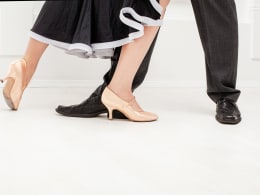
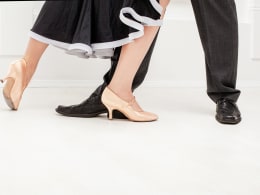
Stable flooring and suitable footwear support ease of turning during rapid rhythm changes in the Leipzig dance hall.

Body mechanics instead of artificial hip movement

A common misconception concerns the role of hip movement in Rumba and Cha-Cha. Beginners often try to actively push their pelvis to the side. However, the characteristic movement is created passively via the bent and subsequently powerfully straightened standing leg. Anyone who consciously directs the pressure through the ball of the foot into the floor automatically creates the typical rhythm. A sound preparation in the beginner course focuses precisely on this center of gravity.

Likewise, the distance in a dance couple differs significantly from Caribbean styles: while a very close chest contact is often sought in Bachata, Cha-Cha and Jive use an elastic dance frame with variable distance. Leading and following take place via hand connections and body tension based on pull and push. This requires both dance partners to have stable balance, but in return allows for quick changes of direction and lively solo turns.

Clean Latin technique put to the test

How to master Latin

  • Roll your weight completely over the balls of your feet
  • Allow hip action as a result of leg extension
  • Maintain body tension within your own frame

Common mistakes

  • Placing heels down heavily and uncontrollably
  • Pushing the hips to the side in an artificial and isolated way
  • Holding on tightly to your partner's arms

Latin American dancing starts in the feet and travels through the knees into the hips: If you use the floor actively, you dance effortlessly at any tempo.

Dance teacher for competitive dance, Leipzig

Rumba, Cha-Cha, and Jive in musical contrast

The three most frequently taught styles in Leipzig cover fundamentally different tempos. Rumba is considered a walking dance in 4/4 time with an emphasized pause on the first beat, allowing partners to celebrate closeness and space. Cha-Cha is based on the same basic structure, but breaks the rhythm with a fast chassé on the count of four-and-one. Here, pointed accents and playful footwork dominate.

Jive, on the other hand, brings a driving tempo of up to 44 bars per minute to the dance floor. Its roots in swing are evident in bouncy knee actions and kicks that require high stamina. Anyone who regularly attends courses or open dance evenings in Saxon halls uses these styles as a versatile tool: you can switch effortlessly between slow ballads and fast pop music without exhausting your dance repertoire.

Two facets of Latin American dancing

Rumba

Focus on control and pause

Slow movement phases and spatial awareness

Slow music allows for deep weight shifts and expressive lines. Both dance partners work intensively on balance, stretching, and musical phrasing.

Jive

Stamina and bouncy rhythm

High tempo and lively actions

Fast chassés and bouncy knee actions require quick reflexes and precise footwork. The figures appear dynamic, light-footed, and energetic in the room.

Frequently Asked Questions

  1. Comfortable clothing that allows full freedom of movement for your knees and shoulders is perfectly sufficient. It is important to wear clean shoes with smooth leather soles or special dance shoes with chrome leather soles, so that turns are gentle on your joints.

Discover Latin dance courses in Leipzig

Find the right course for Cha-Cha, Rumba, or Jive at your level in Leipzig.

View all matching courses

Find Latin dance partners in Leipzig

On udansa, you can find dance enthusiasts in Leipzig for shared Latin dance lessons and open practice nights in your area.

Find Latin dance partners in Leipzig