Moving the space together
Meet like-minded people for free movement, exchange information about courses, or find your partner for dance improvisation in Leipzig.

By Mary De LucaUpdated
Meet like-minded people for free movement, exchange information about courses, or find your partner for dance improvisation in Leipzig.
Contemporary dance breaks down fixed movement patterns and invites you to rediscover your own body in space. If you are looking for expression beyond rigid forms in Leipzig, you will discover a vibrant practice of improvisation, gravity, and contact.
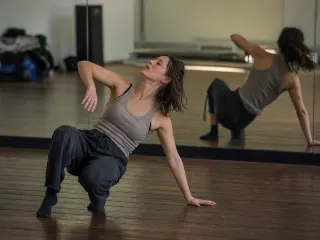
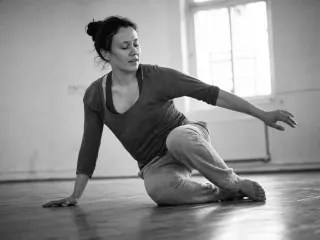
Contemporary dance describes dance forms that have developed beyond the rigid rules of classical ballet and combine techniques such as improvisation, floorwork, and release. It utilizes the interplay of gravity, dynamics, and individual expression.
Contemporary dance in Leipzig combines choreographic precision with the freedom of individual movement impulses. While classic dance styles demand fixed step sequences and prescribed postures, the contemporary approach explores gravity, breath, and the interaction with the floor. The Saxon art city offers an inspiring foundation for this: places like the converted Halle 7 of the Baumwollspinnerei in the Lindenau district, where the LOFFT acts as a production house and the Leipziger Tanztheater operate, shape the understanding of dance as a living art form away from rigid theater conventions. Anyone interested in Leipziger Ballett or stage dance often experiences the contrast between technical rigor and free expression here.
For beginners, this means: It is less about imitating a movement perfectly and more about training your own body awareness. Modern training methods like floorwork, release technique, and targeted joint mobilization form the foundation for moving through space without tension.
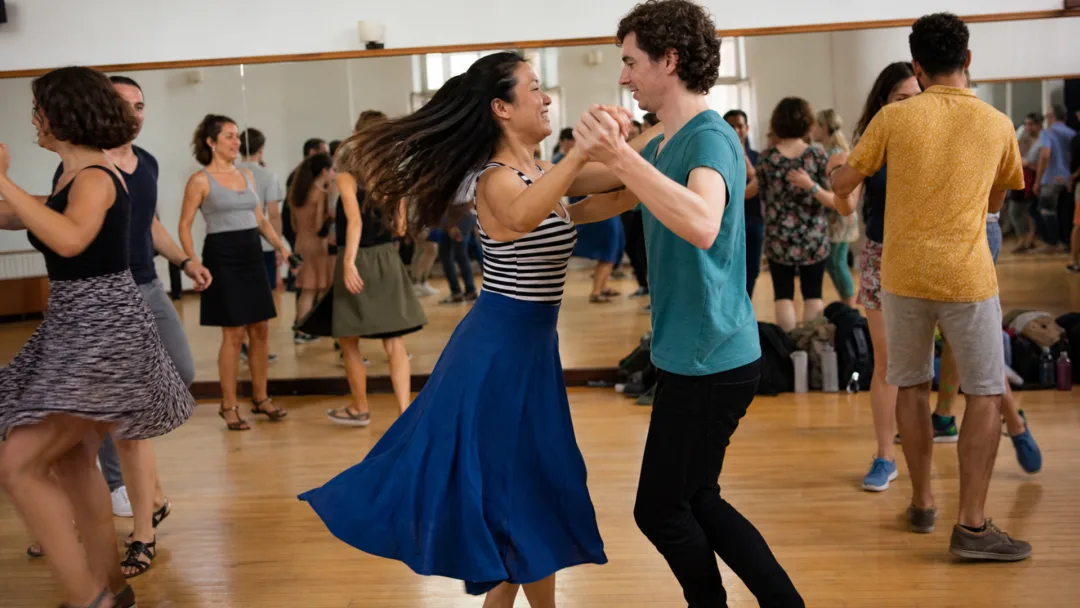
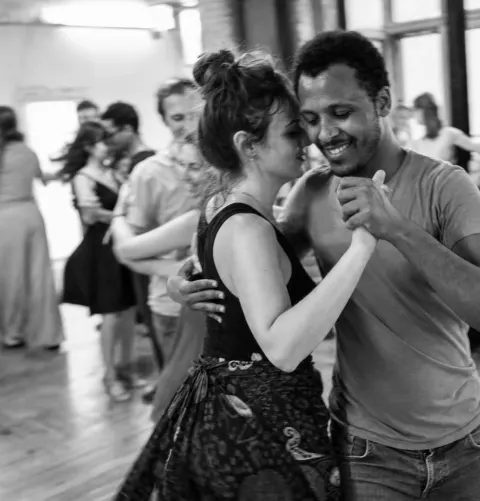
A central component of many courses and workshops is movement improvisation. In this process, dance sequences are not created from memory, but in the moment of doing, often guided by spatial images, touch, or musical impulses. In contemporary dance and Contact Improvisation, dancers work with shifting their own center of gravity, sharing weight, and releasing unnecessary tension.
Dance improvisation in particular requires a keen sense of distance and proximity. Those new to this practice first learn to stabilize their own body before seeking contact with others. Through festivals like the euro-scene Leipzig, which annually presents international dance artists and innovative forms, the awareness of experimental stage and movement formats remains ever-present in the urban environment and encourages one's own dance exchange.
How to succeed in practice
Typical mistakes
Find suitable courses for Contemporary, Modern Dance, and improvisation in your area.
In contemporary dance, you do not fight against the floor, but learn to use it as a reliable partner for momentum and balance.
If you are looking for contemporary training, Contemporary Dance, or Contact Improvisation in Leipzig, you should pay attention to a mindful learning environment when choosing a studio or instructor. Since this dance style involves a lot of floor work, a sprung wooden floor and appropriate clothing are crucial to protect your knees and shoulders. Dancing barefoot or in socks helps you establish a direct connection to the surface.
Before you commit to a fixed class format, it is recommended to attend an open trial session. Pay attention to whether there is room for your own boundaries: high-quality contemporary dance instruction is characterized by the ability to adapt exercises to individual levels, rather than forcing all participants into identical movement patterns. Researching resources like the historical Tanzarchiv Leipzig also shows how deeply rooted the experimentation with free movement is in Central Germany.
Form, flow and technique
Contemporary Dance uses structured principles such as gravity, momentum and floor techniques to shape choreographic phrases in space with precision and dynamics.
Focus, impulse, and resonance
Contact Improvisation focuses on the spontaneous physical contact point between two bodies, where weight, balance, and flow are negotiated without fixed roles.
Comfortable, stretchy sportswear in several layers is ideal. Long trousers and a top with sleeves protect the skin from friction during sliding and rolling movements on the dance floor.
No, previous knowledge of ballet or ballroom dance is not a requirement. Many courses are explicitly aimed at beginners and teach the basics of movement directly through body awareness and joint-friendly sequences.
As a rule, you dance barefoot or in cotton socks. Socks make it easier to slide and turn on the floor, while bare feet offer more grip and support for jumps and powerful steps.
Look for a joint-friendly sprung floor and transparent agreements regarding personal boundaries. Good instructors guide you to maintain your own well-being and to adjust movements at any time.
 Dance styles in Leipzig: How to find the right dance for you
 Flamenco in Leipzig: Rhythm, pride, and Spanish dance
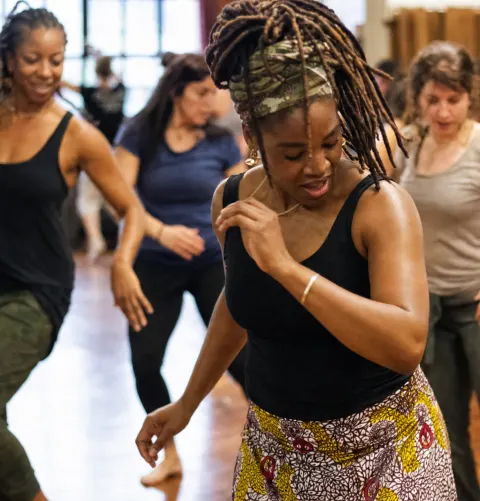 Afrobeats dance in Leipzig: club culture, grounding, and groove
 Which dance style suits me in Leipzig? The self-test
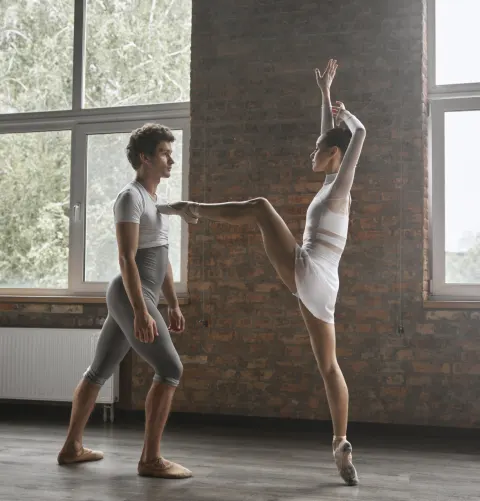 Leipziger Ballett: Understanding dance history at Oper Leipzig
 Salsa in Leipzig: Scene, styles, and dance floors
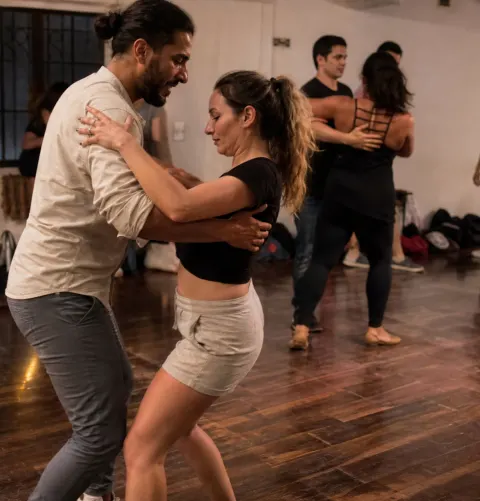 Bachata Leipzig: Sensual, Dominicana and tips for beginners