Onto the dance floor together
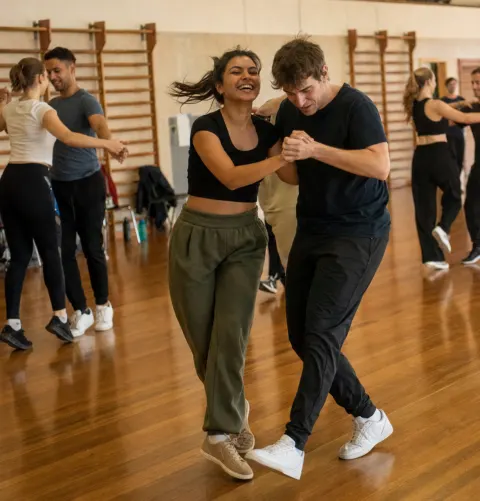
On udansa, you can find dance enthusiasts for recreational and competitive sports, as well as offers for partner dance in Leipzig. Simply specify your skill level and your dance style.

By Mary De LucaUpdated
On udansa, you can find dance enthusiasts for recreational and competitive sports, as well as offers for partner dance in Leipzig. Simply specify your skill level and your dance style.
The step from casual social dancing to competitive sports requires dedication, reliable training times, and the right partner on the dance floor. A club provides the necessary space for this.
D-Class refers to the official entry-level class in German competitive dance for standard and Latin sections. In this class, fixed restrictions regarding permitted figures and competition attire apply to keep the focus entirely on fundamental movement quality.
Anyone looking for more precision after the first course levels in a dance school will sooner or later end up in organized club sports. A dance sports club in Leipzig opens up the structured transition for couples from simple social steps to athletic posture, precise footwork, and rhythmic accuracy. While commercial dance schools primarily offer fixed blocks for recreational dancing, club life is based on continuous training in fixed groups. You pay a monthly membership fee and in return use free training times in the hall, guided group training, and individual coaching sessions.
For beginners, the focus is initially on grassroots sports. Here, step sequences are deepened without immediately requiring tournament clothing or strict regulations. Many dancers appreciate this environment to refine the technique of Waltz, Tango, Quickstep, Cha-Cha, or Rumba. Those who enjoy fixed choreographies and want to measure what they have learned against other couples then switch to tournament training, where the foundations for the D-class in tournament sports are laid.
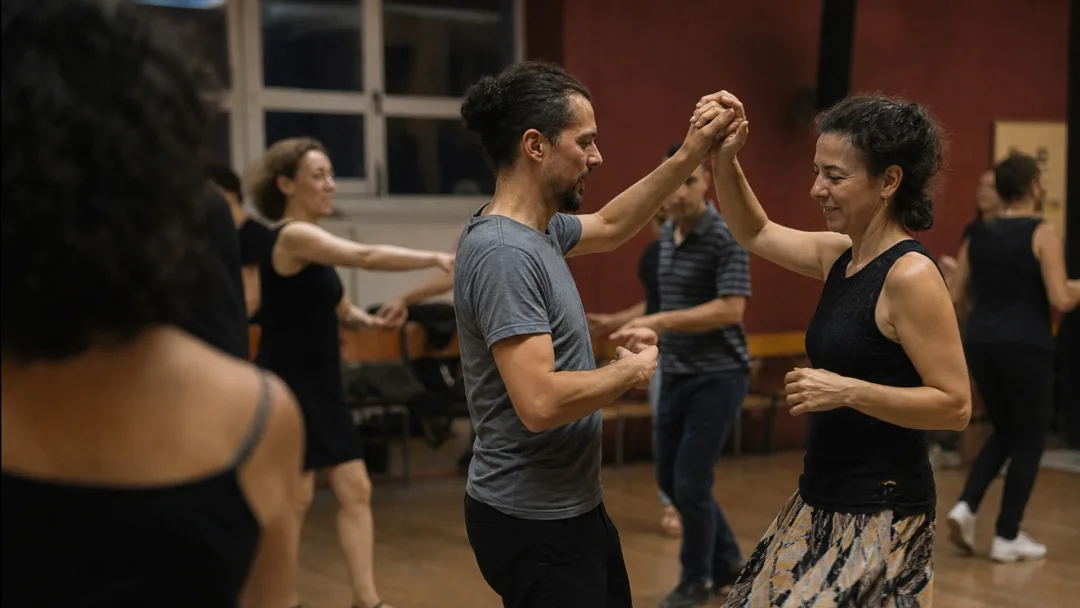
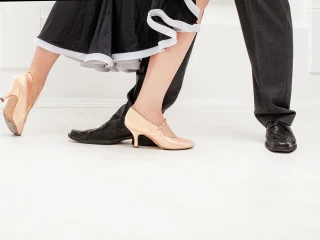
The path into regular tournament sports begins in the German association system in the D-class. In this entry-level class, figure sequences are deliberately regulated so that couples can focus on clean basic technique and musicality, instead of getting lost in complex poses. Standard couples start here with three dances: Waltz, Tango, and Quickstep. In the Latin section, Cha-Cha-Cha, Rumba, and Jive form the starting program. Only with the promotion to higher classes are dances like Viennese Waltz, Slow Foxtrot, Samba, and Paso Doble added.
A modern dance club in Leipzig offers specific training days for these performance levels. In addition to group training for couples, free training is the heart of club life: the parquet hall is open several times a week so that couples can independently repeat their routines, correct posture errors, and build stamina. This training culture distinguishes the club significantly from the weekly dance school course. If you are not yet sure where your sporting journey should lead, a look into the historical dance archive Leipzig will help you to understand the deep roots of the regional movement art.
Recommended
Avoid
Discover training groups and courses in Leipzig for recreational sports and tournament preparation.
In competitive dance, it is not the complexity of the choreography that determines success, but the shared balance and mutual trust in the basic step.
The biggest hurdle before starting tournament dancing is rarely your own motivation, but rather finding the right match. For search queries like tournament dance leipzig dance partner, the following applies: height, training discipline, and shared goals must harmonize. Those aiming for tournaments ideally train two to three times a week. If two people with different time availability meet here, it quickly leads to frustration on the dance floor.
A structured way to search for a partner is through online profiles on udansa, notices on club boards, or by approaching people directly at open training evenings. Before a firm club registration, there is always a non-binding trial dance. This is less about perfection and more about the tactile feeling as a couple: Does the frame fit? Does the pressure point in the hands feel comfortable? How do you handle mistakes together? Anyone who answers these questions honestly finds the basis for a long-term athletic partnership. The combination of posture and expressiveness is also reflected in festive occasions, such as those cultivated at the traditional Leipzig Opera Ball, or in the historic ambiance experienced in a ballroom in Leipzig.
Regular training without tournament stress
In recreational dance, you train technique and rhythm without strict association regulations. Your clothing remains casual, the training commitment is usually one to two evenings per week, and the joy of moving as a couple is the main focus.
Goal-oriented competitive sport with scoring
Competitive dancing aims at athletic comparison in starting classes from D to S class. It requires regular private lessons, free practice several times a week, competition attire, and the acquisition of a starting license.
No, prior knowledge from regular dance classes is perfectly sufficient. The basics of posture, footwork, and leading are built from scratch and intensified in the club's recreational sports groups.
Many clubs offer open training sessions or boards where individual dancers are welcome. Additionally, you can search for like-minded people on udansa to arrange a trial dance before joining the club.
In the D-class, couples dance Waltz, Tango, and Quickstep in the ballroom category. In the Latin category, the program consists of Cha-Cha-Cha, Rumba, and Jive.
For the first trial, comfortable sportswear and clean shoes with smooth soles are sufficient. Special dance shoes with chrome leather soles only become important once you train regularly on the dance floor.
 Find a dance partner in Leipzig for courses, clubs, and balls
 Lindy Hop scene in Leipzig: How to get started with Swing
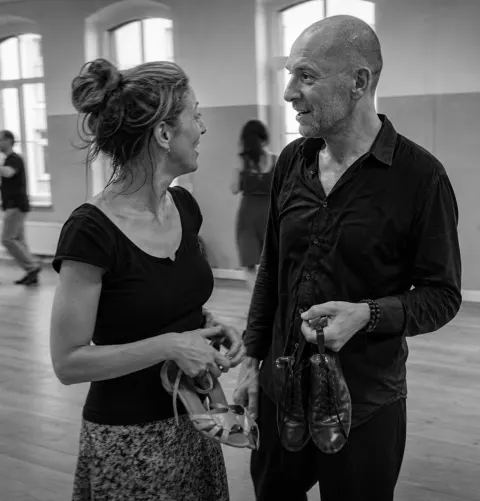 Dance Partner Search Leipzig: Which path suits you?
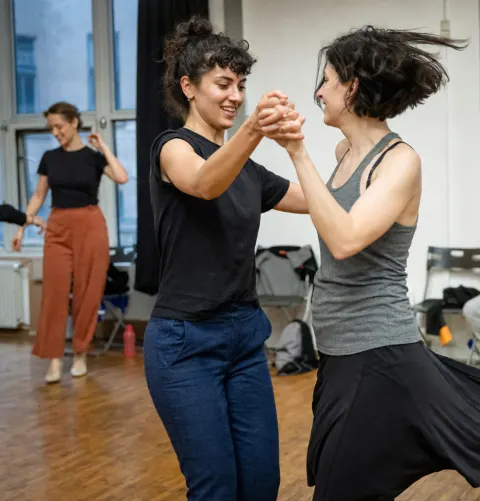 Queer dancing in Leipzig: Equality dance and open role selection
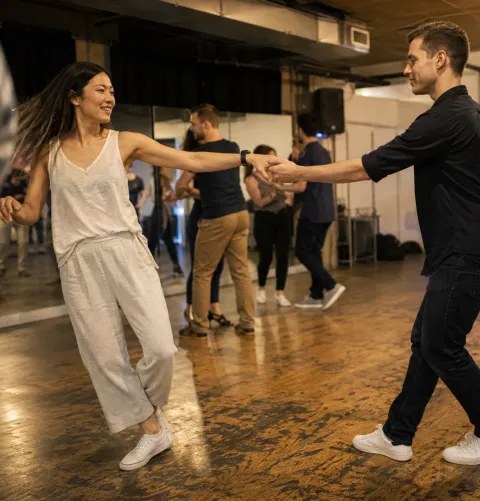 West Coast Swing Leipzig dance partners: Start without a fixed commitment
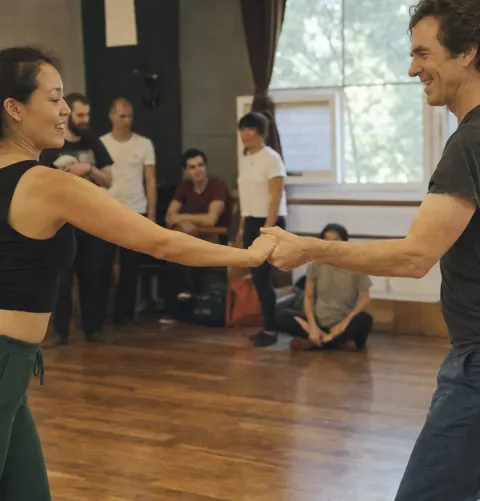 Switch Dancing in Leipzig: New perspectives in partner dance
 Dance partners over 50 in Leipzig: Dancing on equal terms