SalsaDance styles in Cologne

Salsa in Cologne: Getting started with Cubana and Mambo On2

5 minutes
In a nutshell
  • In Cologne, the focus is primarily on the circular Cuban style and the linear New York Style On2.
  • Salsa Cubana is characterized by fluid turns around each other and spontaneous body movements.
  • Mambo On2 requires precise leading on an imaginary line and emphasizes the second beat of the music.
  • Beginners can learn both styles without any prior knowledge and should choose their course based on their musical taste and sense of movement.

Salsa fascinates with its joy of life and infectious rhythms, but behind the term lie completely different dance styles. Which direction suits your start best depends on your sense of rhythm and use of space.

DefinitionCross Body Lead

Cross Body Lead refers to the fundamental leading figure in linear Salsa, where the leader clears the path for the follower to switch places on the dance line. This movement forms the foundation for almost all turns in Mambo On2.

Two directions shape the classes in Cologne

Anyone looking for a dance class in Cologne will quickly encounter two very different worlds of Salsa: the circular, earthy style from Cuba and the linear elegance of Mambo On2. Many beginners sign up for a general course without knowing which style is being taught there. This often leads to confusion when one's own footwork does not match the music being played or a future dance partner. Anyone who wants to start with the right dance style in Cologne should understand the characteristics of both variants before signing up for the first time.

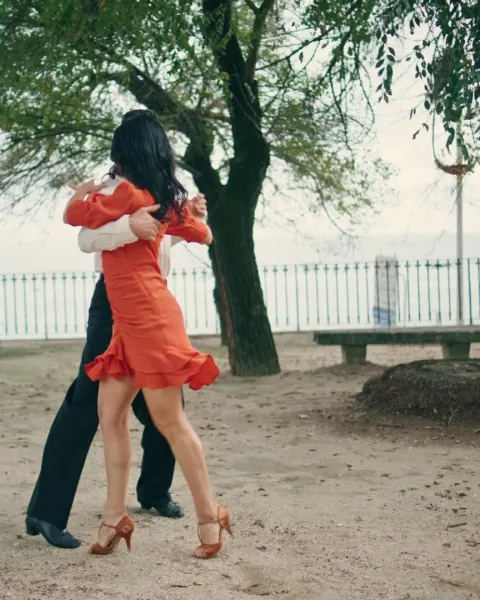
Cuban Salsa, also known as Casino, is based on a constant circular movement of both partners around each other. Here, curved arm knots, a lot of body movement, and a playful dynamic dominate. Mambo On2, on the other hand, which has grown strongly out of the New York music and jazz scene, moves strictly along an imaginary line. This spatial clarity creates a completely different aesthetic and requires precise alignment of every single step.
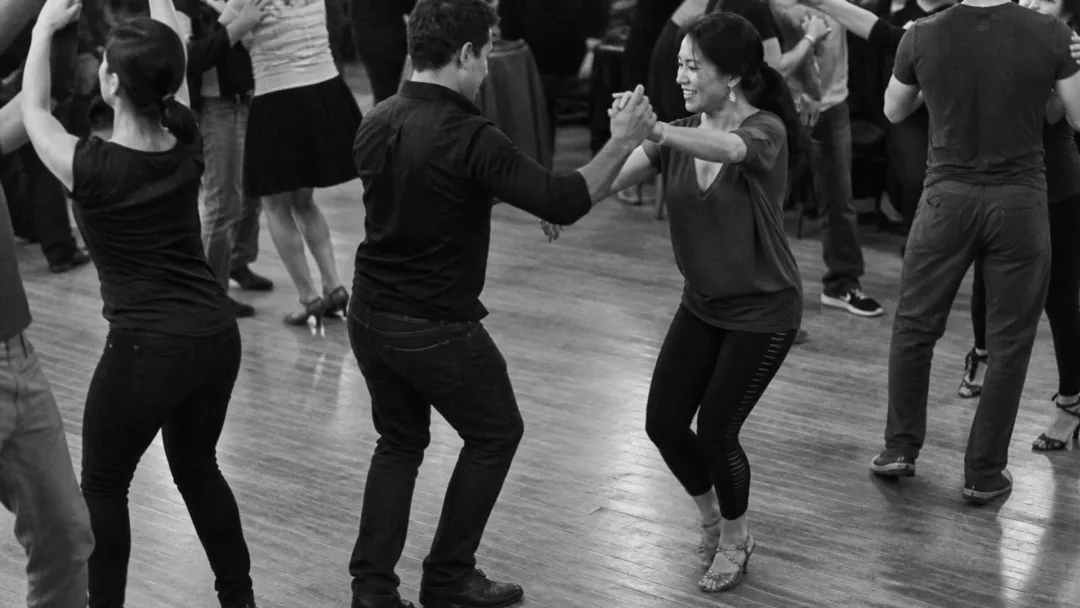
The clear alignment on a single line distinguishes the New York style significantly from the circular figures of Cuban dancers.

The secret to the right timing on the dance floor

The biggest noticeable difference lies in the timing. While a typical beginner course for Cuban Salsa usually starts on the first beat of the music, Mambo On2 only breaks on the second beat of the measure. This moment feels unfamiliar to newcomers at first, because the body is working against the instinctive pulse of the drum. Those who want to learn Salsa train a particularly fine ear for the rhythm section of congas and clave in On2 classes.

Beginners often mistakenly believe that you have to master the Cuban style first before you dare to try On2. That is a fallacy: both systems have a self-contained movement concept. Anyone who knows from the start which music excites them can begin directly with the respective system. If you are unsure how the connection feels in a pair, you can test which dynamic better suits your own preferences beforehand at a trial session in a Cologne dance school.

What matters when starting Salsa classes

How to get started

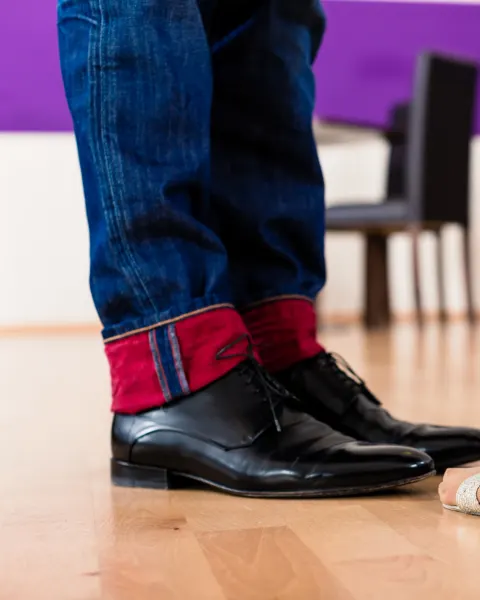
  • Choose shoes with a sole that turns easily
  • Keep your weight on the balls of your feet
  • Practice regularly with different partners
  • Actively listen to the rhythmic beats of the conga

Typical hurdles

  • Wearing heavy sneakers with rubber soles
  • Stomping into the floor with your entire heel
  • Dancing rigidly with only one person
  • Counting steps in your head exclusively

Discover Salsa courses in Cologne

Find the right beginner course for Cubana or On2 and learn Salsa systematically.

Once you feel the difference between circle and line in your body, you will understand the music in a completely new way and find your own rhythm effortlessly.

Dance instructor for Salsa and Caribbean dances

What you should look for in your first course

When choosing the right format, the course structure is what counts most. Good beginner courses do not just teach sequences of figures, but place great importance on leading and following from the center of the body. Pure step combinations are of little help if the subtle coordination with your partner is missing on the dance floor. Transparent instruction explains exactly why a certain impulse arrives in the back or the fingertips.

It is also worth taking a look at the group organization: a regular partner change during the course accelerates learning success enormously. Those who only practice with their own partner unconsciously compensate for posture errors and find it difficult to dance with others later on. A solid basis in Cubana or On2 will also open doors for you later to related genres like Bachata or the Brazilian Zouk in Cologne, because the fundamentals of body tension are universal.

Cubana and Mambo On2 in direct comparison

Cubana

Playful movement in space

Circular and grounded

The dance moves in soft arcs around a common center. Turns are created through intertwined arm movements, while the steps remain firmly anchored in the floor and leave plenty of room for a free sense of body.

On2

Straightforward dynamics in the cut

Precise leading on the line

The partners stay on a narrow line and use exact stops. The change on beat two creates an elegant glide to the music, which thrives on technical cleanliness and fine body tension.

Frequently Asked Questions

  1. No, most dance schools offer courses with an open concept where partners rotate regularly. This way, you learn directly how to adjust to different leading styles. A fixed dance partner is therefore not a requirement for getting started.

Mary De Lucaudansa editorial team ·
Share
Know-how for the floor

From the guide

View all articles