Social dance4 minutes

Ballroom dance in Cologne: From basic steps to medals at a glance

By Bernhard De LucaUpdated

In a nutshell
  • Ballroom dance in Cologne is taught in almost all dance schools as a combination of ballroom and Latin.
  • You can get started with multi-week beginner courses without any prior knowledge, followed by flexible medal levels from bronze to gold.
  • The course offerings are aimed at recreational dancers and are clearly distinguished from performance-oriented club tournament sports.
  • Weekly practice evenings and dance school parties consolidate what you have learned directly in Cologne's everyday dance life.

From your first hesitation with the basic step to an effortless turn across the dance floor: ballroom dancing combines two dance worlds into a versatile hobby for all ages.

DefinitionWorld Dance Program (WTP)

The World Dance Program refers to the globally standardized teaching system used by dance schools, which provides beginners with the fundamental steps of the most important ballroom and Latin dances. It lays the foundation for all subsequent medal courses.

How the classic course system in Cologne is structured

Anyone choosing ballroom dancing in Cologne will book a combined program at most dance schools. The classic course systems guide you through ballroom dances like Waltz, Tango, Viennese Waltz, and Quickstep in parallel with Latin American dances: Cha-Cha-Cha, Rumba, and Jive are part of the standard repertoire almost everywhere. This combination of both worlds is firmly anchored in the Rhineland, regardless of whether you step onto the dance floor on the left bank of the Rhine in Ehrenfeld, the Südstadt, or on the right bank in Deutz and Mülheim.

A regular dance course for ballroom in Cologne requires no prior knowledge for the beginner course (Level 1 or World Dance Program WTP 1). The focus is not on complicated figures, but on finding the common beat, a relaxed posture, and moving confidently in the room. If you are still orienting yourself, our guide on how to find the right dance school in Cologne will help you choose the right atmosphere for you.

Anyone who internalizes the direction of travel in the hall can move around even on crowded Cologne dance floors in a relaxed way.

From bronze course to medal level without performance pressure

After the basic course and the intermediate course, the medal system of the General German Dance Teachers Association opens up. Here, you deepen your Latin American dances in Cologne and refine your standard technique step by step from bronze to silver and gold, all the way to Gold Star. In these levels, you get to know more demanding rhythms like Slowfox and Samba, while footwork, rise and fall, and the characteristic hip movement in the Latin section become more precise.

Many dance students confuse these medal courses with competitive sports. However, medal dancing remains pure social dancing: it is about confidence, fluid transitions, and the joy of good posture in the familiar circle of the dance school. Neither strict dress codes nor judges in tailcoats await you. After Gold Star, the permanent dance circle usually follows, in which couples try out new figure sequences weekly over years and maintain their technique.

Orientation for dance couples in Cologne

Proper etiquette in ballroom dancing

  • Bring clean indoor shoes with smooth soles for turning
  • Move along the outer dance lane in the direction of the dance
  • Work your way up from Bronze to Gold at your own learning pace

Common misconceptions

  • Entering the dance floor with wet street shoes
  • Standing in the way of ballroom couples in the middle of the room
  • Confusing medal levels with performance-oriented competitive sports

In ballroom dancing, it is not the perfect pose for a panel of judges that counts, but the shared lightness with which two people pick up the beat of the music.

Dance teacher from Cologne-Deutz

Practice evenings and balls in Cologne's dance life

Lessons in the studio are only half the battle, because what you have learned only sticks when you apply it freely to the music without the dance teacher counting. That is why almost all dance schools in Cologne offer regular dance parties, practice evenings, or tea dances on the weekend. On these floors, you share the parquet with dancers of all levels, which helps you to intuitively adapt to the flow of dance in the room.

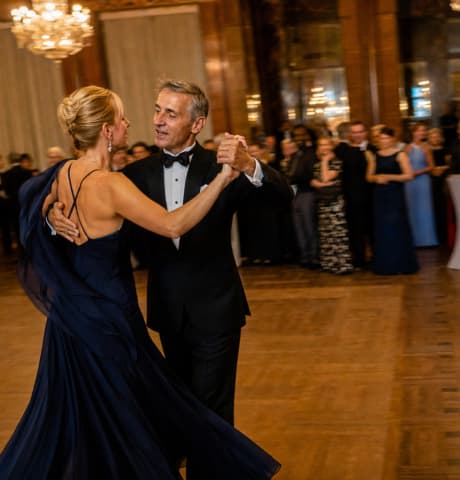
A real highlight for ballroom and Latin dancers are festive evenings like the traditional ball in Cologne, where gala attire and live music provide the perfect setting. If you are still looking for the right companion for your next course or dance evening, the guide will help you to find new dance partners in Cologne, so that you can get started without any detours.

Two styles on the same Cologne dance floor

Momentum

Ballroom dances in space

Waltz, Tango, Quickstep

Ballroom dances like Waltz or Tango are characterized by a closed hold, covering space, and sweeping movement along the line of dance. They require calm frame stability.

Rhythm

Latin American dynamics

Cha-Cha-Cha, Rumba, Jive

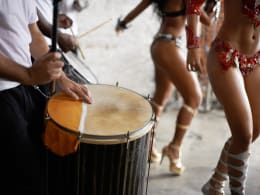
Latin dances like Cha-Cha-Cha, Rumba, or Jive thrive on rhythmic footwork, hip action, and changing, open holds. You usually dance them in a more stationary way on a smaller area.

Frequently Asked Questions

  1. A couple is an advantage, but not a must. Many dance schools in Cologne offer singles courses with regular partner rotation or maintain guest dancer lists to balance out uneven courses.

Ballroom and Latin courses in Cologne

Find the right beginner course or dance circle in your area.

View all matching courses

Find your dance partner in Cologne

On udansa you can find dance partners for every level in Cologne, exchange ideas with the community, and discover current dance events.

Find your dance partner in Cologne