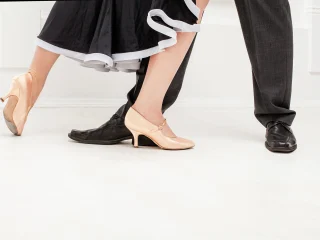
Latin dancing

Where the rhythm moves through your hips

  • Rhythm throughout your body

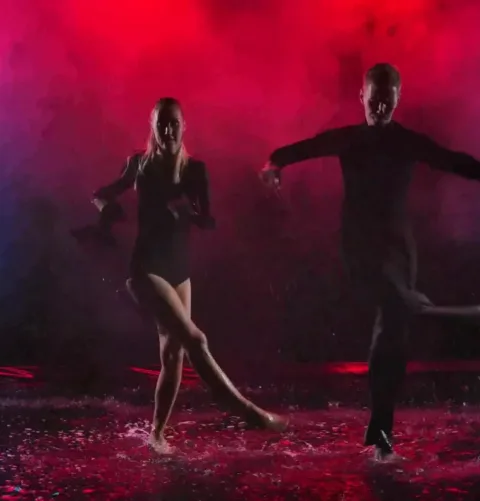
    The movement starts with a shift in your weight and flows through your knees and hips all the way to your arms.
  • A dance for two

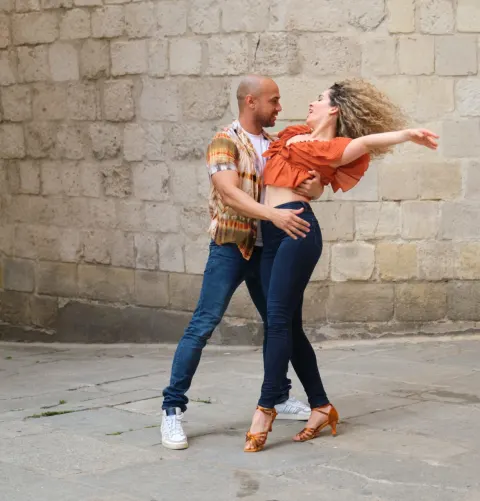
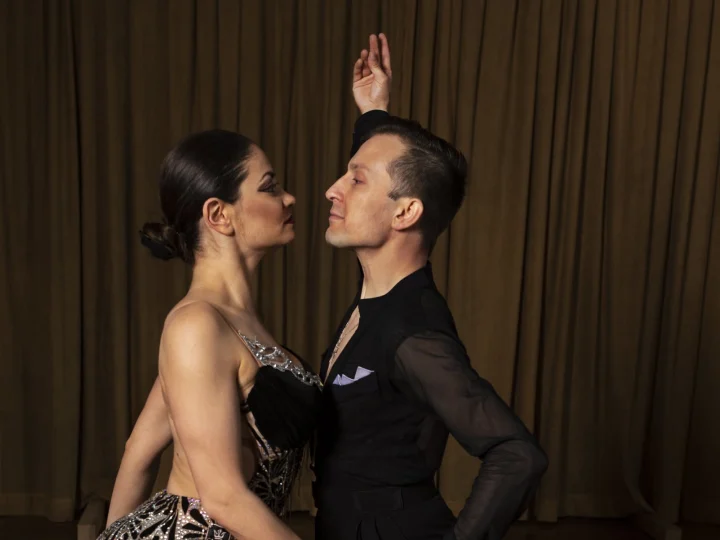
    Open figures, turns and eye contact: Latin dancing thrives on the dialogue between the two of you.
  • Five dances, five temperaments

    From the slow Rumba to the sparkling Jive, you shift between feeling and speed.

What are Latin American dances?

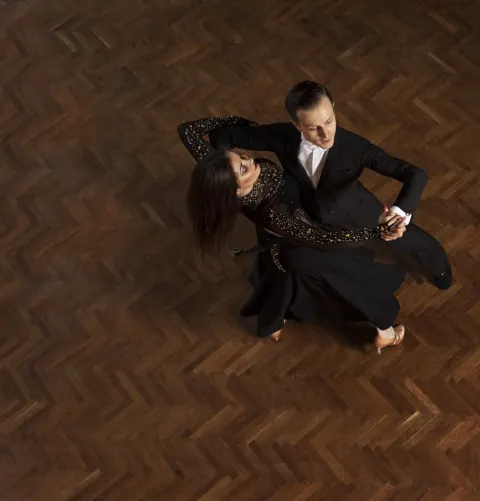
Latin American dances, or Latin for short, are the five competitive dances Samba, Cha-Cha-Cha, Rumba, Paso Doble and Jive. They originated in Brazil, Cuba, Spain and the USA, and took their current form in European competitive ballroom dancing. They are known for open and closed dance holds, expressive hip movements and many figures danced by the couple in one spot. In German dance schools, you usually learn Latin alongside the standard dances as part of the World Dance Programme.
Find Latin dance classes near you

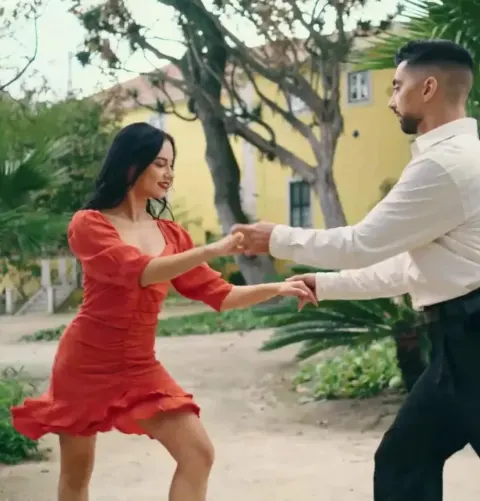
Discover dance classes for Latin American dances near you and get your hips moving.

Discover all Latin dance classes

What does Latin sound like?

Latin American music is driven by percussion and clear accents. Samba and Paso Doble are danced to a 2/4 beat, while Cha-Cha-Cha, Rumba and Jive are danced to a 4/4 beat. Alongside Latin classics, at the dance school you also dance to pop and rock songs with the right rhythm.

The Five Latin Dances at a Glance

  • Samba · 2/4 time, around 50 bars per minute: a springy bounce from the knees, with Brazilian flair.
  • Cha-Cha-Cha · 4/4 time, around 30 bars per minute: playful, with the signature chassé on “Cha-Cha.”
  • Rumba · 4/4 time, around 26 bars per minute: the slowest Latin dance, full of feeling and expression.
  • Paso Doble · 2/4 time, around 60 bars per minute: proud and dramatic, inspired by bullfighting.
  • Jive · 4/4 time, around 43 bars per minute: fast, with kicks and flicks, rooted in swing and rock ’n’ roll.

Dance levels range from your first beginner course to competition couples. The tempos apply to competitive dancing, while social dancing is often a little more relaxed.

Latin is perfect for you if you...

  • have rhythm in your blood or want to finally find it
  • love moving expressively and using your whole body
  • want to dance more than just Discofox at parties, weddings and balls
  • feel like getting a workout that doesn't feel like exercise
  • love Latin music, pop and rock ’n’ roll equally
  • enjoy flirting and having fun as a couple

FAQ about learning Latin dance

Here you'll find answers to the most important questions about Latin dances.

  1. In competitive dance, there are five: Samba, Cha-Cha-Cha, Rumba, Paso Doble and Jive. At dance schools, you usually start with Cha-Cha-Cha, Rumba and Jive, while Samba and Paso Doble often come in more advanced courses.

Discover Latin dances one by one

Explore individual dances in more depth or check out related partner dances