
Find your perfect partner on udansa
Whether you are still looking for the right match for your first Samba season or want to book training sessions right away: on udansa, you connect with the dance community in a flash.



By Bernhard De LucaUpdated
Whether you are still looking for the right match for your first Samba season or want to book training sessions right away: on udansa, you connect with the dance community in a flash.
Stepping onto the competition floor requires a choreography that provides security and shines. With the right structure, you will master the Samba in the D-class flawlessly and expressively.
When starting out in competitive dance, especially in the D-class, less is often more. A harmonious Samba choreography is not defined by the most difficult figures, but by the flawless presentation of the basics. In the lower classes, judges primarily look for timing, rhythm, and clean footwork. If you try to do too much here and incorporate complex combinations, you risk stumbling and losing your connection to the music. Building a solid Samba routine therefore means tailoring the permitted Samba in social and competitive dance: technique & rules exactly to your own strengths.
A well-thought-out structure conserves energy and ensures a confident appearance. Every Samba D-class choreo should be structured in such a way that it can be flexibly interrupted or adjusted at any point on the dance floor if other couples block the way. Focus on executing the characteristic hip and knee movement cleanly instead of getting tangled up in complicated wrapping figures. A clear structure provides security and leaves room for important interaction as a couple.

Review the current rules of your association for the D-class. Select only figures that are approved for this competition class to avoid point deductions by the judges from the start.
Building a good Samba routine means alternating between slow and fast phases. Place stationary Whisks at the beginning and plan space-consuming Samba Walks for the long sides of the dance floor.
Connect the individual elements into a fluid sequence of Samba dance steps. Make sure that the transitions feel organic and that your body weight is always cleanly centered on your standing leg.
Test the finished Samba tournament sequence first at a very slow tempo without music. Only when the footwork is mastered, increase the speed up to tournament tempo.
Simulate the crowded conditions on the competition floor by deliberately placing obstacles in your path during training. Practice spontaneously inserting basic steps so you can react flexibly to blockages.
Correct
Wrong
Preparation
During
On the day of the competition
For a Samba D-class choreography, basic steps like the Natural Roll, Whisks, Samba Walks in Promenade, and Botafogos are suitable. These figures are permitted within the step limitation regulations and demonstrate the important rhythm work.
The sequence should be structured so that it repeats after about 32 to 64 bars. This corresponds to the typical phrasing of the music and makes it easier to orient yourself on the floor.
In case of a blockage, switch immediately to a stationary figure like the Stationary Samba Walks or Whisks. As soon as the path is clear, continue the space-covering movement in the line of dance.
Find the right dance course now to take your competition choreography to the next level.
Couple danceLimbach-Oberfrohna · Germany
PaartanzkreisFriday · 18:15 · Oct 23
Limbach-Oberfrohna
BallroomMeißen · Germany
Tanzkreis | PROFESSIONALTuesday · 20:15 · Oct 27, 2026 - Jan 5, 2027
“Ein Haus für Vieles” - Saal Tanzkurse
Couple danceLimbach-Oberfrohna · Germany
Silberkurs für PaareSunday · 16:15 · Oct 25 - Nov 15
Limbach-Oberfrohna
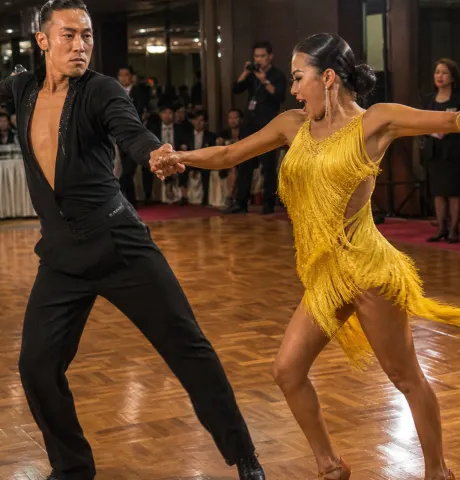 Samba in ballroom and competitive dance: technique & rulesSamba in competitive dance fascinates with its speed and precision. Learn how the Latin American tournament dance differs from the Brazilian social dance.
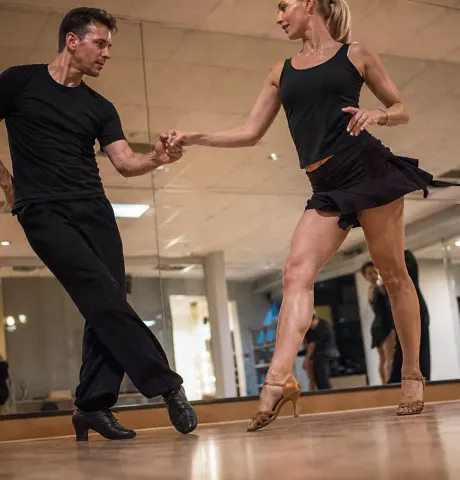 Samba Music Trends: Modern Beats in Dance SportExperience the evolution of samba music: modern pop remixes and electronic beats are currently revolutionizing dance schools and competitive sports.
 Samba Step Limits: Allowed Figures in TournamentsLearn everything about the strict step limits in tournament Samba from class D to S and how to design your choreography in compliance with the rules.
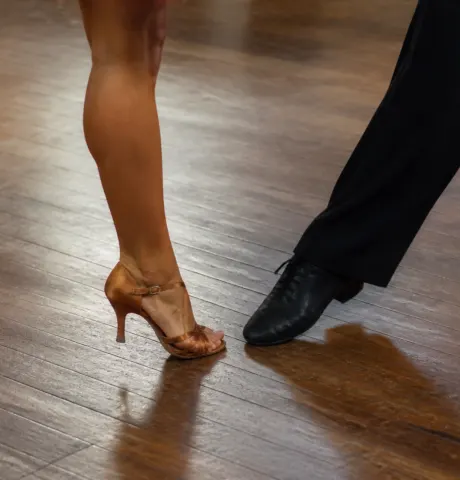 Improve Samba footwork: 5 exercises for fast feetFast feet and precise footwork are the key to success in competition Samba. These five field-tested exercises will take your dance technique to the next level.
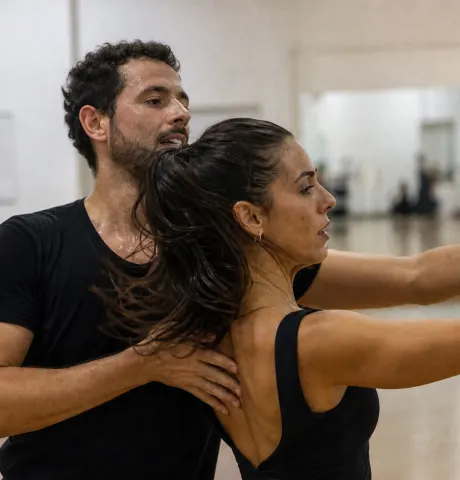 Samba Dance Hold: Perfect Partner Contact in CompetitionThe perfect Samba dance hold in competition requires a delicate balance of stability and dynamics. Learn how to maintain flawless partner contact during fast turns and promenades.
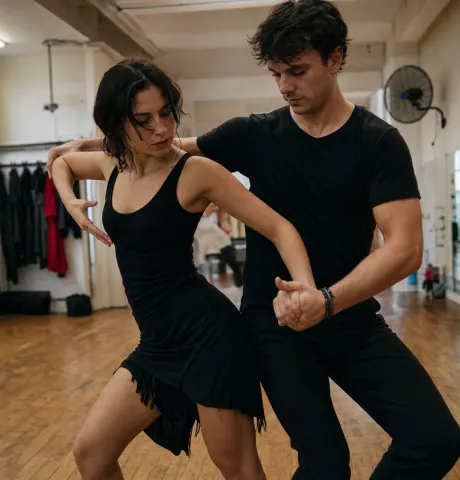 Preparing for your first Samba tournament: Stepping into the spotlightThe step from dance class to the competition floor is exciting and requires a whole new level of preparation. This case study shows how to succeed in your amateur debut.
 Finding a Samba tournament partner: What to look forIf you want to dance Samba successfully in Latin tournament sport, you need the ideal partner. Learn what matters when choosing and how to search systematically.