Dance instructionFind a dance school in Cologne

Modern dance concepts in Cologne: trends in dance instruction

4 minutes
In a nutshell
  • Modern dance concepts in Cologne completely separate the dance roles of leading and following from biological gender.
  • With the open-role principle and role switching, couples learn both perspectives for a better mutual understanding.
  • Contemporary studios rely on modular units instead of rigid block courses, making it easier to join flexibly.
  • The focus of instruction is on sensitive body communication and natural biomechanics instead of rigid step counting.

Modern dance concepts free partner dance from dusty conventions: roles are chosen freely, movements are understood as a dialogue, and course structures are flexibly adapted to everyday life.

DefinitionOpen Role

Open Role refers to a teaching and dance concept where the roles of leading and following are chosen freely, regardless of gender or gender identity. Many studios also incorporate the fluid switching of both roles within a single dance.

How partner dance instruction is fundamentally changing

For decades, traditional partner dance was tied to fixed gender roles: men lead, women follow, and entry was based on rigid, multi-week cycles. Anyone looking for modern dance concepts in Cologne today encounters a noticeably more open teaching landscape. The focus is shifting from rigid step sequences to genuine movement communication. Instead of letting gender determine the dance position, dancers choose their roles based on individual interest or learn both perspectives from the start.

This methodological opening is particularly evident in formats like open-role instruction or modular course systems. During a trial class at a Cologne dance school, you can quickly determine how contemporary a studio is: are they still teaching traditional ladies' and men's steps, or is it about giving impulses, body tension, and flexible interaction on the floor?
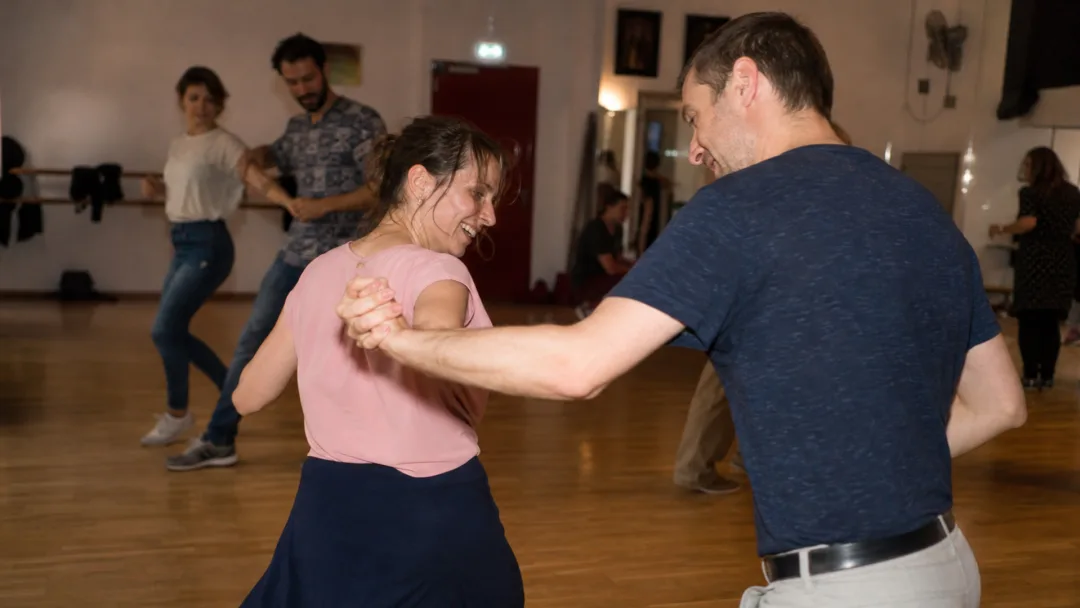
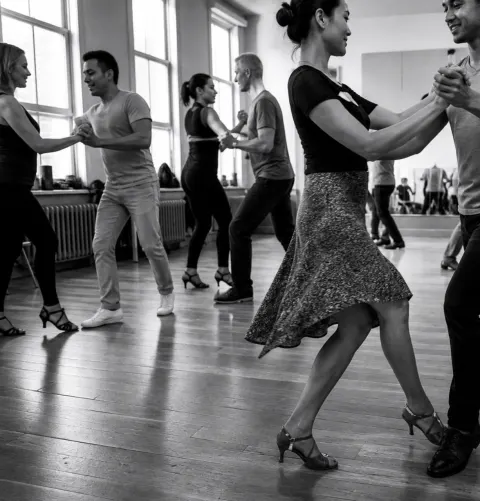
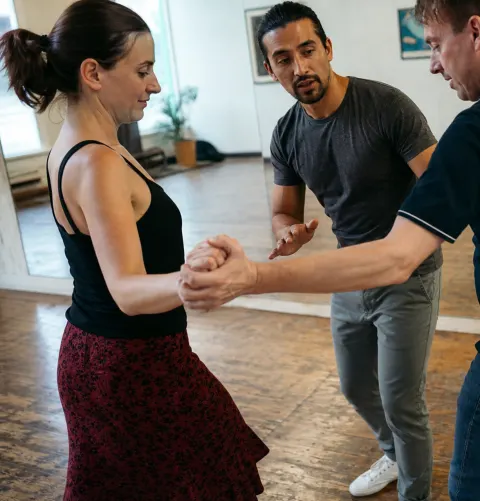
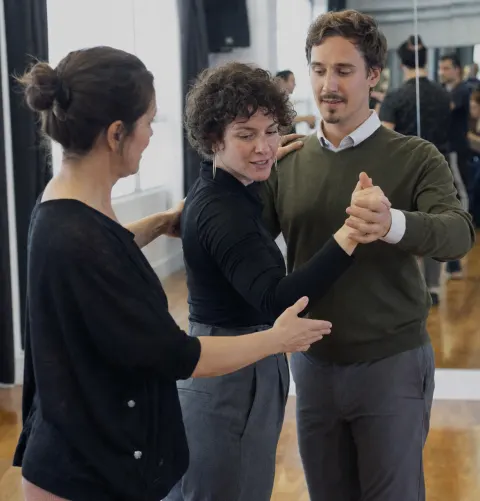
Clear eye contact and a relaxed posture: role-flexible dancing is based on continuous feedback from both dance partners.

Why role flexibility makes dancing easier

A central building block of modern pedagogy is the conscious change of roles when dancing. Anyone who understands how a led movement impulse feels can later lead much more precisely, sensitively, and clearly themselves. Conversely, knowledge of the leading mechanics opens up new freedom for followers to add their own musical accents, without disturbing the harmony of the couple.

For everyone looking for a dance course without a fixed partner or as part of the LGBTQIA+ community, studios with queer dance and open-role offerings create a protected and appreciative space. Here, dancing is not understood as the reproduction of outdated etiquette, but as a dialogue on equal terms. Whether Salsa, Bachata, or Ballroom: the movement follows the music, not tradition.

Didactics in comparison: contemporary versus outdated

That's how it works

  • Choose roles based on your preference and technical interest
  • Learn both roles to understand dynamics and impulses
  • Guide leading impulses biomechanically and gently from the core
  • Use flexible course systems for your own learning rhythm

Not like this

  • Linking roles rigidly to biological sex
  • Training only one role and ignoring the other
  • Leading with force or leverage on the arms
  • Memorizing fixed step sequences blindly without body awareness

Dance courses with modern concepts in Cologne

Find the right course with open roles and flexible units in your city.

Good partner dance does not come from insisting on conventions, but from attentive listening through physical contact, no matter who is leading or following.

Dance instructor for partner dance

Modular systems and criteria for modern studios

Beyond content-related reforms, modular course systems are changing the way dance instruction is organized. Fixed ten-week classes are increasingly giving way to flexible thematic blocks that can be attended according to your own schedule. If you have a busy professional life, you no longer need to worry about missed hours, but can simply continue your training in the next suitable module.

Before you sign up for a course, it is worth taking a look at the provider's didactic philosophy. Pay attention to whether role selection and partner switching are handled transparently in class and whether instructors place the focus on biomechanical understanding rather than pure rote learning. With a targeted dance style finder for Cologne, you can clarify in advance which form of movement best suits your personal requirements.

Leading and following as an equal dialogue

Leading

The creative dance role

Giving impulses without pressure

The focus is on spatial orientation, clear body tension, and precisely offering movement impulses. Leading here means making suggestions, not pulling or pushing.

Following

The responding dance role

Actively perceiving and reacting

Following requires active alertness, your own balance, and a fine perception for weight shifts. It is not passive being pulled along, but the dance response in a dialogue.

Frequently Asked Questions

  1. No, in modern open-role or queer dance classes, all participants decide for themselves which dance role they would like to learn. Many dancers learn both roles one after the other or even in parallel during the course to develop a better understanding of leading impulses and reaction dynamics.

Bernhard De Lucaudansa editorial team ·
Share
Know-how for the floor

From the guide

View all articles