Traditional danceDance styles in Cologne

Hellige Knäächte un Mägde: Cologne's oldest traditional dance group

4 minutes
In a nutshell
  • The Hellige Knäächte un Mägde are considered the oldest traditional dance group in Cologne.
  • The group traces its origins back to the medieval Cologne farmers' guilds and their fair dances.
  • Since the first Cologne Rose Monday parade in 1823, the group has danced in the procession without interruption.
  • Typical of their performance are historical peasant costumes, traditional couple dances, and the jester figure Jeckenbääntche.

While guard and Mariechen characterize the image of many Cologne sessions, the Hellige Knäächte un Mägde have been preserving the rural dance folklore of the old peasant benches for centuries.

DefinitionHellige Knäächte un Mägde

Hellige Knäächte un Mägde is the most traditional folk dance group in Cologne, with roots in the rural customs of the historical Cologne farmers' guilds. They have been dancing in traditional costumes since 1823 and maintain handed-down couple choreographies, away from military-style guard dancing.

Peasant roots and the parade of 1823

When people think of Cologne carnival stages, they often picture the uniformed guards of the large corps. The Hellige Knäächte un Mägde, however, embody a completely independent tradition that manages without sabers, shakos, and military drill. As a historically verified group, they trace their origins back to the farmhands and maids of the medieval peasant benches. These urban communities of farmers and day laborers celebrated fair festivals with their own rural round and partner dances, from which the choreographies developed.

The ensemble already appeared in the very first Cologne Rose Monday parade in 1823 and has been an uninterrupted part of this procession ever since as the only dance formation. The dancers are traditionally led by a central figure: the Jeckenbääntche, a historical jester figure who clears the way with a jingle cap and mischief. Formations like the Lyskircher Hellige Knäächte un Mägde also continue to draw from this common historical foundation to this day.
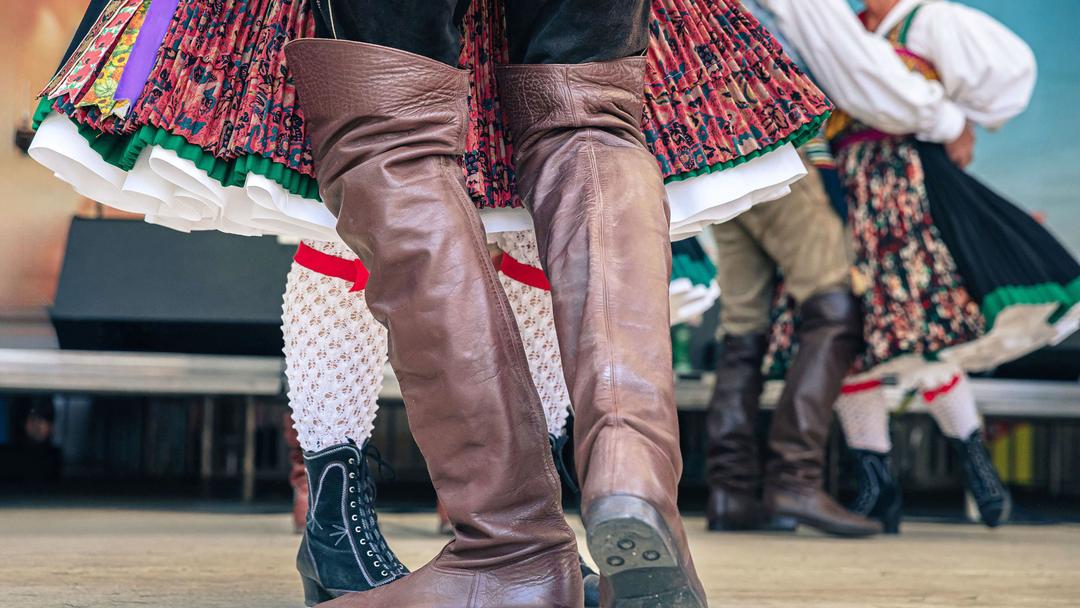
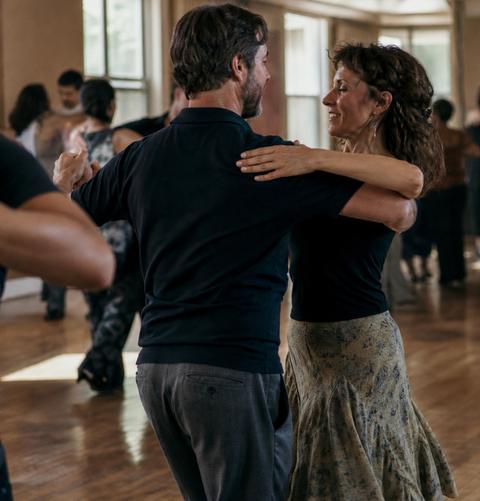
Traditional folk dance performance in colorful costumes and leather boots
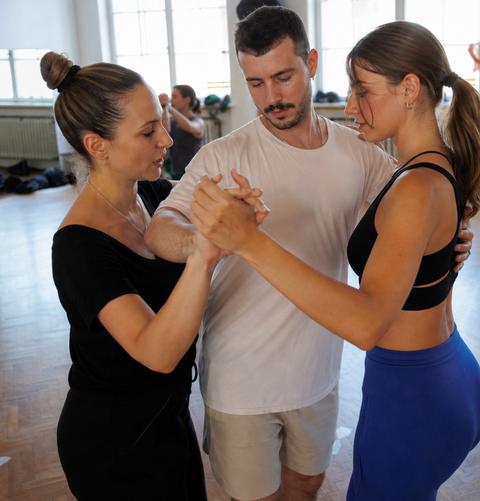
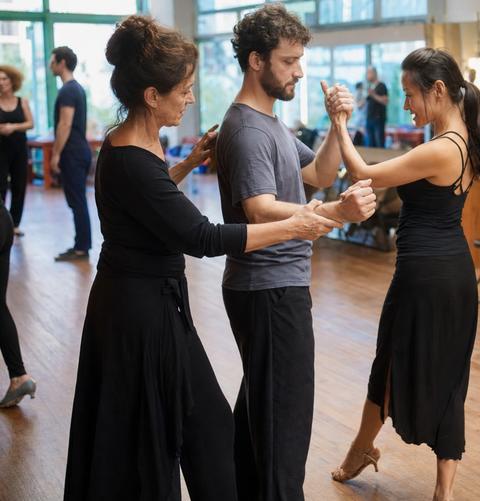
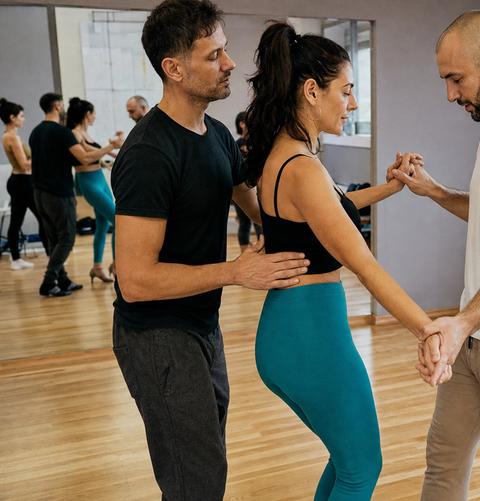
Traditional folk dance steps thrive on a precise sense of rhythm and constant eye contact between partners.

Folklore and historical costumes in pairs

The group's dances differ fundamentally from modern acrobatic guard dance. Instead of high-flying throws, splits, and military marching beats, fluid footwork, turns, bows, and rhythmic clapping in pairs dominate. The music is based on traditional Rhineland melodies and waltz rhythms that reflect a lively festive atmosphere. If you are wondering which dance style suits you in Cologne, you will discover a form of partner dance here that combines living city history with sophisticated movement.

The dancing takes place in authentically reproduced traditional costumes: the men wear loose linen shirts, knee breeches, vests, and sturdy buckled shoes, while the women appear in colorful skirts, aprons, and bonnets. This clothing is not a costume in the sense of street carnival, but represents the festive attire of the Cologne rural population of past centuries. Every movement in the dance is coordinated to make the fabrics, aprons, and turns of the pairs harmonize in the space.

Traditional dance and carnival dance in comparison

Hellige Knäächte un Mägde

  • Wear historical costumes with knee breeches and apron skirts
  • Dance flowing waltzes and traditional round dances as a couple
  • Let the jester figure of the Jeckenbääntche lead the way

Carnival guard dances

  • Use military uniforms with tricorn hats and riding boots
  • Practice acrobatic lifts and flying elements
  • Show strict marching in guard step on stage

Discover partner dance and dance culture in Cologne

Find suitable courses for traditional and modern dance styles in Cologne.

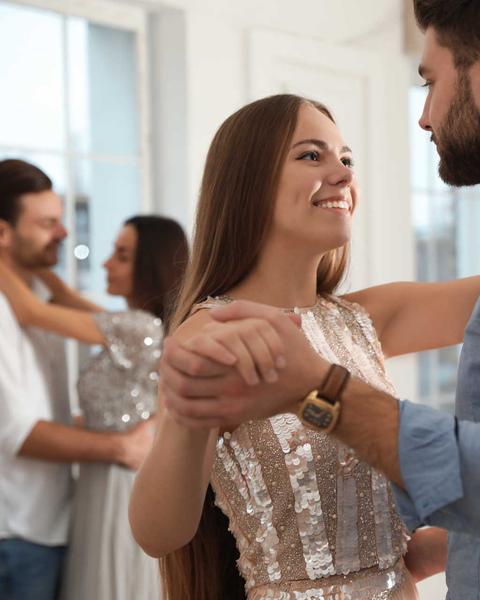
In traditional folk dance, it is not about athletic peak performance, but about the shared presence and the common rhythm of the couples on stage.

Dance instructor for partner dance and stage dance

Training and community in the ensemble

Joining such a traditional formation requires dedication, a sense of rhythm, and joy in historical footwork. The ensemble trains all year round to rehearse demanding choreographies for performances in halls like the Gürzenich or on large stages. In addition to dance conditioning, the focus is on togetherness, as many sequences rely on millimeter-precise movements in space. If you want to take the step, you can prepare specifically for club rehearsals with a trial training session at the dance club in Cologne.

For dance enthusiasts, the ensemble offers a rare opportunity: here, you are not just practicing a modern dance sport, but actively maintaining a piece of intangible cultural heritage. Alongside the Hellige Knäächte un Mägde, there are many other facets of dancing together in the city, from folk dances to formats for senior dance in Cologne. Year after year, the traditional group proves how lively historical dance culture can remain on stage.

Two roles in traditional folk dance

Role

The farmhand in the dance

Down-to-earth leading and footwork

The dancers wear breeches, vests, and sturdy dance shoes. In the dance, they lead the turns of the maids and maintain their footing during fast change steps.

Role

The maid in the spotlight

Lively skirt work and lightness

The dancers dress in wide skirts with aprons and lace caps. In the dance, they show expansive turns, rhythmic clapping, and graceful bows.

Frequently Asked Questions

  1. No, the group does not belong to the uniformed guards of the traditional Cologne corps. It is an independent folk dance group that presents rural, peasant folklore instead of military drill.

Mary De Lucaudansa editorial team ·
Share
Know-how for the floor

From the guide

View all articles